Planchonella australis
(R. Br.) Pierre
Black apple
iNaturalist· cc-by-sa
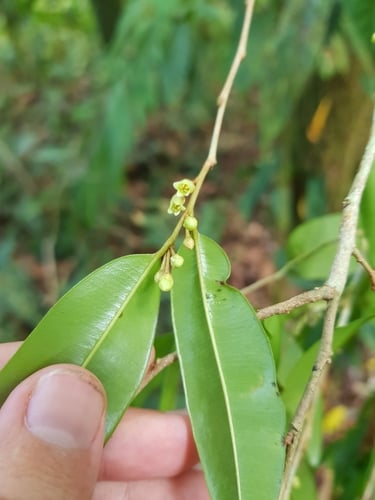
(c) Greg Tasney, some rights reserved (CC BY-SA), uploaded by Greg Tasney
iNaturalist· cc-by-sa
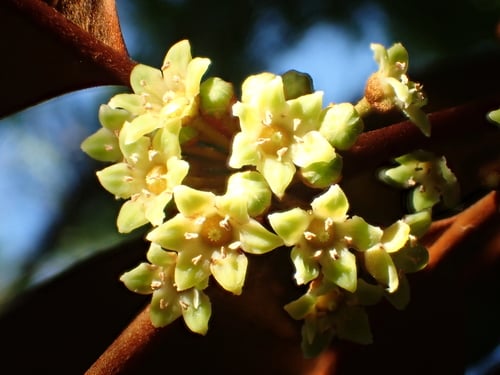
(c) Greg Tasney, some rights reserved (CC BY-SA), uploaded by Greg Tasney
iNaturalist· cc-by-sa
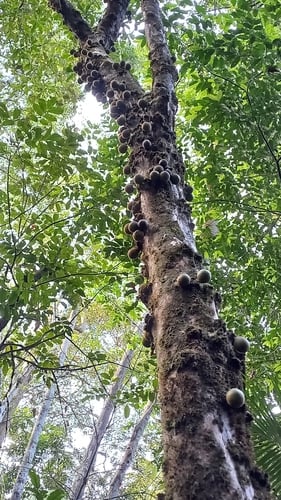
(c) Greg Tasney, some rights reserved (CC BY-SA), uploaded by Greg Tasney
Summary
Source: WikipediaPlanchonella australis, also known by the synonym Pouteria australis, is a medium to tall rainforest tree of the family Sapotaceae native to Queensland and New South Wales, Australia. It is known by the common name black apple, wild plum, yellow buttonwood, black plum and yellow bulletwood.
Description
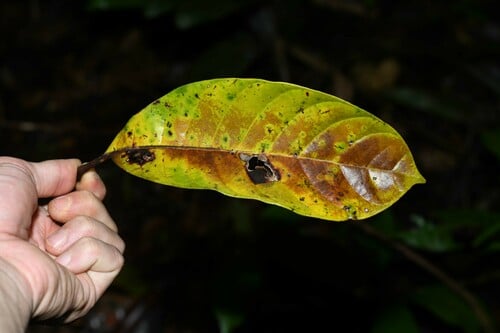
A large tree. It grows 15-25 m high. The leaves are a dark shiny green. The flower are small and white. The fruit are large and black.
This description is brief — help expand it
Edible Uses
The fruit is eaten raw and some forms are quite sweet. It is purplish or black, obovoid or globose, 20–60mm long, and contains 2–5 seeds each around 20mm long.
Traditional Uses
The fruit are eaten fresh or preserved.
This uses section is brief — help expand it
Medicinal Uses
None known
Distribution
It is a subtropical plant. It is best in moist, semi-shaded position. It needs shelter from strong winds.
Where It Grows
Australia*,
Cultivation
A plant mainly of the subtropical regions of eastern Australia, just entering into the tropical regions in southern Queensland. The tree is slow-growing when young.
Propagation
Seed - sown fresh, germination occurs within a few weeks.
Other Uses
The wood is hard and handsomely marked, and is used for high-quality cabinet making.
Other Information
The fruit are edible but not tasty.
Nutrition
| Part | Moisture | kJ | kcal | Protein | Vit A | Vit C | Iron | Zinc |
|---|---|---|---|---|---|---|---|---|
| Fruit | 74.7 | 213 | 51 | 2.2 | — | 5 | 1 | 0.3 |
Synonyms
Also Known As
Australian Native Plum, Bush apple
References (4)
- Hedrick, U.P., 1919, (Ed.), Sturtevant's edible plants of the world. p 606 (As Sideroxylon australe)
- Syst. census Austral. pl. 92, 154. 1882 (As Sideroxylon australe)
- Queensland Forest Service, 1991, Trees and Shrubs. Department of Primary Industries. p 80
- www.ceres.org.au/bushfoodcatalogue