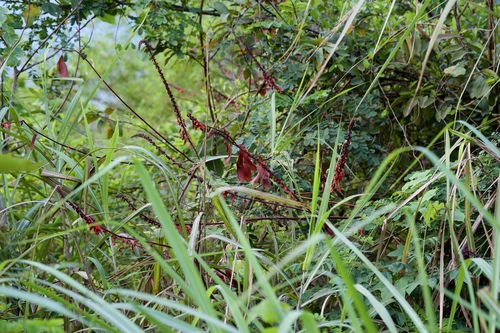
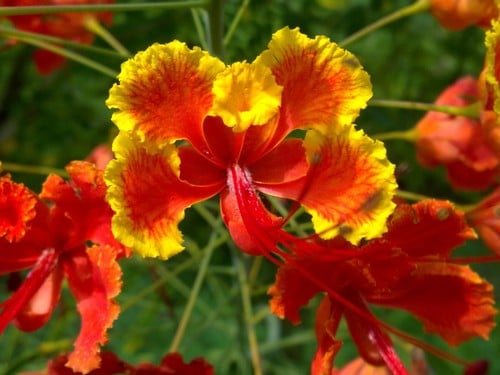
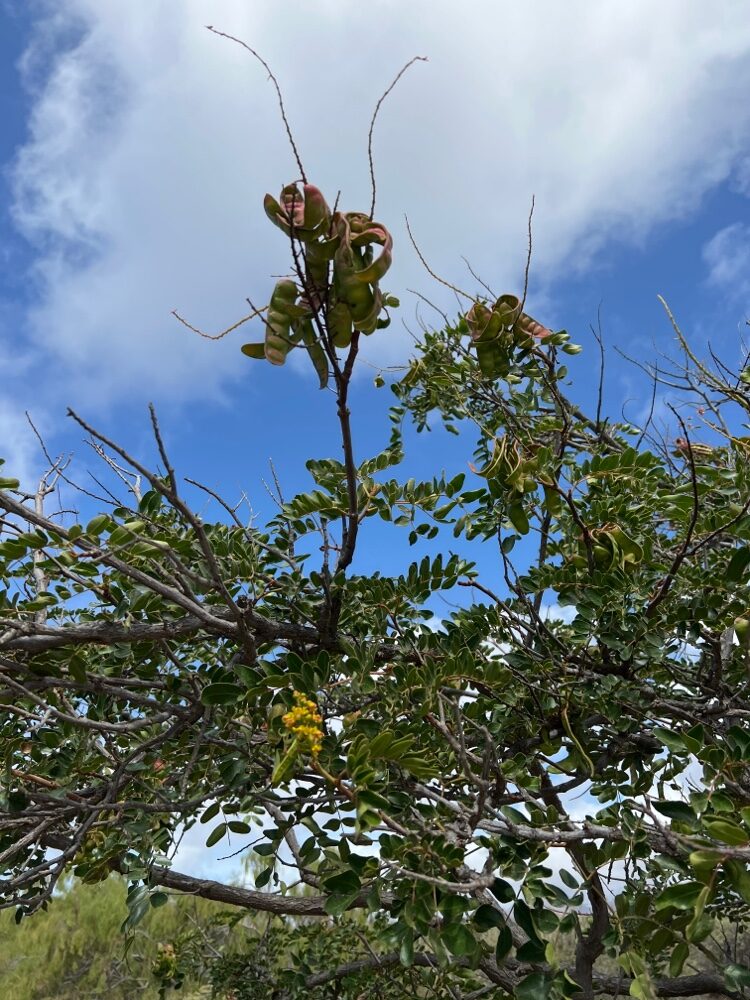
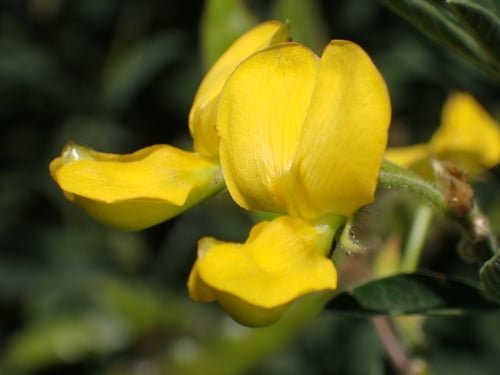
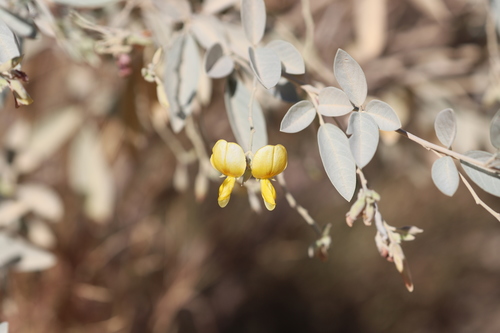
Canavalia brasiliensis
Benth.
iNaturalist· cc-by
(c) Bill Levine, some rights reserved (CC BY), uploaded by Bill Levine
iNaturalist· cc-by-nc
(c) Juan Carlos López Domínguez, some rights reserved (CC BY-NC)
iNaturalist· cc-by
(c) stephen, some rights reserved (CC BY)
Description
A perennial creeping vine in the bean family with edible seeds, native to tropical regions of South America where it grows from sea level to 1,000 m elevation.
Edible Uses
The seeds are eaten.
Distribution
It is a tropical plant. In Argentina it grows from sea level to 1,000 m above sea level.
Where It Grows
Argentina, Brazil, Paraguay, Peru, South America,
Cultivation
A plant of the tropics, where it is found at elevations up to 1,000 metres. It grows best in areas where annual daytime temperatures are within the range 26 - 30°c, but can tolerate 18 - 34°c. It prefers a mean annual rainfall in the range 900 - 1,500mm, but tolerates 500 - 2,000mm. Grows best in a sunny position. Succeeds in most soils, including those of low fertility. There are indications that the plant may be somewhat tolerant of saline conditions. Prefers a pH in the range 5 - 7, tolerating 4.3 - 8. The plant survives, and can stay green, during 5 - 6 months of dry period - it then grows away quickly at the onset of the rains and as a result can suppress weeds. As a green manure, average dry matter (DM) production is 5,000 - 7,000 kg/ha/year, with extremes ranging from 1,700 - 14,200 kg/ha/year. This species has a symbiotic relationship with certain soil bacteria, these bacteria form nodules on the roots and fix atmospheric nitrogen. Some of this nitrogen is utilized by the growing plant but some can also be used by other plants growing nearby.
Propagation
Seed - it has a hard seedcoat and may benefit from scarification before sowing to speed up germination. This can usually be done by pouring a small amount of nearly boiling water on the seeds (being careful not to cook them!) and then soaking them for 12 - 24 hours in warm water. By this time they should have imbibed moisture and swollen - if they have not, then carefully make a nick in the seedcoat (being careful not to damage the embryo) and soak for a further 12 hours before sowing. Germination rates up to 80% can be achieved from scarified seed.
Other Uses
The plant has a deep and ample root system and also fixes atmospheric nitrogen. It can be used as a green manure plant, to enrich fallow soil and to protect the soil from erosion control. It can contribute to amelioration of soil structure, to stabilization of erosion prone sites and to nutrient cycling. Because of the medium decomposition and nitrogen mineralization rates of the biomass of this plant, nutrient release synchronizes well with the nutrient demand of annual crops such as maize and rice, when the green manure biomass is incorporated before sowing of the succeeding crop. As a result, nitrogen recovery is higher than for most other green manure plants and can reach nitrogen recovery rates of mineral nitrogen fertilizer.
Synonyms
References (1)
- Reis, S. V. and Lipp, F. L., 1982, New Plant Sources for Drugs and Foods from the New York Botanical Garden herbarium. Harvard. p 130