Senna hirsuta
(Linn.) Irwin & Barneby
Hairy cassia, Woolly senna
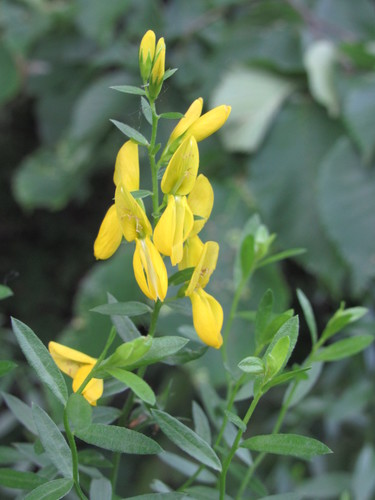
iNaturalist· cc-by-nc
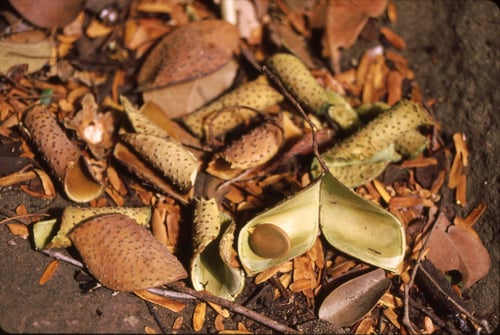
(c) Bart Wursten, some rights reserved (CC BY-NC), uploaded by Bart Wursten
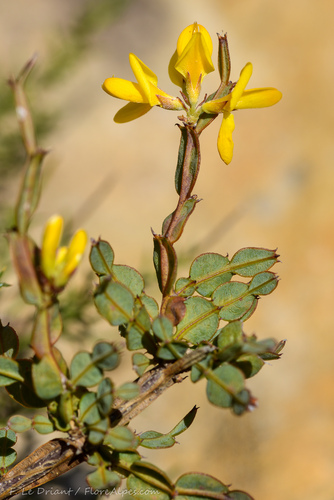
iNaturalist· cc-by-nc
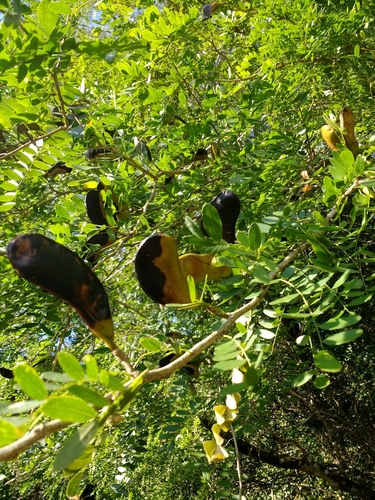
(c) Matthew Lachiusa, some rights reserved (CC BY-NC)
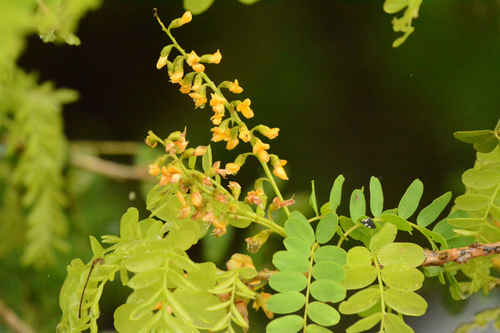
iNaturalist· cc-by-nc
(c) Riana Fourie, some rights reserved (CC BY-NC), uploaded by Riana Fourie
Summary
Source: WikipediaSenna hirsuta, commonly known as woolly senna, is a species of flowering plant in the family Fabaceae and is native to Central and South America, but is naturalised in many other countries. It is an erect or spreading shrub or herbaceous perennial with pinnate leaves, with two to six pairs of egg-shaped leaflets, and yellow flowers arranged in groups of two to six, with six fertile stamens and four staminodes in each flower.
Description
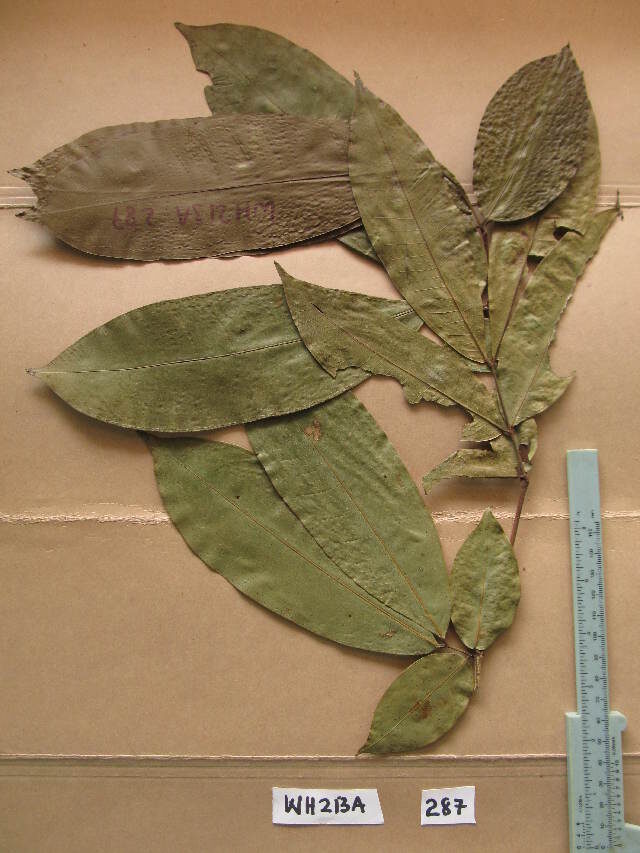
A small shrub. It grows 0.2-2.5 m tall. It has hairy stems and bad smelling leaves. The leaf stalk has finger-like glands just above the base. The leaflets are in 3-5 pairs. They are oval and 6-9 cm long by 2-3.5 cm wide. They are hairy. The flower clusters are short and in the axils of leaves. The petals are orange-yellow. They are 1-1.7 cm long. The fruit is a slightly curved pod. They are 8-18 cm long by 3-7 mm wide. The pod is flattened. The pods are densely hairy. The seeds are dark green and lie at right angles to the long axis of the pod. They are 2.5-3 mm long by 2 mm wide.
Edible Uses
The leaves and young pods are eaten, usually steamed or cooked in vegetable dishes or in salads. The unpleasant smell can be reduced by relatively long cooking. The seeds are roasted and used as a substitute for coffee.
Medicinal Uses
The leaves are used medicinally for treating kidney disorders and herpes. An infusion is an effective remedy for renal calculi. An infusion of the leaves is applied externally to treat skin disorders and cracked nipples. The root is tonic. A tincture of the root is rubbed onto rheumatic areas. The leaf contains derived anthracenes. The seed contains a bi-anthraquinone and a tri-terpenoid, which may prove medicinally important.
Known Hazards
Roasting of the seed destroys the toxalbumin present in fresh seed.
Distribution
A tropical plant. It grows from 30-60 m altitude in Papua New Guinea. In Indonesia it grows up to 700 m above sea level. In West Africa it grows in the lowland rain-forest belt. In Yunnan.
Where It Grows
Naturalized in SE Asia, on plains and hilly areas, growing spontaneously in waste locations, along roadsides, railway embankments, dry ditches and in secondary forest. It is found in gardens and fields as a weed
Cultivation
Succeeds in subtropical to tropical regions at elevations up to about 700 metres. Prefers a sunny position. The plant has often escaped from cultivation and become a weed in SE Asia and the Pacific. In South-East Asia the plant flowers throughout the year. Plants respond well to coppicing. There are conflicting reports on whether or not this tree has a symbiotic relationship with certain soil bacteria, so it is unclear as to whether this tree fixes atmospheric nitrogen.
Propagation
Seed - requires pre-treatment to soften the hard seedcoat and allow the ingress of water. This can be done by soaking the seed in a small amount of nearly boiling water (which cools down quickly and does not cook the seed) and then soaking the seed for 12 - 24 hours in warm water. Alternatively, a small area of the seed coat can be abraded, being careful not to damage the embryo.
Other Uses
The seed contains a water-soluble gum, though not in commercial quantities. Used as a shade plant in young coffee plantations. Green manure. A fast growing plant that is easy to cut, coppices well and can produce considerable amounts of foliage material in a growth cycle of 8 months. It is often used as a green manure crop in Asia Observations in Central Africa indicate that is competes poorly with weeds.
Synonyms
Also Known As
Alcaparro, Angreng paupa, Bado chakunda, Bonda, Caukillo, Deo tarota, Deo torthan, Devtorthan, Kachang kayu, Kandauk, Karuthagarai, Methep, Muong long, Mutuy, Sinteng, Thagarai, Yangnihon
References (20)
- Altschul, S.V.R., 1973, Drugs and Foods from Little-known Plants. Notes in Harvard University Herbaria. Harvard Univ. Press. Massachusetts. no. 1692 (As Cassia hirsuta)
- Bhogaonkar, P. Y. & Devarkar, V. D., 2018, Inventory for ethnovegetable knowledge of the tribals of Satpura hill area-Melghat, Dist. Amravati (India), Plantae Scientia, 2018; Vol. 01 Issue 01: 01-08 (As Cassia hirsuta)
- Bonou, A., et al, 2013, Valeur economique des Produits Forestiers Non Ligneux (PFNL) au Benin. Editions Universitaires Europeennes p 98 (As Cassia hirsuta)
- Burkill, H. M., 1985, The useful plants of west tropical Africa, Vol. 4. Kew.
- Burkill, I.H., 1966, A Dictionary of the Economic Products of the Malay Peninsula. Ministry of Agriculture and Cooperatives, Kuala Lumpur, Malaysia. Vol 1 (A-H) p 482 (As Cassia hirsuta)
Show all 20 references Hide references
- Grubben, G. J. H. and Denton, O. A. (eds), 2004, Plant Resources of Tropical Africa 2. Vegetables. PROTA, Wageningen, Netherlands. p 564
- Kahlon, L. K. & Singh, R., 2019, Traditional knowledge & Dynamics of edible plants of primitive tribal group ‘Paudi Bhuyan’ with changing demography migration patterns in Northern Odisha. Indian Journal of Traditional Knowledge Vol 18(1), pp 7-15
- Kermath, B. M., et al, 2014, Food Plants in the Americas: A survey of the domesticated, cultivated and wild plants used for Human food in North, Central and South America and the Caribbean. On line draft. p 796
- Kew Plants of the World Online
- Kiran, K. C., et al, 2019, Diversity and Seasonal Availability of Potential Wild Edible Plants from Vidarbha Region of Maharashtra State, India. Int.J.Curr.Microbiol.App.Sci (2019) 8(2): 1434-1446
- Martin, F.W. & Ruberte, R.M., 1979, Edible Leaves of the Tropics. Antillian College Press, Mayaguez, Puerto Rico. p 198 (As Cassia hirsuta)
- Medhi, P., Sarma, A and Borthakur, S. K., 2014, Wild edible plants from the Dima Hasao district of Assam, India. Pleione 8(1): 133-148
- Ochse, J.J. et al, 1931, Vegetables of the Dutch East Indies. Asher reprint. p 374 (As Cassia hirsuta)
- Peekel, P.G., 1984, (Translation E.E.Henty), Flora of the Bismarck Archipelago for Naturalists, Division of Botany, Lae, PNG. p 218, (As Cassia hirsuta)
- Pham-Hoang Ho, 1999, An Illustrated Flora of Vietnam. Nha Xuat Ban Tre. p 850 (As Cassia hirsuta)
- Prabha, Y. P., et al, 2010, Documentation of Wild Edible Plants of Melghat Forest, Dist. Amravati, Maharashtra State, India. Ethnobotanical Leaflets 14: 751-58, 2010. (As Cassia hirsuta)
- Roa, J. A. G. & Boada, D. S. G., 2018, Fundación para el Fortalecimiento de la Fruticultura y Plantas Alimenticias no Convencionales en Colombia.
- Sp. pl. 1:378. 1753 (As Cassia hirsuta)
- Verdcourt, B., 1979, Manual of New Guinea Legumes. Botany Bulletin No 11, Division of Botany, Lae, Papua New Guinea. p 45 (As Cassia hirsuta)
- World Checklist of Useful Plant Species 2020. Royal Botanic Gardens, Kew