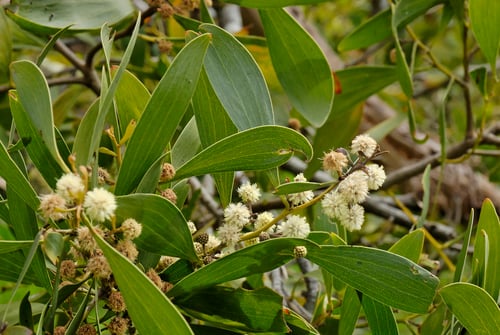
Senna marilandica
(L.) Link
Maryland senna
iNaturalist· cc-by
(c) mayfly1963, some rights reserved (CC BY), uploaded by mayfly1963
iNaturalist· cc-by-nc
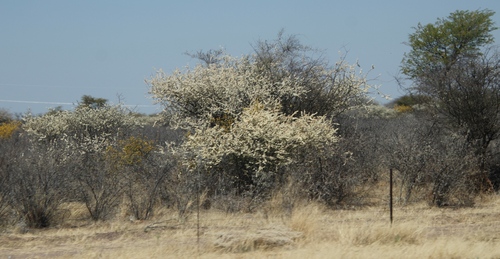
(c) Joseph D Kurtz, some rights reserved (CC BY-NC)
iNaturalist· cc-by-nc
(c) Joseph D Kurtz, some rights reserved (CC BY-NC)
Summary
Source: WikipediaSenna marilandica, commonly known as Maryland senna, Maryland wild senna, and wild senna, is a perennial flowering plant in the pea family (Fabaceae) native to the United States. It blooms in the summer with yellow flowers, followed by long seed pods, and can grow up to 2 m (6 ft) tall. It prefers average to wet soil.
Description
A herb. It keeps growing from year to year. The stems are green and round and 2 m tall. The leaves are compound and alternate. They have 4-8 pairs of opposite leaflets. The leaflets are 6 cm long by 2 cm wide. They are narrowly oval. The flowering shoots have 6-9 yellow flowers. They can be in the axils of leaves or at the ends of stems. The pods are 8 cm long.
Edible Uses
No edible uses are known for this plant.
Medicinal Uses
The leaves and seedpods are cathartic, diuretic, and vermifuge. Leaves are harvested before and during flowering; pods are harvested when fully ripe in autumn. Both are dried for later use. The leaves are a safe and effective cathartic, best combined with Foeniculum vulgare seeds to counteract a tendency to cause griping. The seedpods are also usable and are milder but slower acting. Seeds soaked in water until mucilaginous have been swallowed to treat sore throats. The root is cardiac and febrifuge; an infusion has been used for fevers and heart problems, and a root poultice has been applied to sores.
Distribution
It is a temperate plant.
Where It Grows
North America, USA,
Propagation
Seed - scarify, then pre-soak in warm water for 2–3 hours before sowing from early spring to early summer in a warm greenhouse. Seed usually germinates in 1–12 weeks at 23°C. Prick seedlings into individual pots once large enough to handle and grow on in the greenhouse, not planting out until the following spring. Can also be propagated by division as growth begins in spring, or by cuttings of moderately ripe wood taken in July in a frame.
Other Uses
No other uses are known for this plant. It is a nitrogen fixer.
Synonyms
References (1)
- Kermath, B. M., et al, 2014, Food Plants in the Americas: A survey of the domesticated, cultivated and wild plants used for Human food in North, Central and South America and the Caribbean. On line draft. p 796