Choerospondias axillaris
(Roxb.) B. L. Burtt & A. W. Hill
Lapsi, Nepalese hogplum
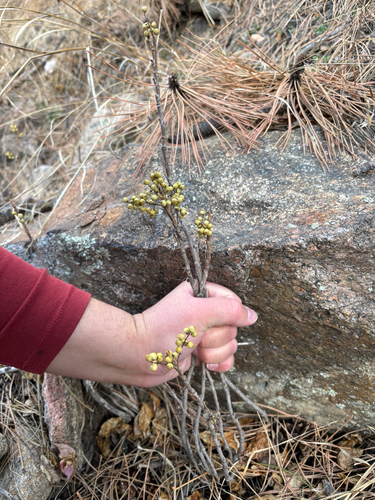
iNaturalist· cc-by-nc
(c) Yao Li, some rights reserved (CC BY-NC), uploaded by Yao Li
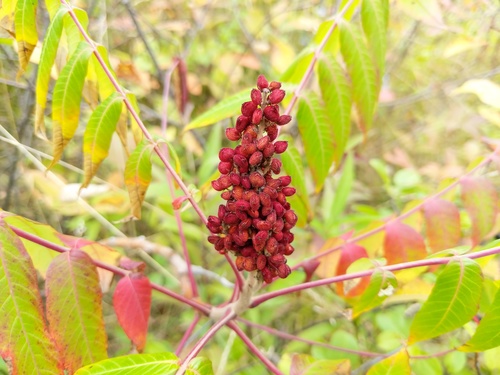
iNaturalist· cc-by-nc
(c) Yao Li, some rights reserved (CC BY-NC), uploaded by Yao Li
Description
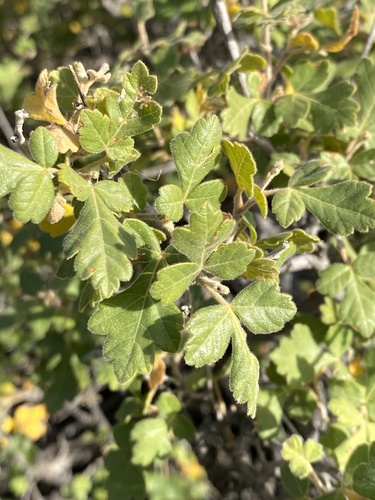
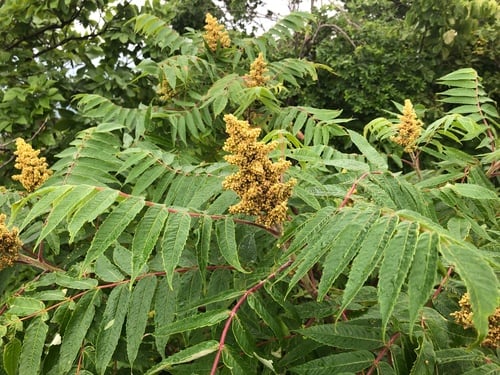
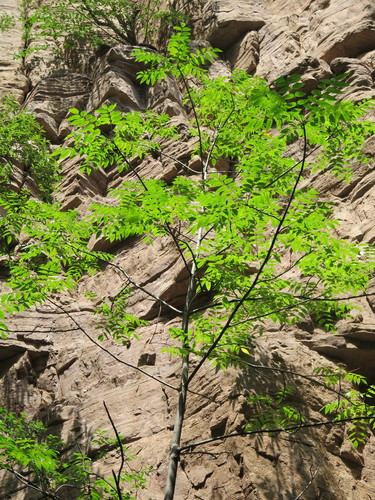
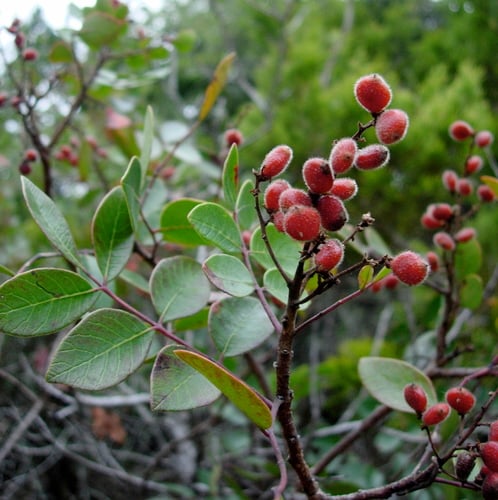
A tree that loses its leaves. It is 15-30 m high and has a trunk 40-50 cm across. The young branches are stout. They are 5 mm across. The small branches are purple brown in colour. The leaves are alternate. They are compound made up of pairs of leaflets with one leaflet at the end. The leaves are 25-40 cm long. The leaflets are in 5-13 pairs and 10 cm long by 3-3.5 cm wide. The leaf stalk is 2 cm long. The male and female flowers occur on separate trees. The male flowers are in loose irregular arrangements either at the ends of branches or in the axils of leaves. They are 15-20 cm long. The female flowers occur singly or in 2's or 3's in the axils of leaves. The flowers are reddish-purple. The fruit is fleshy and has 5 stones inside. The fruit is 3 cm across and is yellow.
Edible Uses
The ripe fruit is eaten raw and used for wine, candy, jam, and pickles; half-ripe fruit are preferred for pickles and the pulp is dried for marmalade or jam. Young leaves are eaten raw.
Traditional Uses
The ripe fruit can be eaten raw and used for wine production. The fruit are used for candy, jam and pickles. It is the half ripe fruit that are used for pickles. The fruit pulp is dried to make marmalade or jams. The young leaves are eaten raw.
Medicinal Uses
No medicinal uses mentioned in available data.
Distribution
A tropical and subtropical plant. It grows in Northern Vietnam and below 600 m altitude. It is mostly on deep, wet red soils. It grows between 600-2000 m altitude in southern Yunnan. In XTBG Yunnan. In Sichuan.
Where It Grows
Asia, Australia, Bhutan, Cambodia, China, Himalayas, India, Indochina, Indonesia, Japan, Laos, Myanmar, Nepal, Northeastern India, SE Asia, Sikkim, South Africa, Taiwan, Thailand, Tibet, Vietnam,
Cultivation
Plants can be grown from seeds. They can also be grown by cuttings and budding.
Other Uses
The fibrous bark can be used for making rope. The greyish-white wood is soft with a marked silver grain. It is used as a light construction timber, for making tea chests and general furniture. The wood is used for fuel. The seed shells are used as a fuel in brick kilns. The tree is often used as a fruit tree in reaforestation projects. The tree is planted as a pioneer species in northern Thailand in reforestation projects to restore native woodland - it is planted in degraded woodland and open areas in a mix with various other species that all have the ability to grow fast; produce dense, weed-suppressing crowns; and attract seed-dispersing wildlife, particularly birds and bats.
Production
In Thailand plants flower in December to February and fruit March to May.
Other Information
It is sold in markets. The fruit are exported. It is a cultivated food plant.
Nutrition
| Part | Moisture | kJ | kcal | Protein | Vit A | Vit C | Iron | Zinc |
|---|---|---|---|---|---|---|---|---|
| Fruit | — | — | — | — | 0.1 | 0.1 | 0.8 | — |
Synonyms
Also Known As
Amali, Biu la yang, Del-cline, Hamoi-tenga, Ju-ru-ra, Kalah, Khamoli-sali, Labshi, Lapsee, Lapsi, Lat xoan, Lobsi, Maimeo, Makok nang, Mamue, Manang, Mang men, Mu, Nan-suan-zao, Njing-chi, Nying sho sha, Pako chi, Phindruwa, Pindumsi, Pintupsi, Pohon lapsi, Saa-lee-puu, Seesiat thet, Silot-kung, Siolt-kung, Sning-zho-sha, Southern sour jujube, Thaisudi-khasiba, Wu yan liu tong, Xoan nhur, Xuyen coc
References (40)
- Aiguo, C. & Zhiling, D., 2001, Managing Agricultural Resources for Biodiversity Conservation. Case Study Yunnan, Southwest China. Environment Liaison Center International. p 40
- Altschul, S.V.R., 1973, Drugs and Foods from Little-known Plants. Notes in Harvard University Herbaria. Harvard Univ. Press. Massachusetts. no. 2502 (As Poupartia axillaris)
- Ambasta, S.P. (Ed.), 2000, The Useful Plants of India. CSIR India. p 121
- Ann. Roy. Bot. Gard. (Calcutta) 9:20, t. 25. 1901 (As Poupartia axillaris)
- Ann. Bot. (London) ser. 2, 1:254, in note; Bull. Misc.Inform. 1937:407. 1937
Show all 40 references Hide references
- Bajracharya, D., 1980, Nutritive Values of Nepalese Edible Wild Fruits. Z. Lebensm. Unters. Forsch. 171: 363-366
- Balkrishna, A., et al, 2022, Indigenous Uses of Plants among Forest-dependent Communities of Seijosa, Arunachal Pradesh. International Journal of Economic Plants 2022, 9(1):064-080
- Cao, Y., et al, 2020, Ethnobotanical study on wild edible plants used by three trans-boundary ethnic groups in Jiangcheng County, Pu’er, Southwest China. Journal of Ethnobiology and Ethnomedicine (2020) 16:66
- Dangol, D. R. et al, 2017, Wild Edible Plants in Nepal. Proceedings of 2nd National Workshop on CUAOGR, 2017.
- Facciola, S., 1998, Cornucopia 2: a Source Book of Edible Plants. Kampong Publications, p 9 (As Spondias axillaris)
- Gardner, S., et al, 2000, A Field Guide to Forest Trees of Northern Thailand, Kobfai Publishing Project. p 150
- Gautam, R. S., et al, 2020, Wild Edible Fruits of Nepal. Int. J. Appl. Sci. Biotechnol. Vol 8(3): 289-304
- Gautam, R. S., et al, 2022, Ethnobotanical Review of Wild Edible Plants of Nepal. Journal of Natural History Museum Volume 32, 2021-22 p 102
- Ghimire, S. K., et al, 2008, Non-Timber Forest Products of Nepal Himalaya. WWF Nepal p 21
- Ghosh, C. & Das A. P., 2011, Some useful and poisonous tea garden weeds from the Darjiling District of West Bengal, India. Pleione 5(1): 91 - 114
- Hu, Shiu-ying, 2005, Food Plants of China. The Chinese University Press. p 515 (As Choerospondias fordii)
- Jha, P. K., et al, 1996, Plant genetic resources of Nepal: A guide for plant breeders of agricultural, horticultural and forestry crops. Euphytica 87:189-210
- Jin, Chen et al, 1999, Ethnobotanical studies on Wild Edible Fruits in Southern Yunnan: Folk Names: Nutritional Value and Uses. Economic Botany 53(1) pp 2-14
- Forest Inventory and Planning Institute, 1996, Vietnam Forest Trees. Agriculture Publishing House p 35
- Jacquat, C., 1990, Plants from the Markets of Thailand. D.K. Book House p 81
- Khakurel, D., et al, 2021, Foods from the wild: Local knowledge, use pattern and distribution in Western Nepal. PLOS ONE.
- Kunwar, R.M., et al, 2012, Underutilized Plant Species in Far West Nepal. J. Mt. Sci. (2012) 9:589-600
- Li, S., et al, 2020, Monpa, memory, and change: an ethnobotanical study of plant use in Mêdog County, South-east Tibet, China. Journal of Ethnobiology and Ethnomedicine. (2020) 16:5 p 16
- Luo, B., et al, 2019, Wild edible plants collected by Hani from terraced rice paddy agroecosystem in Honghe Prefecture, Yunnan, China. Journal of Ethnobiology and Ethnomedicine 15:56
- Manandhar, N.P., 2002, Plants and People of Nepal. Timber Press. Portland, Oregon. p 150
- Manju Sundriyal, and R. C. Sundriyal, Wild Edible Plants of the Sikkim Himalaya: Marketing, Value Addition and Implications for Management. Economic Botany: Vol. 58, No. 2, pp. 300–315. (As Spondias axillaris)
- Miya, M. S. & Gautum, D., 2021, Checklist of floral species at the Institute of Forestry, Pokhara Campus, Pokhara, Nepal. Journal of Institute of Forestry, Nepal 18 (2021) 133-177
- Mukhia, P.K., et al, 2013, Wild plants as Non Wood Forest Products used by the rural community of Dagana, a southern foothill district of Bhutan, SAARC Journal, 27 pages
- Ray, A., et al, 2020, How many Wild Edible Plants do we Use. Frontiers in Sustainable Food Systems. 4:56 p 12
- Recher, P, 2001, Fruit Spirit Botanical Gardens Plant Index. www.nrg.com.au/~recher/ seedlist.html p 1 (Choreosp_ axillaris)
- Sam, H. V. et al, 2004, Trees of Laos and Vietnam: A Field Guide to 100 Economically or Ecologically Important Species. BLUMEA 49: 201-349
- Savita, et al, 2006, Studies on wild edible plants of ethnic people in east Sikkim. Asian J. of Bio Sci. (2006) Vol. 1 No. 2 : 117-125
- Shin, T., et al, 2018, Traditional knowledge of wild edible plants with special emphasis on medicinal uses in Southern Shan State, Myanmar. Journal of Ethnobiology and Ethnomedicine (2018) 14:48
- Shrestha, S., 2021, Wild Edible Plants of Dhankuta, Eastern Nepal. Rupantaran : A Multidisciplinary Journal Vol. V : pp 100-109, September, 2021 p 103
- Uprety, Y., et al, 2016, Traditional use and management of NTFPs in Kangchenjunga Landscape: implications for conservation and livelihoods. Journal of Ethnobiology and Ethnomedicine (2016) 12:19
- Van Sam, H. et al, 2004, Trees of Laos and Vietnam: A Field Guide to 100 Economically or Ecologically Important Species. Blumea 29 (2004) 201-349
- WATT, (As Spondias acuminata)
- Wikipedia
- World Checklist of Useful Plant Species 2020. Royal Botanic Gardens, Kew
- Yeshi, K. et al, 2017, Taxonomical Identification of Himalayan Edible Medicinal Plants in Bhutan and the Phenolic Contents and Antioxidant Activity of Selected Plants. TBAP 7 (2) 2017 pp 89 - 106