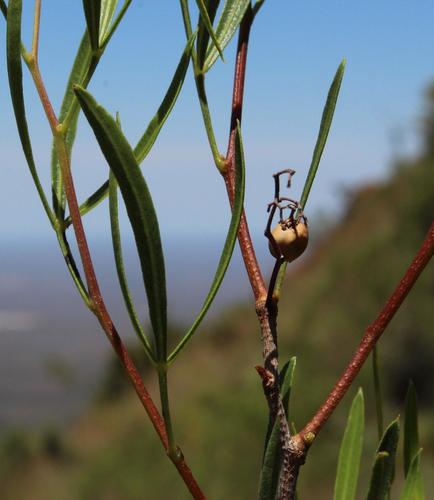
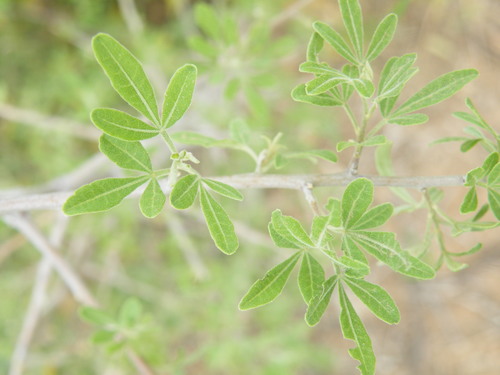
Rhus x pulvinata
Greene
Pulvinate sumac
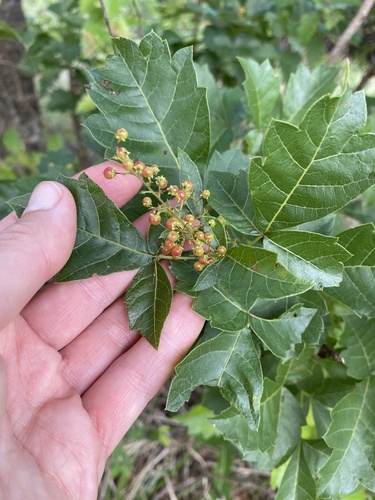
iNaturalist· cc-by-nc-sa
(c) davidenrique, some rights reserved (CC BY-NC-SA)
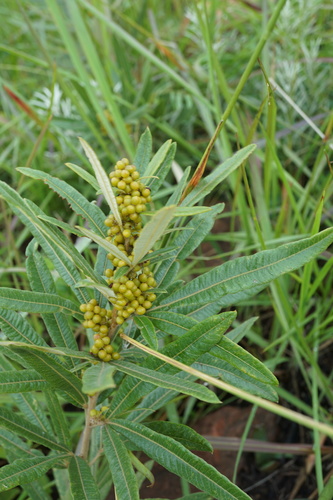
iNaturalist· cc-by-nc-sa
(c) davidenrique, some rights reserved (CC BY-NC-SA)
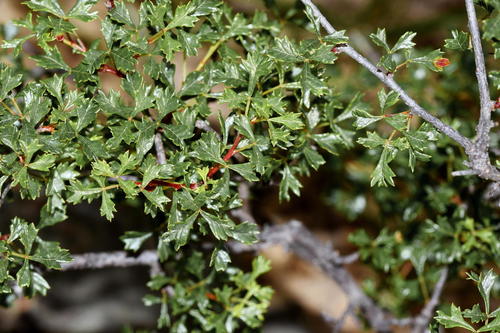
iNaturalist· cc-by-nc-sa
(c) davidenrique, some rights reserved (CC BY-NC-SA)
Summary
Deciduous shrub growing 3 m tall by 5 m wide. Flowers July to August; seeds ripen September to November. Dioecious requiring both male and female plants for seed production; pollinated by bees. Tolerates light sandy, medium loamy, and heavy clay soils with good drainage, including nutritionally poor soil. Grows in mildly acidic, neutral, basic, and very alkaline soils. Full sun required. Handles dry or moist conditions and strong winds but not maritime exposure. Hardy to UK zone 2. Noted for attracting wildlife.
Description
Deciduous shrub growing 3 m tall by 5 m wide. Flowers July to August; seeds ripen September to November. Dioecious requiring both male and female plants for seed production; pollinated by bees. Tolerates light sandy, medium loamy, and heavy clay soils with good drainage, including nutritionally poor soil. Grows in mildly acidic, neutral, basic, and very alkaline soils. Full sun required. Handles dry or moist conditions and strong winds but not maritime exposure. Hardy to UK zone 2. Noted for attracting wildlife.
Edible Uses
The following information refers to R. glabra but is almost certainly applicable to this species. The fruit can be eaten raw or cooked; it is small with very little flesh but is borne in fairly large panicles that make harvesting easy. Soaking the fruit for 10–30 minutes in hot or cold water makes a very refreshing lemonade-like drink. The mixture should not be boiled, as this releases tannic acids and makes the drink astringent. The root can be peeled and eaten raw, though this should be treated with some caution due to possible toxicity. Young shoots can also be peeled and eaten raw, again with some caution due to possible toxicity. An oil is also extracted from the seeds.
Medicinal Uses
The following information refers to R. glabra but is almost certainly applicable to this species. Smooth sumach was used by various native North American Indian tribes for a variety of complaints and is occasionally employed in modern herbalism for its astringent and antiseptic qualities. It can potentially cause skin irritation and is best used under the supervision of a qualified practitioner. A tea from the bark or root bark is alterative, antiseptic, astringent, galactogogue, haemostatic, rubefacient, and tonic, used to treat diarrhoea, fevers, general debility, sore mouths, rectal bleeding, and uterine prolapse; it is also used as a gargle for sore throats and applied externally for excessive vaginal discharge, burns, and skin eruptions. The powdered bark applied as a poultice to old ulcers acts as a good antiseptic. A root tea is an appetizer, astringent, diuretic, and emetic, used to treat colds, sore throats, painful urination, retention of urine, and dysentery; roots are harvested in autumn and dried for later use. A branch infusion (green or dried) has been used for TB, and a decoction of branches with seed heads treats itchy scalps and can be used as a bathing wash for frost-bitten limbs. The milky latex has been used as a salve on sores. A leaf tea has treated asthma, diarrhoea, and stomatosis; a leaf poultice has treated skin rashes; and leaves have been chewed for sore gums and rubbed on the lips for soreness. The berries are diuretic, emetic, emmenagogue, purgative, and refrigerant, used for late-onset diabetes, strangury, bowel complaints, febrile diseases, and dysmenorrhoea; they have also been chewed as a remedy for bed-wetting. The blossoms have been chewed for sore mouths, a blossom decoction used as a mouthwash for teething children, and a blossom infusion used as an eyewash for sore eyes.
Known Hazards
There are some suggestions that the sap of this species can cause a skin rash in susceptible people, but this has not been substantiated. See also notes in 'Cultivation Details'.
Distribution
It is a temperate plant.
Where It Grows
Australia,
Cultivation
Easily grown in a wide range of soils, from dry to moist, acidic or alkaline, including shallow chalk soils. Succeeds in a well-drained fertile soil in full sun. Tolerates poor sandy soils. A very hardy plant, when fully dormant it can tolerate temperatures down to at least -25°c. However, the young growth in spring can be damaged by late frosts. A naturally occurring hybrid, R. glabra x R. typhina. A very ornamental and variable plant, there are some named varieties. The cultivar 'Red Autumn Lace' (often erroneously labelled as R. glabra 'Laciniata') is a female form that fruits freely. A good bee plant. Single-stem plants are short-lived in cultivation, but if the plants are coppiced regularly and allowed to form thickets, then they will live longer and also be more ornamental with larger leaves. Any coppicing is best carried out in early spring. Plants have brittle branches and these can be broken off in strong winds. Plants are also susceptible to coral spot fungus. Plants in this genus are notably resistant to honey fungus. Many of the species in this genus are highly toxic and can also cause severe irritation to the skin of some people, whilst other species such as this one are not poisonous. It is relatively simple to distinguish which is which, the poisonous species have axillary panicles and smooth fruits whilst non-poisonous species have compound terminal panicles and fruits covered with acid crimson hairs. The toxic species are sometimes separated into their own genus, Toxicodendron, by some botanists. Dioecious. Male and female plants must be grown if seed is required.
Propagation
Seed is best sown in a cold frame as soon as it is ripe. Pre-soak for 24 hours in hot water (starting at 80–90°C and allowing it to cool) to leach out germination inhibitors — this soak water is drinkable and has a delicious lemon flavour. Stored seed also needs hot water treatment and can be sown in early spring in a cold frame. Prick seedlings into individual pots when large enough to handle and grow on in a greenhouse for their first winter, then plant out in late spring or early summer after the last expected frosts. Note that this is a hybrid species and will not breed true from seed. Cuttings of half-ripe wood, 10cm with a heel, can be taken in July/August in a frame. Root cuttings 4cm long taken in December should be potted up vertically in a greenhouse — a good percentage will take. Suckers can be taken in late autumn to winter.
Other Uses
The following information refers to R. glabra but is almost certainly applicable to this species. The leaves are rich in tannin, containing about 10–25%, and can be collected as they fall in autumn for use as a brown dye or as a mordant; the twigs and roots are also rich in tannin. A black dye is obtained from the fruit, and an orange or yellow dye from the root. An oil extracted from the seeds attains a tallow-like consistency on standing and is used to make candles, which burn brilliantly but emit a pungent smoke. The plant's extensive root system and reasonable wind tolerance make it useful for soil stabilisation and as a shelter screen, though branches can break in very strong winds. The wood is soft, light, and brittle.
Notes
There are about 200 Rhus species.
References (2)
- Hibbert, M., 2002, The Aussie Plant Finder 2002, Florilegium. p 252
- Plants for a Future database, The Field, Penpol, Lostwithiel, Cornwall, PL22 0NG, UK. http://www.scs.leeds.ac.uk/pfaf/