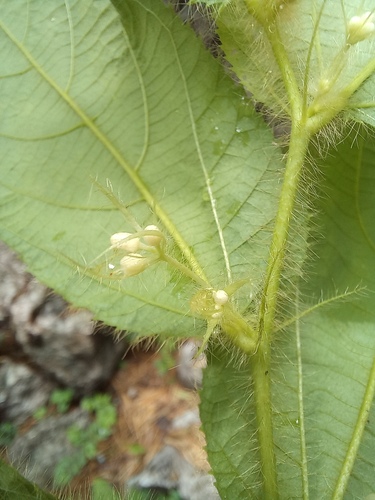
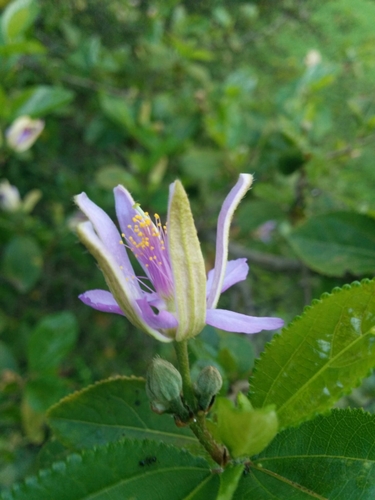
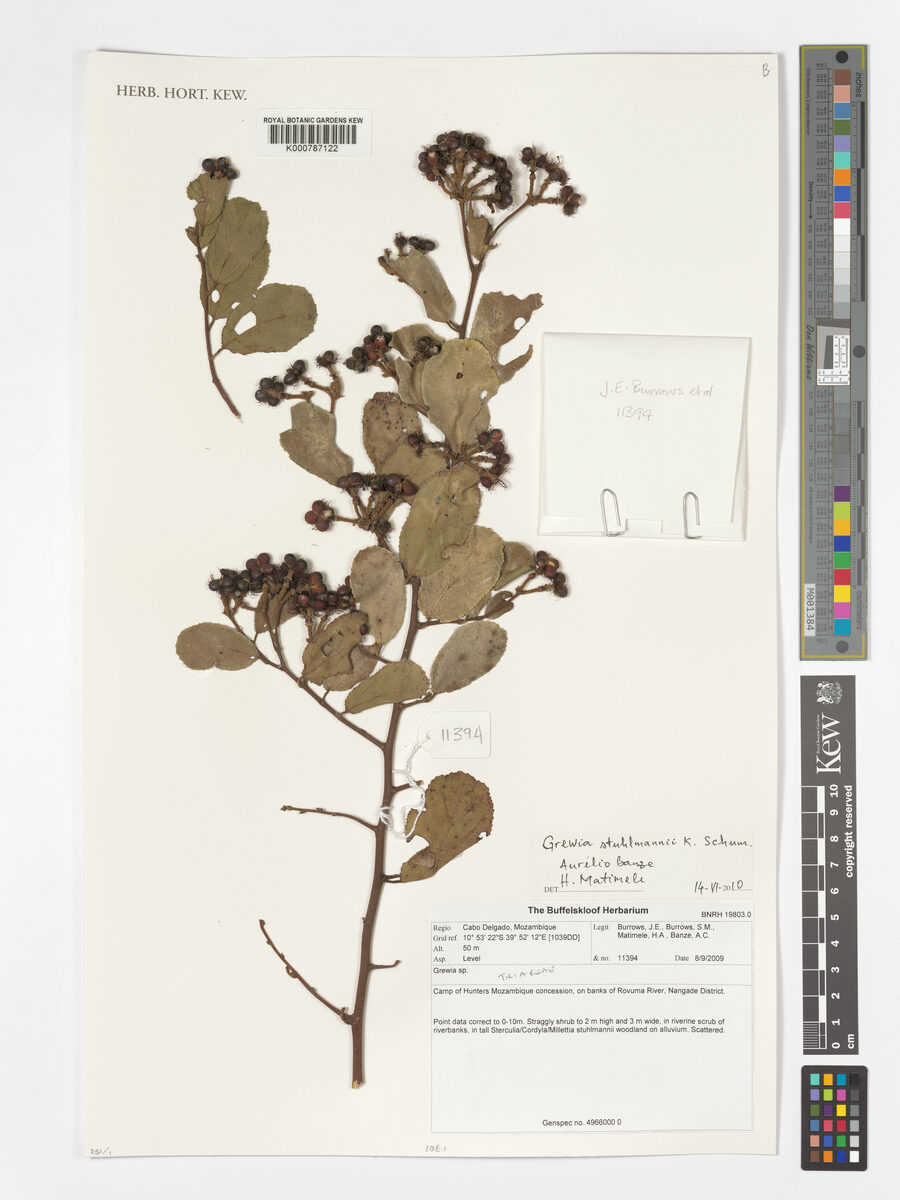
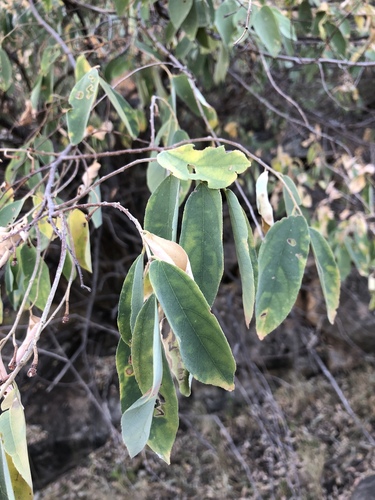
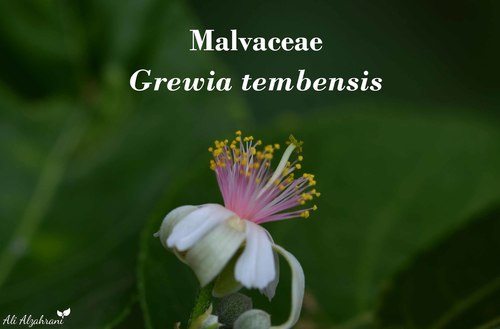
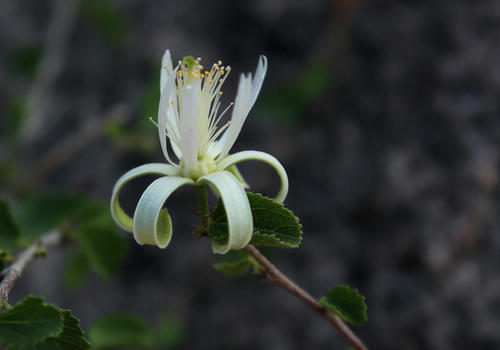
Grewia oppositifolia
Roxb. ex DC.
wikimedia· cc0
Wikimedia Commons
Summary
Source: WikipediaGrewia oppositifolia is a taxon synonym for two species of flowering plants: Grewia oppositifolia Buch.-Ham. ex DC. – synonym of Grewia emarginata Wight & Arn. Grewia oppositifolia Buch.-Ham. ex D.Don – synonym of Grewia optiva J.R.Drumm ex Burret
Description
A deciduous shrub hardy to UK zone 9. Hermaphroditic species accommodating light sandy, medium loamy, and heavy clay soils across mildly acidic to basic pH. Grows in semi-shade or full sun and prefers moist soil conditions.
Edible Uses
The fruit can be eaten raw or cooked and has a pleasant acid taste. The fruit is approximately the size of a pea.
Traditional Uses
The ripe fruit are eaten raw or cooked.
This uses section is brief — help expand it
Medicinal Uses
None known.
Distribution
It is a tropical and subtropical plant. It grows in the foothills of the Himalayas up to 1,800 m above sea level. It can be on open rocky slopes.
Where It Grows
Asia, Himalayas, India, Nepal, Pakistan,
Cultivation
Succeeds in most soils. This species is not very hardy in Britain, preferring hotter summers than are usually experienced here. Plants are often cultivated in the Himalayas.
Propagation
Sow seed in late winter in a cold frame. Prick seedlings out into individual pots when large enough to handle and grow on in the greenhouse for at least their first winter. Plant out into permanent positions in late spring or early summer, after the last expected frosts. Can also be propagated by layering.
Other Uses
A fibre obtained from the bark is used in papermaking and rope making, though it is not very durable; the fibres are 1–1.6mm long. The wood is tough and elastic but has a very unpleasant odour when first cut, and is used for making oar shafts, tool handles, and similar items.
Notes
Also put in the family Tiliaceae.
Synonyms
Also Known As
Bhimal, Bihul
References (5)
- Agarwal, R. & Chandra, V., 2019, Diversity of wild edible plants in the Mandal-Chopta forest, Uttarakhand. Journal of Medicinal Plants Studies 2019; 7(1): 89-92
- Fern, K., 2012, Tropical Species Database http://theferns.info/tropical/
- Manandhar, N. P., 2002, Plants and People of Nepal. Timber Press.
- Masoodi, H. U. R. & Sundriyal, R. C., 2020, Richness of non-timber forest products in Himalayan communities—diversity, distribution, use pattern and conservation status. Journal of Ethnobiology and Ethnomedicine 16:56
- Radha, B., et al, 2013, Wild Edible Plant Resources of the Lohba Range of Kedarnath Forest Division (KFD), Garhwal Himalaya, India. Int. Res J. Biological Sci. Vol. 2 (11), 65-73