Brachychiton gregorii
F. Muell.
Desert kurrajong, Western kurrajong
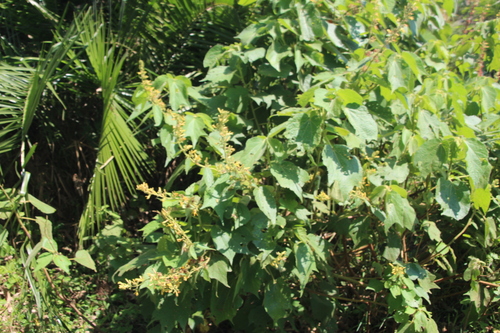
iNaturalist· cc-by-nc
(c) eric_vanderduys, some rights reserved (CC BY-NC)
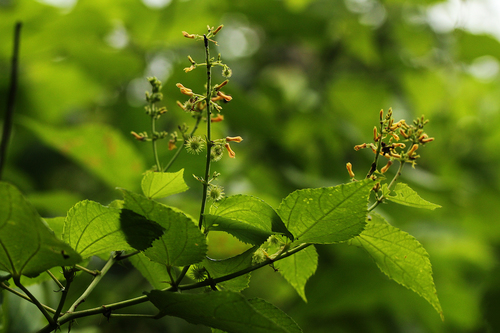
iNaturalist· cc-by-nc
(c) Loxley Fedec, some rights reserved (CC BY-NC), uploaded by Loxley Fedec
iNaturalist· cc-by-nc
(c) Loxley Fedec, some rights reserved (CC BY-NC), uploaded by Loxley Fedec
Summary
Source: WikipediaBrachychiton gregorii, commonly known as the desert kurrajong, is a small tree of the genus Brachychiton found in northern and western Australia. It was originally classified in the family Sterculiaceae, which is now within Malvaceae.
Description
A small deciduous tree. It grows 4-8 m high. It spreads 4-6 m wide. The branches are spreading. The leaves are bright green. They are 8-14 cm long and often with 3 long narrow leaflets. The flowers are bell shaped and creamy-yellow. The flowers are 2 cm across. The fruit follicles are attractive. They are 4-5 cm long and leathery. They have a hooked point.
Edible Uses
The tree is sold commercially in seed form or as a seedling. It is suitable for arid areas as it is drought resistant once established; it is moderately frost tolerant, and can grow in full sun or part shade in well-drained soils. It forms a large tuber from a young age and can be cultivated as a succulent bonsai.
Distribution
It suits warm temperate and arid regions. It is drought resistant. It can stand heavy frosts. It needs well drained soils. It can grow in arid places. It suits hardiness zones 9-10.
Where It Grows
Asia, Australia*, India,
Cultivation
Plants are grown from seed.
Notes
There are about 30 Brachychiton species. Most are in Australia. It is a good shade tree in arid regions. Also put in the family Sterculiaceae.
Nutrition
| Part | Moisture | kJ | kcal | Protein | Vit A | Vit C | Iron | Zinc |
|---|---|---|---|---|---|---|---|---|
| Seed | 4.8 | 1525 | 366 | 20.4 | — | — | 6.6 | 2 |
| Root | 81.1 | 177 | 42 | 0.5 | — | — | 5 | 0.4 |
Synonyms
Also Known As
Ngalta
References (21)
- Bindon, P., 1996, Useful Bush Plants. Western Australian Museum. p 57.
- Bodkin, F., 1991, Encyclopedia Botanica. Cornstalk publishing, p 164
- Boomsma, C.D., 1972, Native Tree of South Australia. Woods & Forests Department South Australia, Bulletin No.19. p 58
- Cancilla, D., 2018, Ethnobotanical and Ethnozoological Values Desktop Assessment - Eliwana Project. p 41
- Cherikoff V. & Isaacs, J., The Bush Food Handbook. How to gather, grow, process and cook Australian Wild Foods. Ti Tree Press, Australia p 188
Show all 21 references Hide references
- Elliot, W.R., & Jones, D.L., 1982, Encyclopedia of Australian Plants suitable for cultivation. Vol 2. Lothian. p 366
- Etherington, K., & Imwold, D., (Eds), 2001, Botanica's Trees & Shrubs. The illustrated A-Z of over 8500 trees and shrubs. Random House, Australia. p 139
- Hall, N. et al, 1972, The Use of Trees and Shrubs in the Dry Country of Australia, AGPS, Canberra. p 355
- Hardwick, G., 2001, Economically Useful Plants for Northern Australia: Master Species List. Crusader eBooks.
- Hibbert, M., 2002, The Aussie Plant Finder 2002, Florilegium. p 45
- Krishen P., 2006, Trees of Delhi, A Field Guide. DK Books. p 168
- Latz, P., 1996, Bushfires and Bushtucker. IAD. p 133.
- Latz, P & Wightman, G., 1995, Desert Bush Tucker Identikit. Common Native Food Plants of Central Australia. Parks & Wild Commission Northern territory. p 12
- Lazarides, M. & Hince, B., 1993, Handbook of Economic Plants of Australia, CSIRO. p 36
- Lord, E.E., & Willis, J.H., 1999, Shrubs and Trees for Australian gardens. Lothian. p 13
- Low, T., 1991, Wild Food Plants of Australia. Australian Nature FieldGuide, Angus & Robertson. p 183
- Low, T., 1992, Bush Tucker. Australia’s Wild Food Harvest. Angus & Robertson. p 87
- Molyneux, B & Forrester, S., 1997, The Austraflora A-Z of Australian Plants. Reed. p 57
- Paczkowska, G . & Chapman, A.R., 2000, The Western Australian Flora. A Descriptive Catalogue. Western Australian Herbarium. p 538
- RIRDC, 2010, New Root Vegetables fo the Native Food Industry, Australian Government RIRDC Publication 9/161
- Urban, A., 1990, Wildflowers of Inland Australia. Portside editions. p 129