Brachychiton discolor
F. Muell.
White kurrajong, Queensland lacebark
iNaturalist· cc-by
(c) ian_mcallan, some rights reserved (CC BY)
iNaturalist· cc-by-sa
(c) Greg Tasney, some rights reserved (CC BY-SA), uploaded by Greg Tasney
iNaturalist· cc-by
(c) Lucas Christofides, some rights reserved (CC BY), uploaded by Lucas Christofides
Summary
Source: WikipediaBrachychiton discolor is a rainforest tree of eastern Australia. It grows in drier rainforest areas. Scattered from Paterson, New South Wales (32° S) to Mackay, Queensland (21° S). There is also an isolated community of these trees at Cape York Peninsula. Common names include lacebark tree, lace kurrajong, pink kurrajong, scrub bottle tree, white kurrajong, hat tree and sycamore.
Description
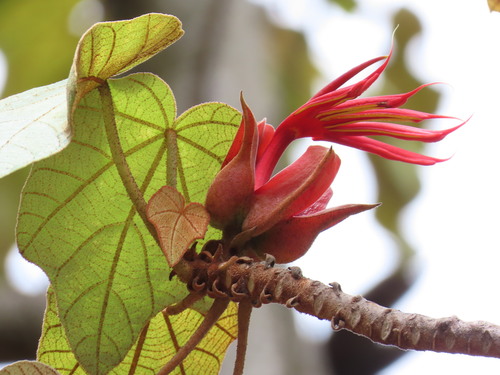
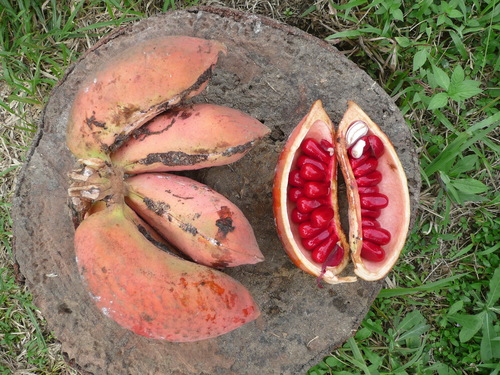
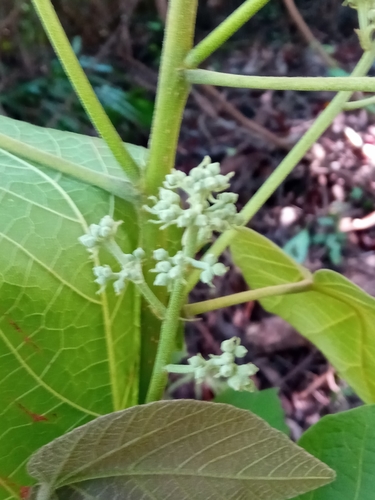
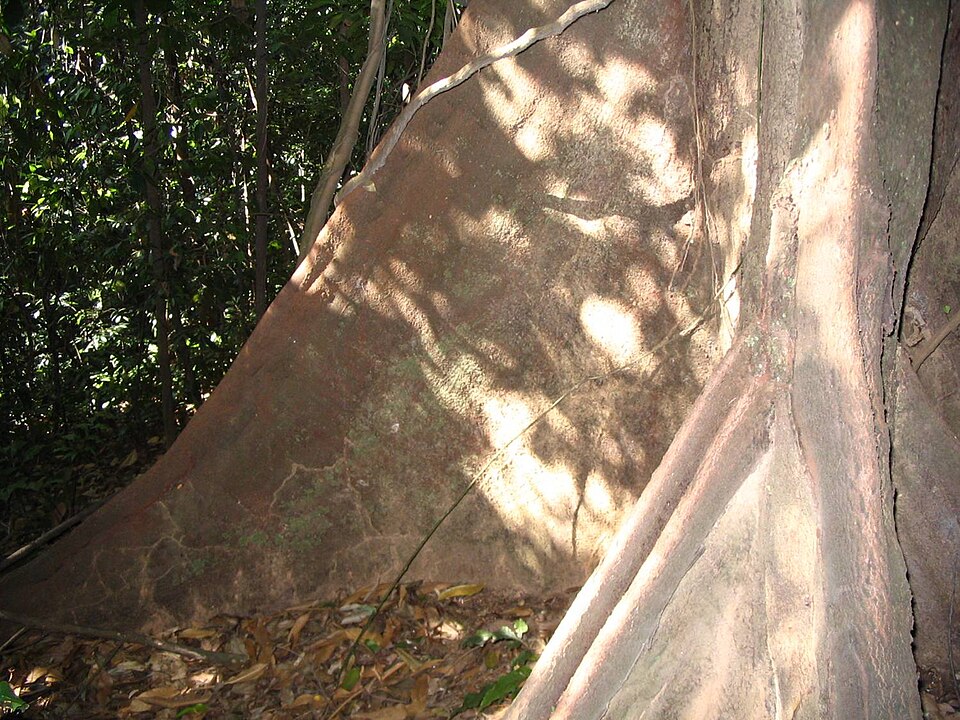
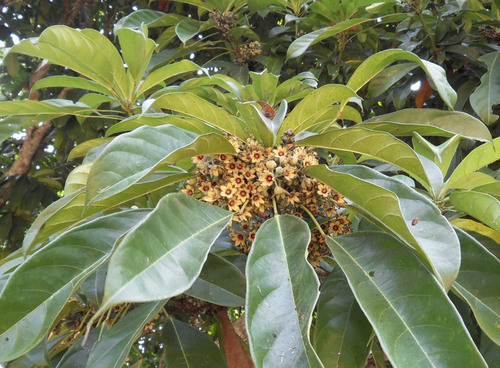
A medium sized tree. It grows 10-24 m high. It can spread 6-8 m wide. It has a stout trunk. The bark is greenish. The young branches are hairy. It loses its leaves for a short time. The leaves have 3-7 lobes and are dull green. They are hairy and 10-20 cm long by 10-20 cm wide. The flowers are dull pink or red. They are bell shaped. They are 3 cm long. They occur in small clusters. The fruit are boat shaped follicles. They are brown and woody and 7-12 cm long.
Edible Uses
Brachychiton discolor is widely planted as an ornamental tree. The wood is used to make shields by Indigenous Australians. The roasted seeds are edible to humans.
Traditional Uses
The seeds are roasted and eaten.
This uses section is brief — help expand it
Known Hazards
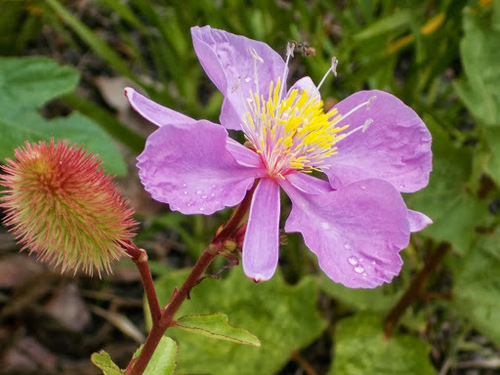
The seed capsule contains irritant, glochid-like, hairs and should only be handled when wearing gloves.
Distribution
A subtropical plant. It is native to E and N Australia. They can grow in a range of soils and climates. It needs well drained soil. It can grow in full sunlight. It can stand light frosts. It grows up to 1,500 m above sea level. Melbourne Botanical gardens. It suits hardiness zones 9-11.
Where It Grows
Africa, Asia, Australia*, East Africa, Indonesia, Mozambique, SE Asia, Tasmania, Zimbabwe,
Cultivation
Plants can be grown from seed or grafting. Seed remain viable for several years.
Propagation
Seed - it stores well and germinates easily, especially if pre-soaked for 12 - 24 hours in warm water. The seed stores well at room temperatures - 15 year old seed had a 54% germination rate.
Other Uses
A strong and valuable fibre is obtained from the inner bark. The white wood is soft when first cut, but becomes hard upon drying. It is not durable, but splits easily. It makes good shingles.
Production
Plants are slow growing.
Notes
There are about 30 Brachychiton species. Most are in Australia. Also put in the family Sterculiaceae.