Brachychiton bidwillii
Hook.
Rusty kurrajong, Little kurrajong, Dwarf kurrajong
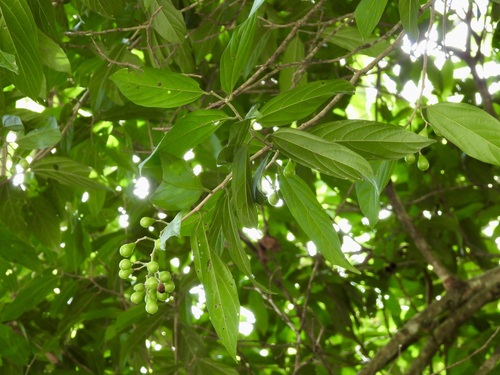
iNaturalist· cc-by
(c) Tatiana Gerus, some rights reserved (CC BY)
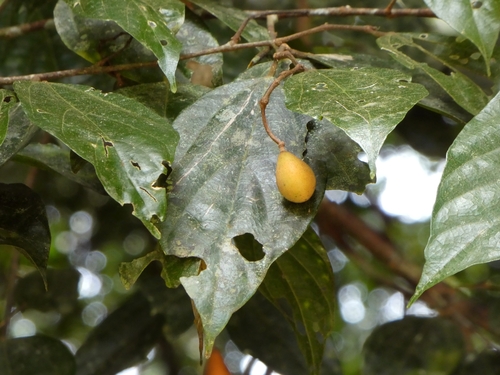
iNaturalist· cc-by
(c) Tatiana Gerus, some rights reserved (CC BY)
iNaturalist· cc-by-nc
(c) Alan McArthur, some rights reserved (CC BY-NC)
Summary
Source: WikipediaBrachychiton bidwillii, commonly known as the dwarf kurrajong or little kurrajong, is a small tree of the genus Brachychiton found in tropical areas of eastern Australia, particularly Queensland. It was originally classified in the family Sterculiaceae, which is now within Malvaceae.
Description
A tall shrub. It grows 3-7 m high and spreads 2-5 m wide. The young shoots are softly hairy. The leaves are 10-15 cm across. They are deeply 3-5 lobed. They are green with soft hairs on both surfaces. The flowers are 4-5 cm across. They are pink to red. They are like tubes. They occur in compact clusters. The seed pods are 7-12 cm long and hairy. They have short points.
Edible Uses
The seeds are eaten raw and roasted.
Traditional Uses
The seeds are eaten raw and roasted.
This uses section is brief — help expand it
Distribution
A tropical plant. It is native to NE Australia. It suits tropical and subtropical regions. It needs well drained soils and a sunny position. It is drought resistant. It is sensitive to frost. It suits hardiness zones 10-12.
Where It Grows
Australia*, North America, USA,
Cultivation
Plants are grown from seed. Seeds take 4-8 weeks to germinate. Seeds can be stored for several months. They can also be grown by cuttings.
Notes
There are about 30 Brachychiton species. Most are in Australia. Also put in the family Sterculiaceae.
Synonyms
References (12)
- Barwick, M., 2004, Tropical and Subtropical Trees. A Worldwide Encyclopedic Guide. Thames and Hudson p 57
- Bodkin, F., 1991, Encyclopedia Botanica. Cornstalk publishing, p 163
- Bot. Mag. 85: t. 5133. 1859
- Cundall, P., (ed.), 2004, Gardening Australia: flora: the gardener's bible. ABC Books. p 249
- Etherington, K., & Imwold, D., (Eds), 2001, Botanica's Trees & Shrubs. The illustrated A-Z of over 8500 trees and shrubs. Random House, Australia. p 139
Show all 12 references Hide references
- Greig, D., 1996, Flowering Natives for Home Gardens. Angus & Robertson. p 85
- Hibbert, M., 2002, The Aussie Plant Finder 2002, Florilegium. p 45
- Leiper, G & Houser, J., Mutooroo. Plant Use by Australian Aboriginal People. Assembly press, Queensland.
- Lord, E.E., & Willis, J.H., 1999, Shrubs and Trees for Australian gardens. Lothian. p 13
- Melzer, R. & Plumb, J., 2011, Plants of Capricornia. Belgamba, Rockhampton. p 340
- Nicholson, N & H., 1996, Australian Rainforest Plants 2, Terania Rainforest Publishing. NSW. p 13
- Williams, J.B., Harden, G.J., and McDonald, W.J.F., 1984, Trees and shrubs in rainforests of New South Wales and Southern Queensland. Univ. of New England, Armidale. p 62