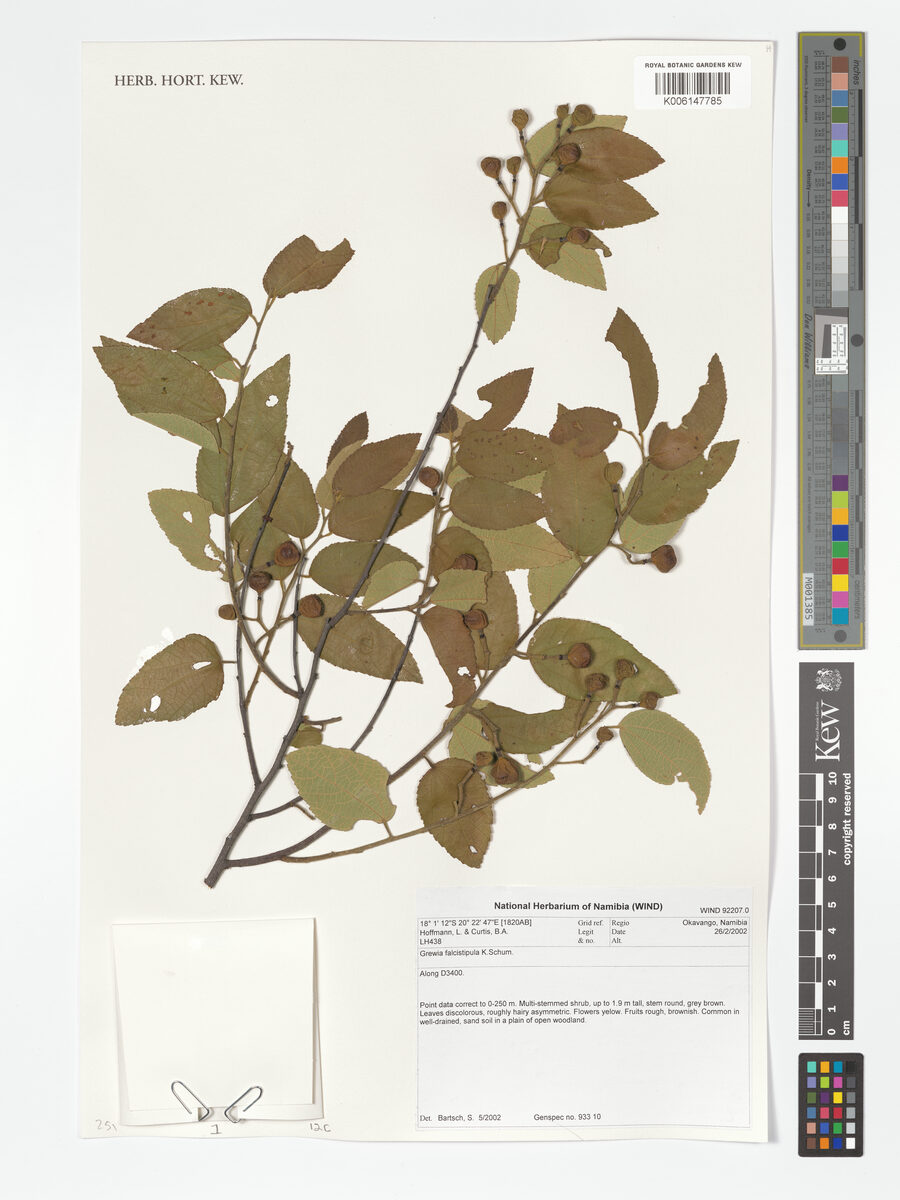
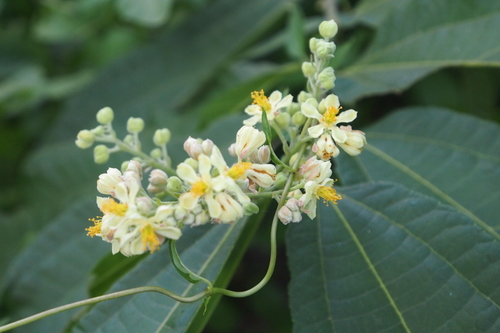
Brachychiton garrawayae
(Bailey) G. P. Guymer
iNaturalist· cc-by-nc
(c) overlander (Gerald Krygsman), some rights reserved (CC BY-NC), uploaded by overlander (Gerald Krygsman)
iNaturalist· cc-by-nc
(c) overlander (Gerald Krygsman), some rights reserved (CC BY-NC)
Summary
Source: WikipediaBrachychiton garrawayae is a small tree in the genus Brachychiton found on the Cape York peninsula. The species was first described by Frederick Manson Bailey in 1899 as Sterculia garrawayae, but was transferred to the genus, Brachychiton, in 1989 by Gordon Guymer.
Description
A tree. It grows 12 m high. It loses its leaves during the year. The leaves are simple and have 3-5 lobes. They are 7-13 cm long by 7-16 cm wide. There are short hairs on top and velvety hairs underneath. The leaf stalks are 2-9 cm long. The flowers are in groups from the branches. There are no petals but 5 sepals. They are fused and pink with a green base and red inside. They are 18-45 mm long. The fruit is a brown follicle. It is 35-65 mm long by 25-30 mm wide. It is densely covered with hairs. There are 9-23 seeds. These are brown with a yellow aril. The seeds are 7-11 mm long.
Edible Uses
The fruit is eaten.
Distribution
A tropical plant. It grows in monsoon and vine forest. They grow in far NE Queensland from sea level to 230 m altitude.
Where It Grows
Australia*,
Cultivation
Plants are grown from seeds.
Notes
There are about 30 Brachychiton species. Most are in Australia. Also put in the family Sterculiaceae.
Synonyms
References (2)
- Cooper, W. and Cooper, W., 2004, Fruits of the Australian Tropical Rainforest. Nokomis Editions, Victoria, Australia. p 529
- IRVINE