Clusia hilariana
Schltdl.
Clusia
iNaturalist· cc-by
(c) Diogo Luiz, some rights reserved (CC BY), uploaded by Diogo Luiz
iNaturalist· cc-by-nc
(c) Flávio Mendes, some rights reserved (CC BY-NC), uploaded by Flávio Mendes
iNaturalist· cc-by-nc
(c) Leandro Cardoso, some rights reserved (CC BY-NC), uploaded by Leandro Cardoso
Description
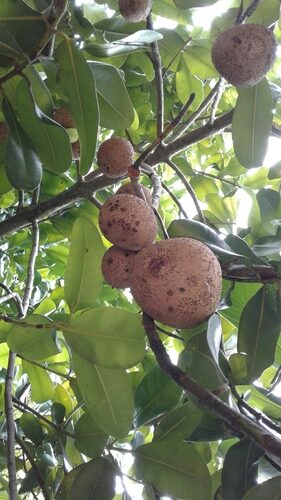
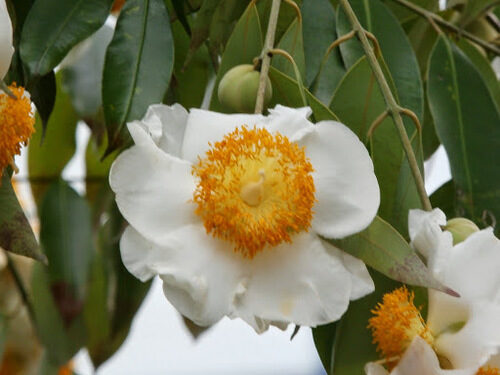
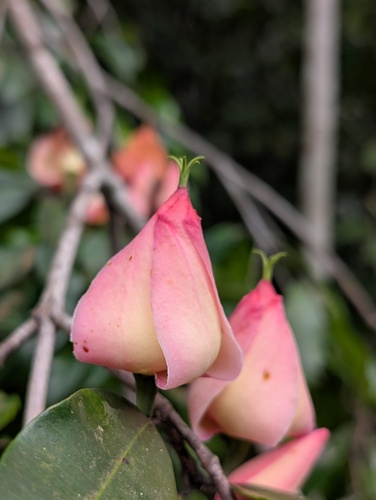
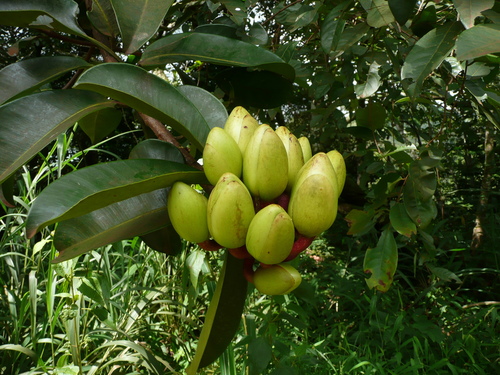
An small evergreen tree. The crown is spreading. It grows 4-8 m tall. The trunk is crooked and 20-30 cm across. Male and female flowers are on separate plants. The fruit is a capsule that is 5 cm across and is round. It contains several seeds and an orange-red aril or fleshy layer around the seeds.
Edible Uses
Fruit - raw. The fruit is a globose capsule around 5cm in diameter containing several seeds surrounded by an orange-red edible aril.
Traditional Uses
The fruit are eaten raw.
This uses section is brief — help expand it
Medicinal Uses
A gum obtained from the plant is drastic and vulnerary. The bark is astringent, it is used in the treatment of diarrhoea.
Distribution
It is a tropical plant. It grows in coastal rainforest on sandy soils.
Where It Grows
Asia, Brazil*, Indonesia, SE Asia, South America,
Cultivation
Plants can be grown from fresh seeds. Seedlings are best in a shady position. Seeds germinate in 15-20 days.
Propagation
Seed - best sown as soon as it is ripe in a partially shaded position in a nursery seedbed. A germination rate of virtually 100% can be expected, with the seed sprouting within 15 - 20 days.
Other Uses
The wood is coarse-textured, irregular-grained, heavy, with a good resistance to wood-eating organisms, It is generally too small to be used for anything other than as a fuel and to make charcoal.
Production
Young plants grow quickly.
Synonyms
Also Known As
Klusia
References (2)
- Fern, K., 2012, Tropical Species Database http://theferns.info/tropical/
- Sukarya, D. G., (Ed.) 2013, 3,500 Plant Species of the Botanic Gardens of Indonesia. LIPI p 614