Garcinia riparia
A.C.Smith
Mangosteen
gbif· cc0
President and Fellows of Harvard College
Description
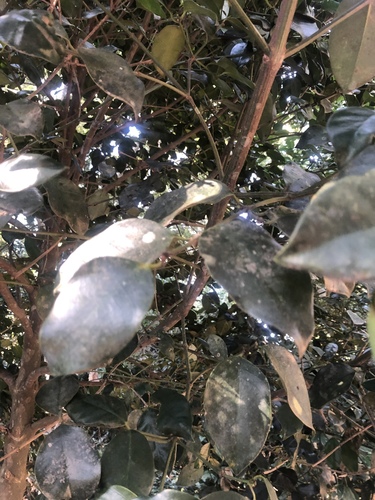
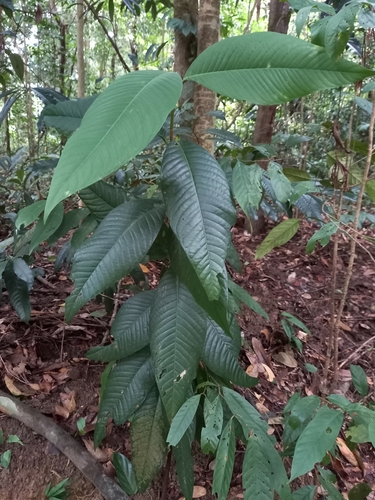
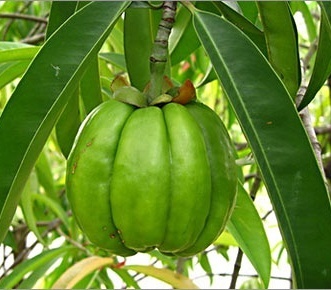
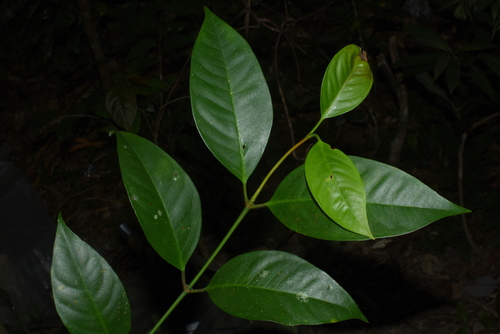
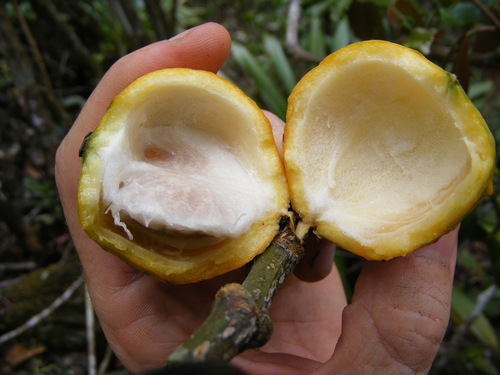
A tall shrub or small tree. It grows 4-8 m high and spreads 1-3 m wide. When trees are damaged they produce a clear exudate. The leaves are 7-9 cm long and 2-3 cm wide. They are narrowly oval and dark green. They are thick textured and the veins are prominent underneath the leaf. The tips of the leaves are drawn out to a fine point. The flower cluster is produced in the axils of leaves and these occur as dense clusters. The flowers are about 0.6 cm across and white. The fruit are 2.5 cm across and yellowish. There are 1-5 seeds inside.
Edible Uses
The fruit are eaten.
Traditional Uses
The fruit are eaten.
This uses section is brief — help expand it
Distribution
A tropical plant. It occurs in rainforests. It grows near rivers. In tropical Queensland it grows from sea level to 100 m altitude.
Where It Grows
Australia*, Pacific, Papua New Guinea, PNG,
Cultivation
Plants are grown from seed which should be sown fresh.
Production
In Australia, the fruit are mature in December to January. Flowering occurs in July.
Notes
There are about 300 Garcinia species.
References (3)
- Cooper W & Cooper W T, 1994, Fruits of the Rain Forest. RD Press p 146
- Elliot, W.R., & Jones, D.L., 1992, Encyclopedia of Australian Plants suitable for cultivation. Vol 4. Lothian. p 331
- World Checklist of Useful Plant Species 2020. Royal Botanic Gardens, Kew