Garcinia schomburgkiana
Pierre
Madan, Madahn
iNaturalist· cc-by-nc
(c) Kuaytiew, some rights reserved (CC BY-NC), uploaded by Kuaytiew
iNaturalist· cc-by-nc
(c) dendrology_thailand2, some rights reserved (CC BY-NC)
Description
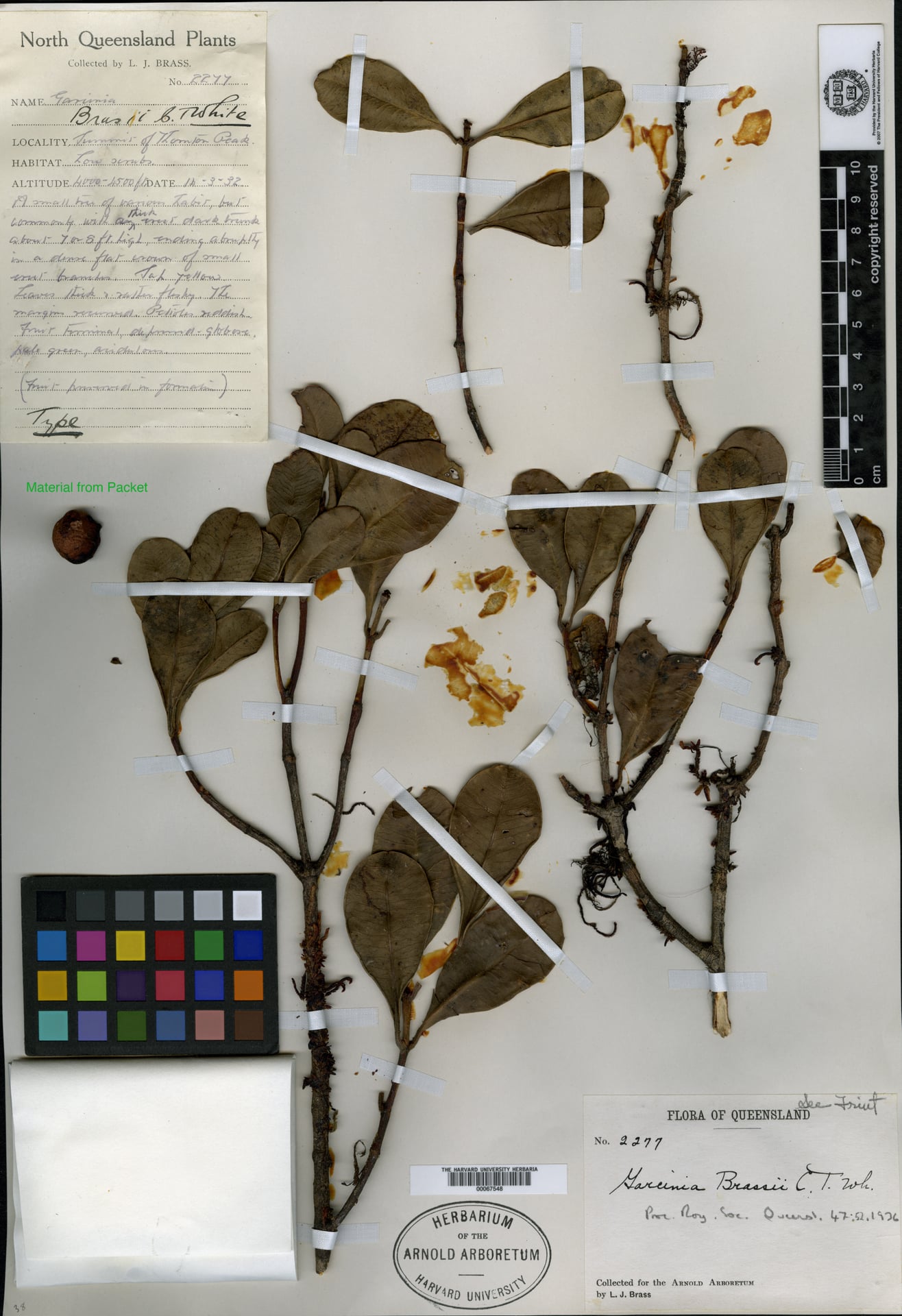
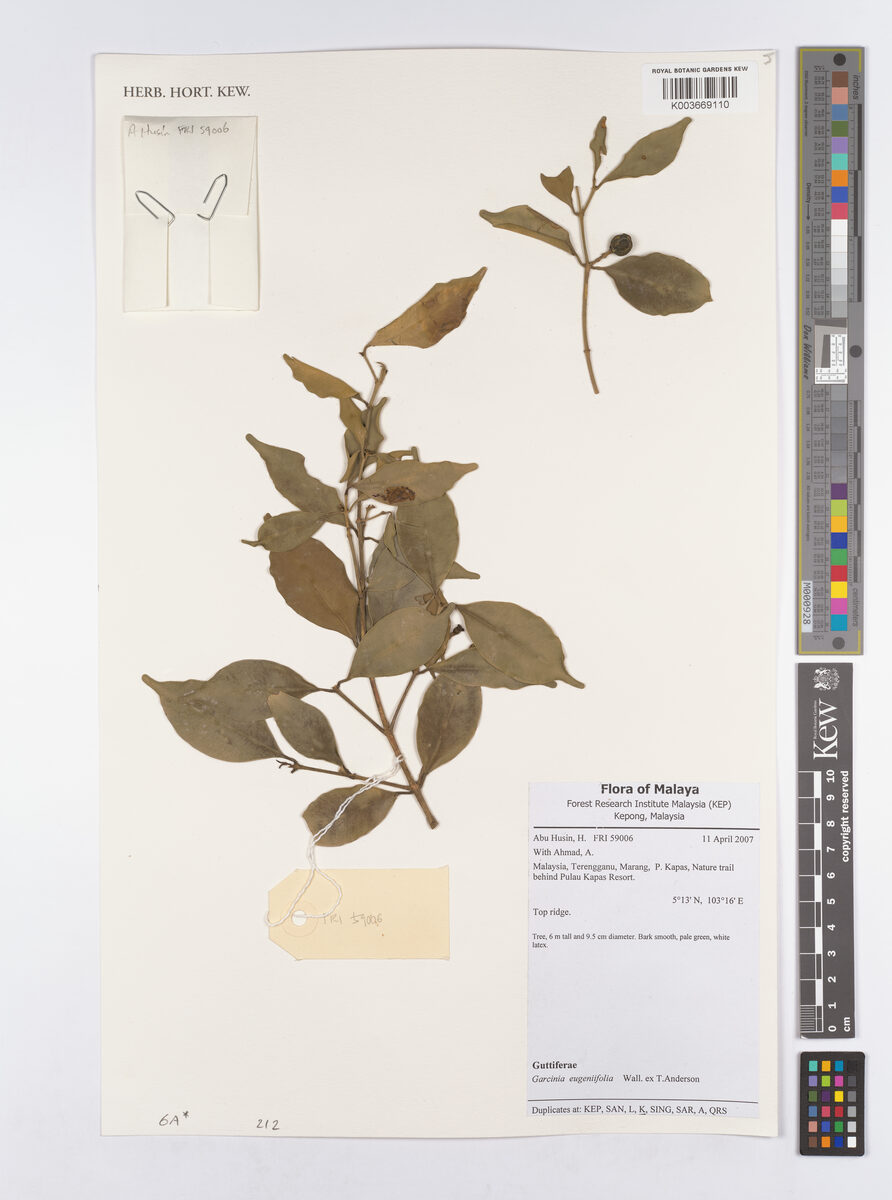
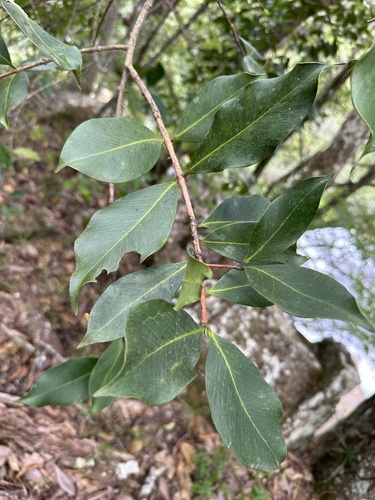
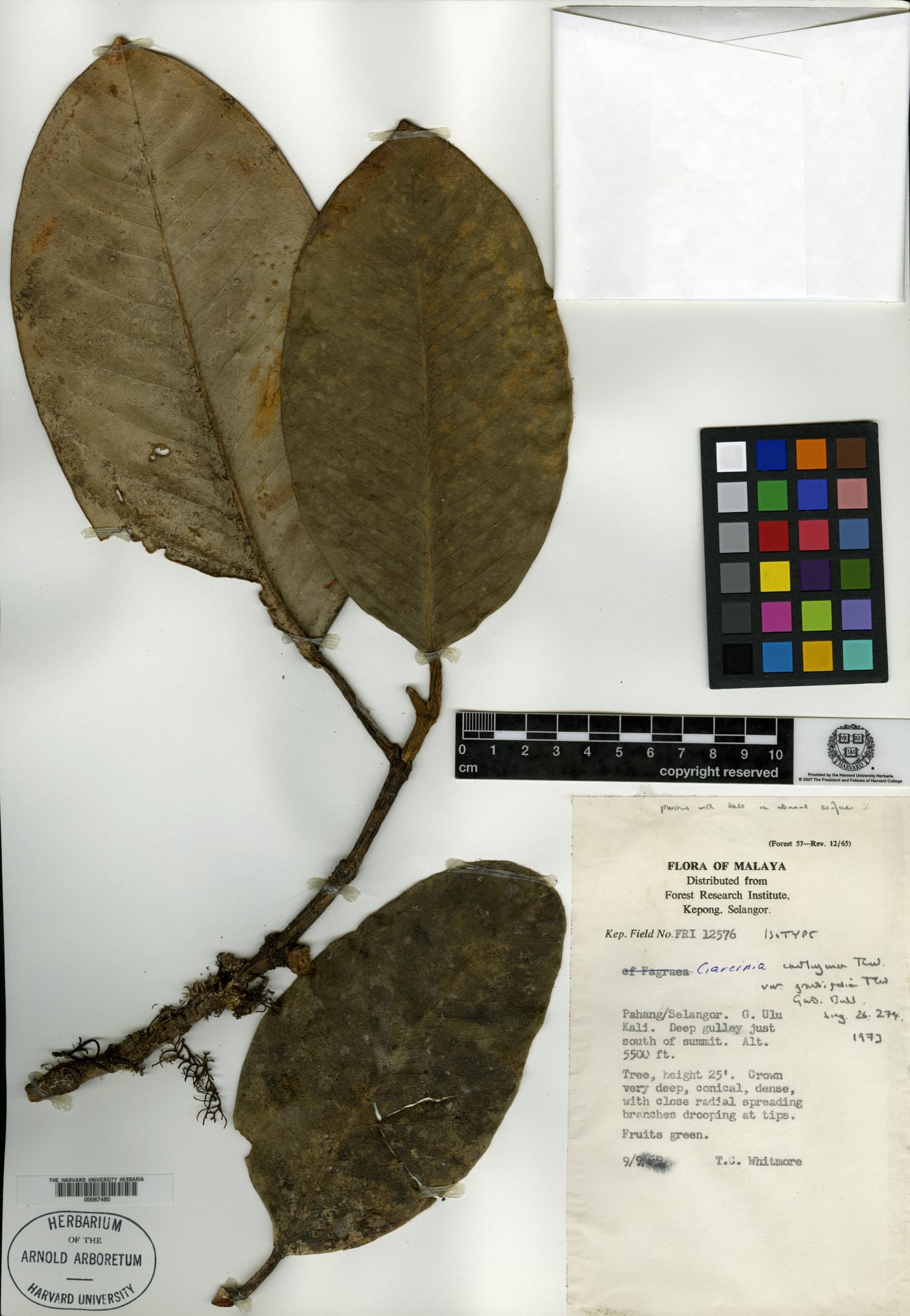
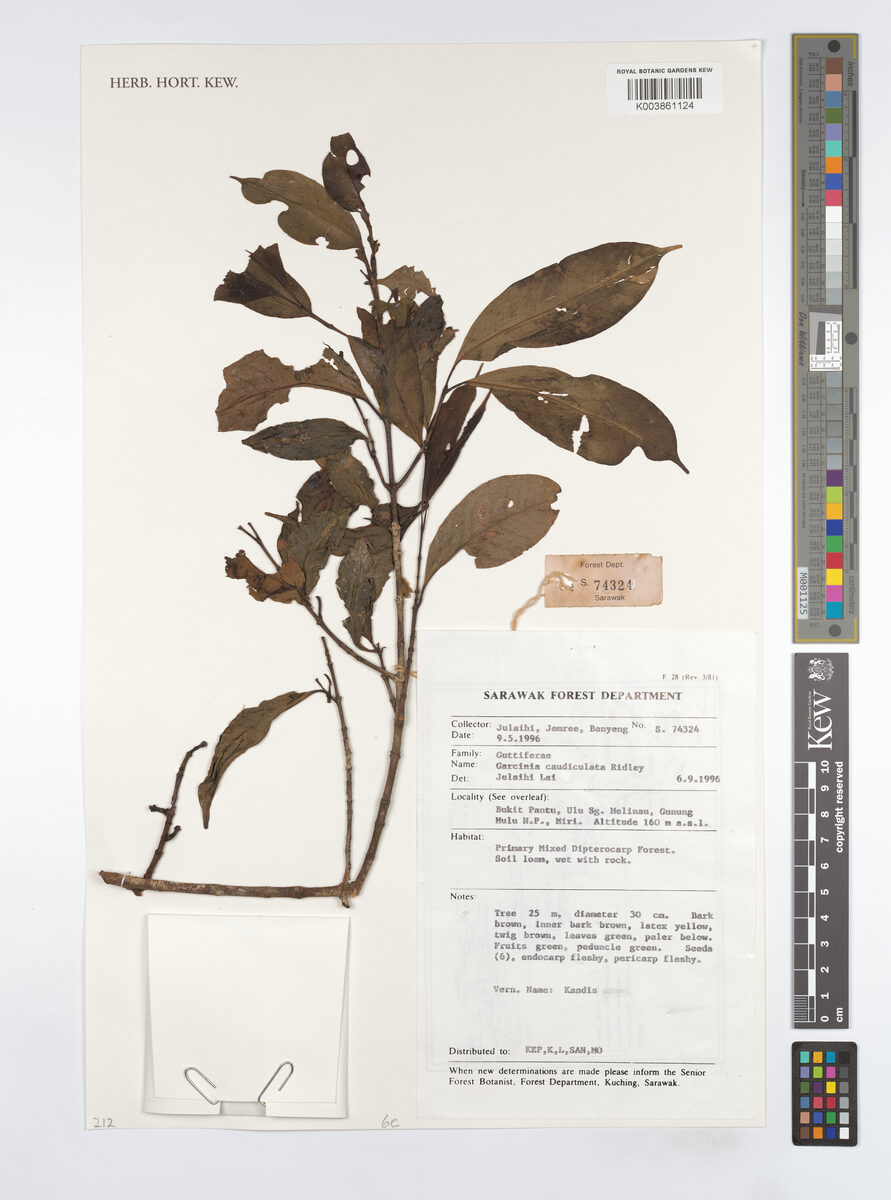
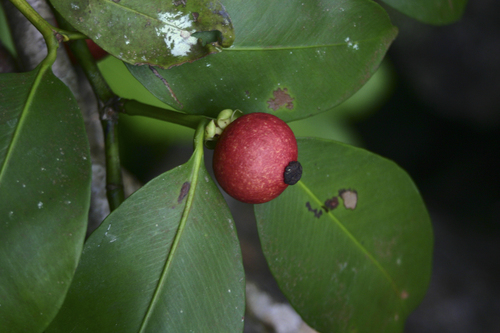
A medium sized tree. The leaves are arranged opposite. It has leathery leaves. They are oval to sword shaped and 11 cm long by 3.5 cm wide. They are dark green and shiny on top and light green and dull underneath. Flowers of one sex and both sexes occur on the same plant. The flowers are small and cream coloured. They occur along the branches. The fruit are green and glossy. They are egg shaped and 4 cm wide. They are green to yellow and sour.
Edible Uses
The sour fruit is eaten raw, pickled, or dried. Young leaves are used as a fresh vegetable mixed with other vegetables or boiled with pork dishes.
Traditional Uses
The sour fruit is eaten raw or pickled. They can be dried. The young leaves are used as a fresh vegetable mixed with other vegetables. They are boiled with pork dishes.
Medicinal Uses
The leaves, root and fruit are used by local people as an expectorant, treatment of coughs, improvement of menstrual blood quality, treatment of diabetes and as a laxative. The fruit is demulcent.
Distribution
A tropical plant.
Where It Grows
Asia, Cambodia, Indochina, SE Asia, Thailand, Vietnam,
Cultivation
A plant of the humid tropics. Likes a wet soil.
Propagation
Seed - easily germinated. We have no specific information on this species, but the seed of most members of the genus can be slow to germinate, even if sown fresh, often taking 6 months or more. Air layering.
Production
In NE Thailand fruit are available June to July.
Notes
There are about 300 Garcinia species.
Also Known As
Bua dong, Bua song, Sandan prey, Tro-meng, Tro-moung
References (6)
- Cengel, D. J. & Dany. C., (Eds), 2016, Integrating Forest Biodiversity Resource Management and Sustainable Community Livelihood Development in the Preah Vihear Protected Forest. International Tropical Timber Organization p 110
- Jacquat, C., 1990, Plants from the Markets of Thailand. D.K. Book House p 58
- McMakin, P.D., 2000, Flowering Plants of Thailand. A Field Guide. White Lotus. p 106
- Suksri, S., et al, 2005, Ethnobotany in Bung Khong Long Non-Hunting Area, Northeast Thailand. Kasetsart J., (Nat. Sci) 39: 519-533
- Tanaka, Y. & Van Ke, N., 2007, Edible Wild Plants of Vietnam: The bountiful garden. Orchid books. p 66
Show all 6 references Hide references
- Thorng, R., et al, 2015, Roles of Wild Food Plants in Ethnic Group Communities in Mondulkiri Province, Northeastern Cambodia. Journal of Mekong Societies Vol.11 No.2 May-August 2015 pp. 1-17