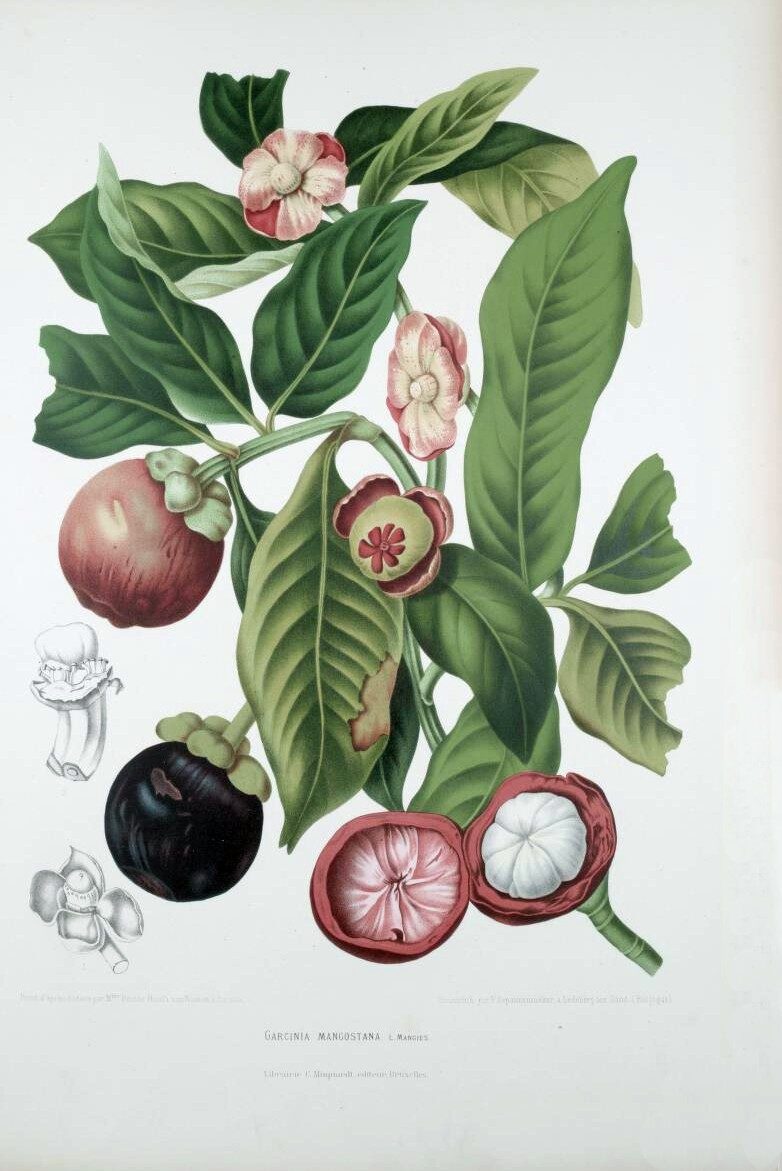
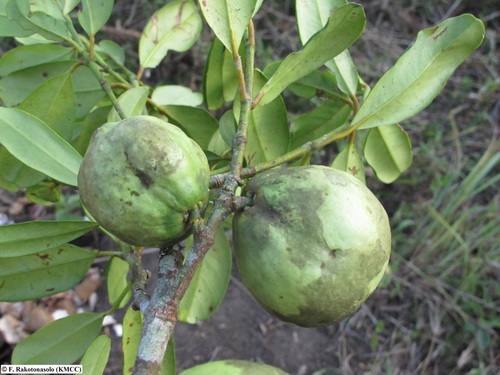
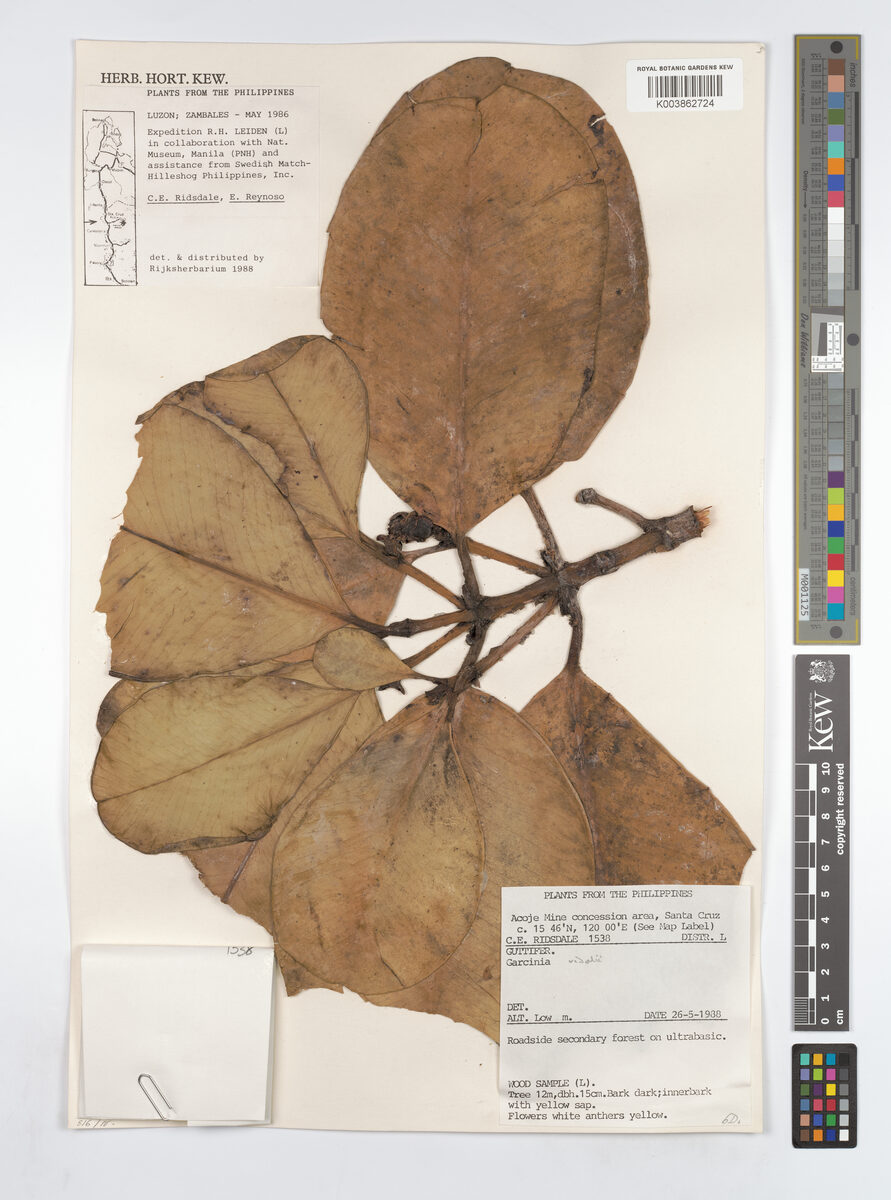
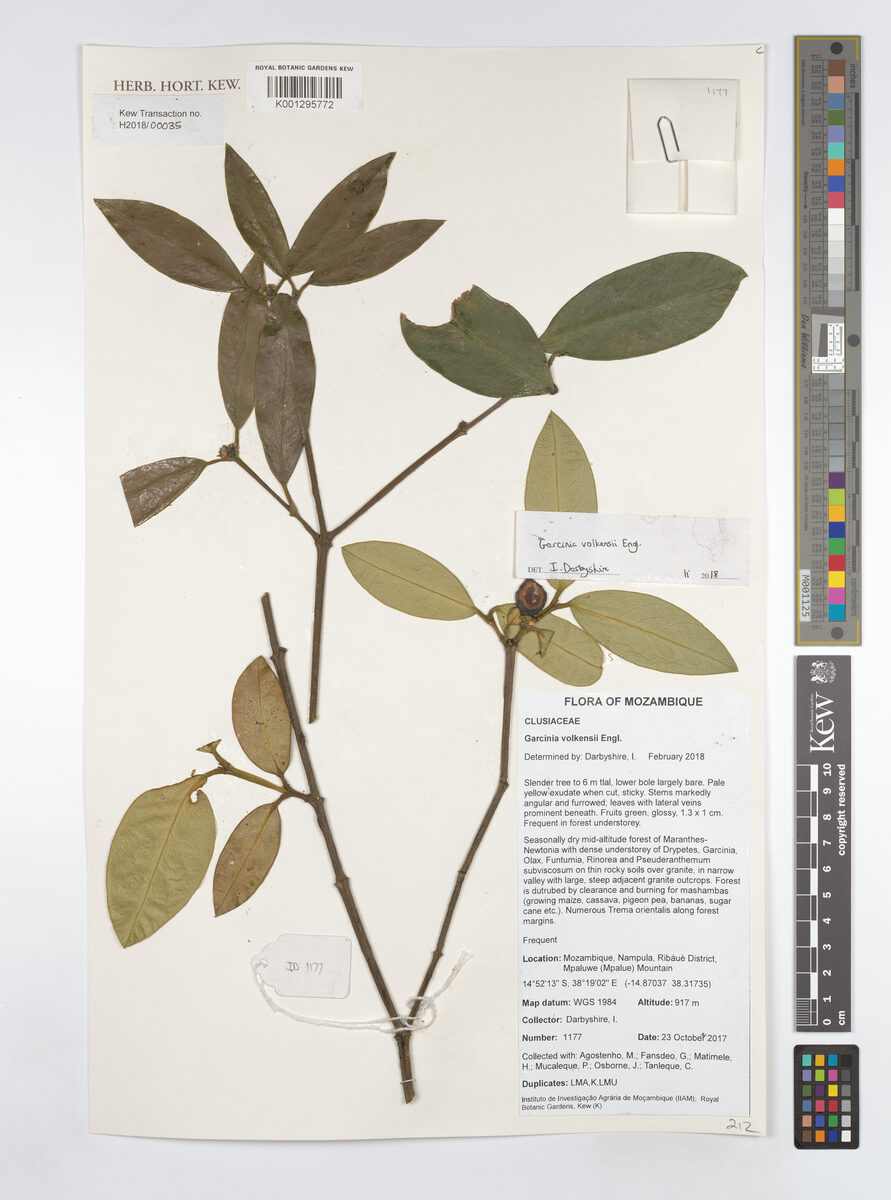
Garcinia sessilis
(G. Forst.) Seem.
Samoan mangosteen
wikimedia· cc-by-sa
Wikimedia Commons - Tauʻolunga
wikimedia· cc-by-sa
Wikimedia Commons - Tauʻolunga
Summary
Source: WikipediaGarcinia sessilis, commonly known as heilala in Tongan, is an evergreen tree native to the Pacific regions of Tonga. The heilala flower is the national flower of Tonga.
Description
An evergreen tree. It can grow to 20 m tall. The trunk can be 30 cm across. Male and female flowers are on separate plants. The fruit are red and oval and 4 cm long.
Edible Uses
Garcinia sessilis has a variety of uses across the islands that it inhabits. Probably the most obvious use could come from the fruit, which is edible. The fruit is identifiable as a red, obovoid around 4 centimeters long, and can be eaten raw. Along with being edible, it also has various medical uses. Crushing the leaves in some water creates an eye wash used for various eye related problems. The bark of the plant can also be used medicinally. The flowers of the tree can be used to scent coconut oil or are commonly turned into necklaces. Wood is also used from the tree, which is used to build homes on its native islands. Local people seemingly use all parts of this plant, leaving none to waste as everything has a use.
Traditional Uses
The fruit are eaten raw.
This uses section is brief — help expand it
Medicinal Uses
The leaves are crushed in water which is then used as an eyewash for eye problems. The bark is used medicinally.
Distribution
It is a tropical plant. It grows in wet and dry forests. It can be on the edges of mangrove swamps. It grows from sea level to 1,150 m above sea level. It is common in limestone forest.
Where It Grows
Fiji, Pacific, Samoa, Solomon Islands, Tonga,
Cultivation
The plant can flower and produce fruit throughout the year. A dioecious species, both male and female forms usually need to be grown if fruit and seed are required. At least some dioecious Garcinia species, however, are able to produce fertile seed even in the absence of fertilization (asexual reproduction). Such seeds would be expected to be genetically identical to the parent
Propagation
Seed - we have no specific information on this species, but the seed of most members of the genus can be slow to germinate, even if sown fresh, often taking 6 months or more.
Other Uses
An abundant yellowish latex is obtained from the tree. No uses are recorded for it. The faintly fragrant flowers are commonly used to scent coconut oil, and also to make necklaces. The wood is used in the construction of traditional houses and for carving. The wood is used for fuel
Production
Plants can produce flowers and fruit throughout the year.