Garcinia rubra
Merr.
Kamandiis
wikimedia· cc-by-sa
Wikimedia Commons - Vitor Oliveira from Torres Vedras, PORTUGAL
Description
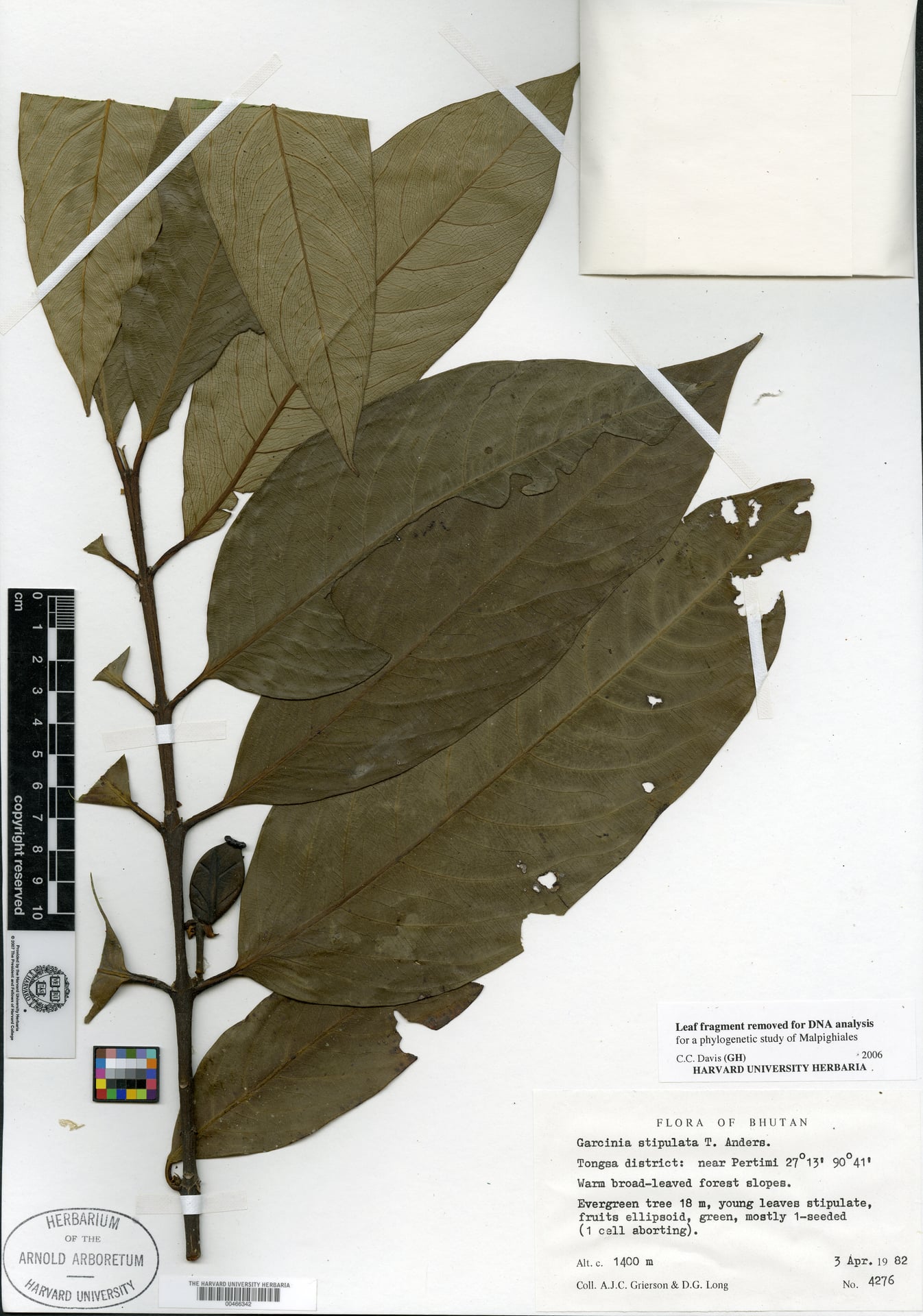
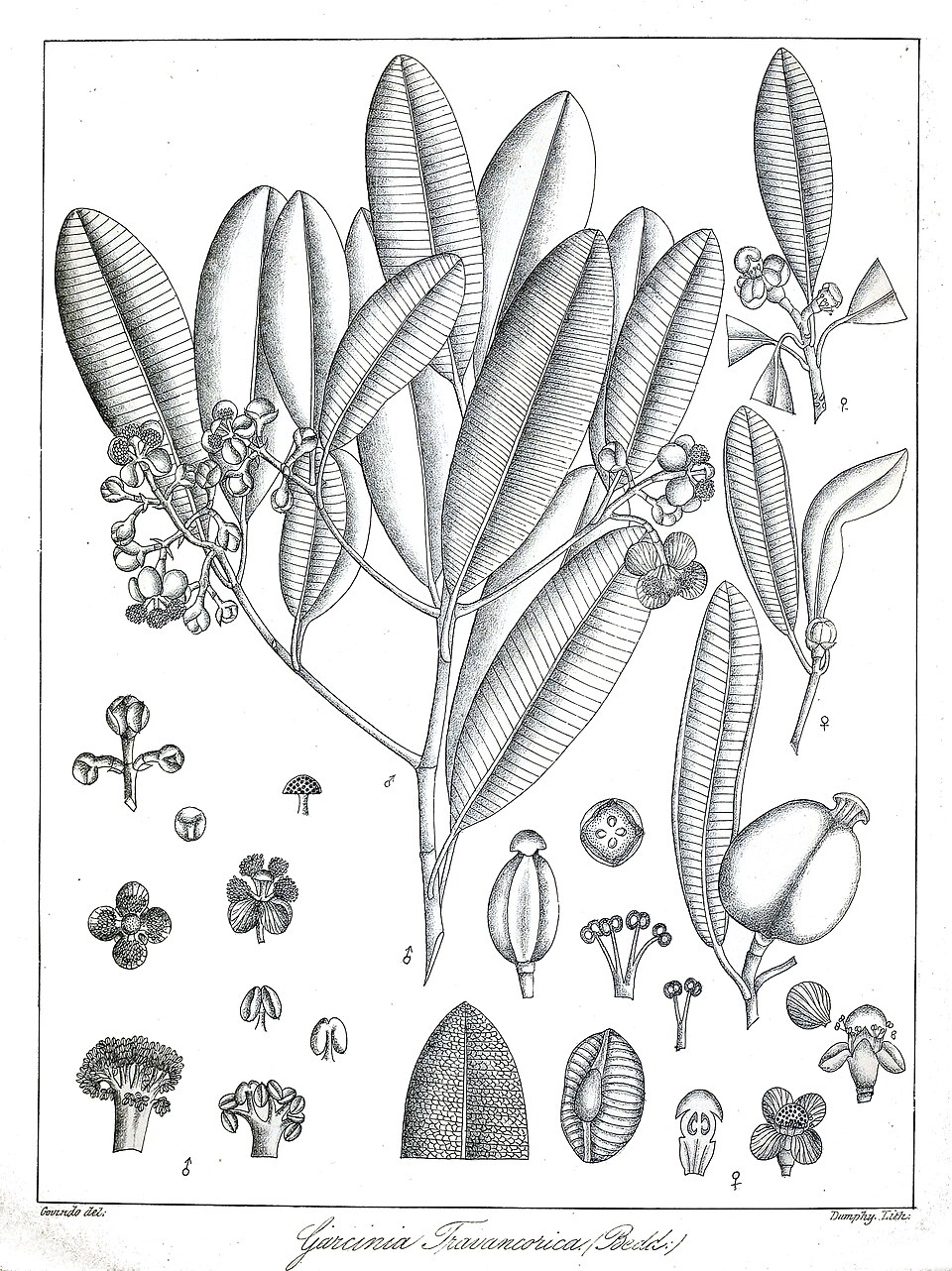
A small tree. It grows 10 m tall. The trunk is 15 cm across. The leaves are 6-12 cm long. The leaves are opposite, thin and pointed at both ends. The flowers are small, bright red and borne in clusters in the axils of leaves. The fruit are 3 cm across somewhat rounded but flattened and yellowish to red. They are fleshy and acidic.
Edible Uses
The acidic fruits are eaten raw.
Traditional Uses
The fruit are eaten raw.
This uses section is brief — help expand it
Distribution
A tropical plant. They occur in the Philippines from northern Luzon to northern Mindanao in primary forest at low altitudes.
Where It Grows
Asia, Pacific, Philippines*, SE Asia,
Cultivation
The tree can flower all year round.
Propagation
Seed - we have no specific information on this species, but the seed of most members of the genus can be slow to germinate, even if sown fresh, often taking 6 months or more.
Production
It flowers year round.
Notes
There are about 300 Garcinia species.
References (4)
- Brown, W.H., 1920, Wild Food Plants of the Philippines. Bureau of Forestry Bulletin No. 21 Manila. p 122
- Monsalud, M.R., Tongacan, A.L., Lopez, F.R., & Lagrimas, M.Q., 1966, Edible Wild Plants in Philippine Forests. Philippine Journal of Science. p 479
- PROSEA (Plant Resources of South East Asia) handbook, Volume 2, 1991, Edible fruits and nuts.
- World Checklist of Useful Plant Species 2020. Royal Botanic Gardens, Kew