Uvaria siamensis
(Scheff.) L.L.Zhou, Y. C. F. Su & R. M. K. Saunders
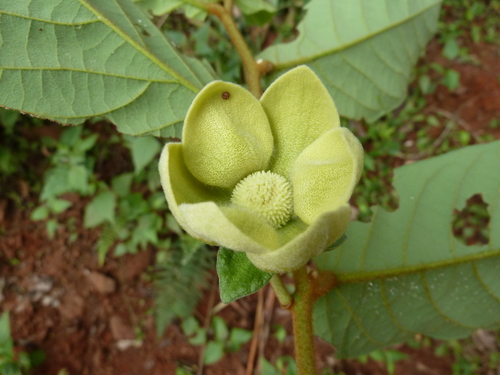
White cheesewood tree
iNaturalist· cc-by-nc
(c) eec, some rights reserved (CC BY-NC), uploaded by eec
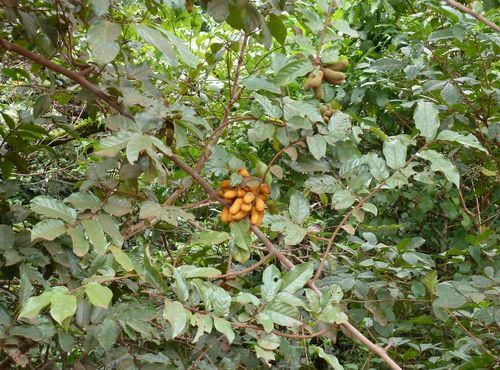
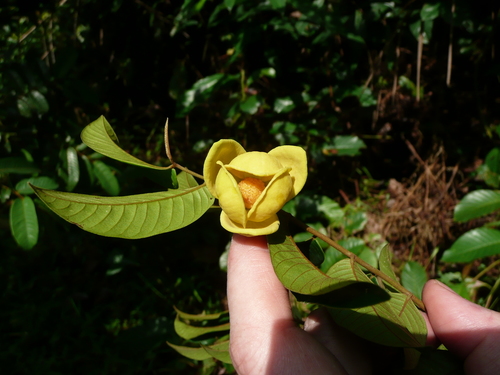
iNaturalist· cc-by-nc
(c) Wangworn Sankamethawee, some rights reserved (CC BY-NC)
Summary
Source: WikipediaUvaria siamensis, locally called nom-maew (Thai: นมแมว), is a plant in the family Annonaceae. Uvaria siamensis is a shrub or liana native to Myanmar, Laos, Thailand, Cambodia, Vietnam, and northern Peninsular Malaysia. It is related to the ylang-ylang. It requires little care and can even be kept in containers, blooming from spring until fall. Despite their plainness, the flowers of the genus Uvaria have a aroma that can travel very far. It is for this that Asian gardeners include it among their favorite garden plants. This plant can tolerate some shade; however, lack of sunlight adversely affects flowering.
Description
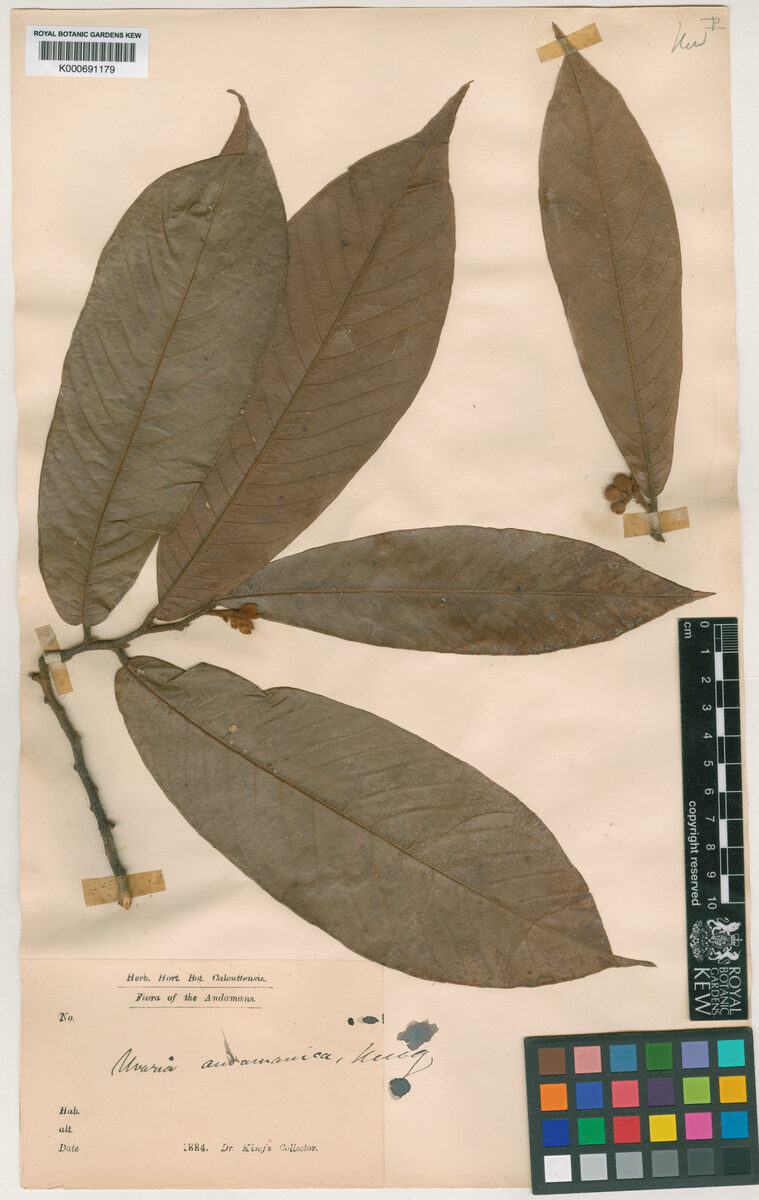
A tree. It grows 8-12 m tall. The leaves are simple and alternate. They are narrowly oval and 7-15 cm long by 2-3 cm wide. The flowers occur singly. They are in the axils of leaves. The flowers are pale yellow and have a scent. The fruit are made up of small fruit. They are black when ripe. They grow in bunches.
Edible Uses
The fruit are eaten.
Distribution
It is a tropical plant. It grows in mixed deciduous forests and dry evergreen forests.
Where It Grows
Asia, Cambodia, Indochina, Indonesia, Malaysia, Philippines, SE Asia,
Cultivation
Plants can be grown by seed or from cuttings.
Synonyms
Also Known As
Devil's tree, Pohon hantu, Romduol, Rumduel
References (3)
- Ali, R. M., et al, (Eds.), 2010, ASEAN Herbal and Medicinal Plants. Forestry research Institute Malaysia. p 67 (As Melodorum fruticosum)
- Sukarya, D. G., (Ed.) 2013, 3,500 Plant Species of the Botanic Gardens of Indonesia. LIPI p 394 (As Melodorum fruticosum)
- Turreira Garcia, N., et al, 2017, Ethnobotanical knowledgeof the Kuy and Khmer people in Prey Lang, Cambodia. Cambodian Journal of Natural History 2017 (1): 76-101 (As Melodorum fruticosum)