Neostenanthera hamata
(Benth.) Exell
wikimedia· cc0
Wikimedia Commons - The image is credited to W.H. Fitch as the lithographer and W. West as the print maker. The image is in a journal article: George Bentham (1862) On African Anonaceae. Transactions of the Linnean Society of London 23: 463-480
Summary
Source: WikipediaNeostenanthera hamata is a species of plant in the family Annonaceae. It is found in Ivory Coast, Ghana, Liberia, and Sierra Leone. George Bentham, the English botanist who first formally described the species, using the basionym Oxymitra hamata, did not explicitly explain the specific epithet, but it has distinctive outer petals with hooked (hamatus in Latin) tips.
Description
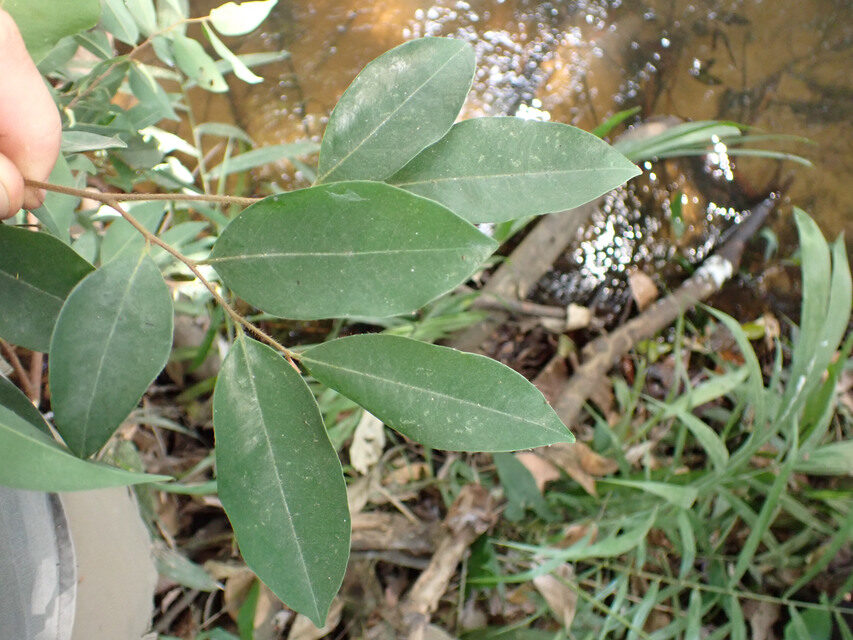
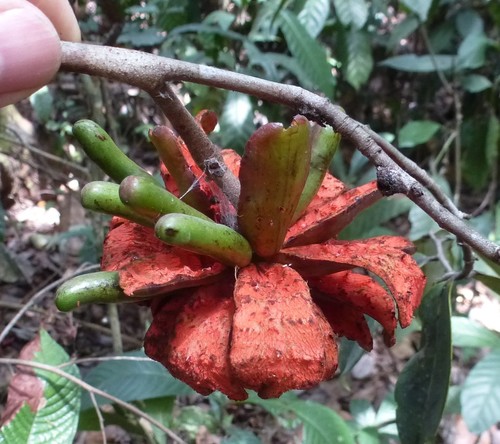
A tree in the Annonaceae family that grows 18–25 m tall with a trunk about 30 cm across. It has yellowish-brown hairs, narrowly oval leaves 7–14 cm long, and small fruits 2 cm long by 1 cm wide.
Edible Uses
The seeds are used for food.
Traditional Uses
The seeds are used for food.
This uses section is brief — help expand it
Where It Grows
Bark - Medicine, Seeds,
Other Information
Annonaceae
Notes
A tree. It grows 18-25 m tall. The trunk is 30 cm across. It has yellowish-brown hairs. The leaves are narrowly oval and 7-14 cm long by 3.5-5 cm wide. The fruit is 2 cm long by 1 cm wide.
Synonyms
Also Known As
A-til, Baue, Baue fu, Je-ah-chu, Pama-wulo, Osuni-elufoni, Sainfi, Sarua
References (1)
- World Checklist of Useful Plant Species 2020. Royal Botanic Gardens, Kew