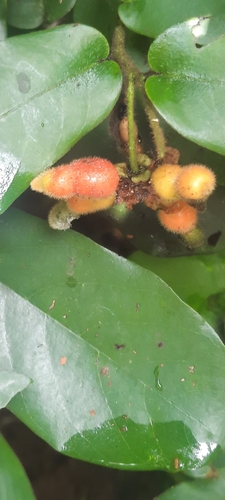
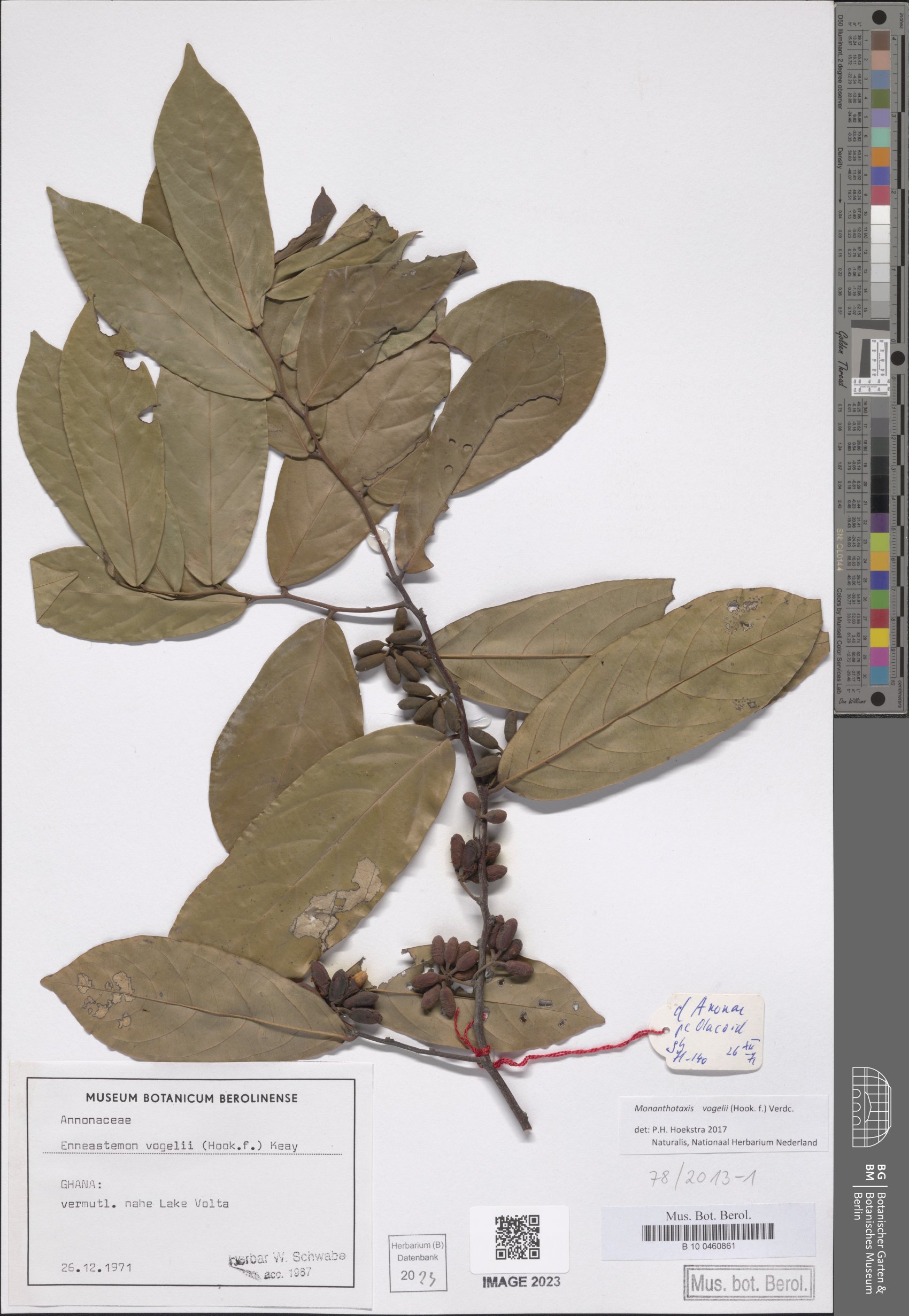
Oxandra lanceolata
(Sw.) Baill.
Haya prieta, Lancewood
iNaturalist· cc-by-nc
(c) Azul B.M, some rights reserved (CC BY-NC), uploaded by Azul B.M
iNaturalist· cc-by-nc
(c) Azul B.M, some rights reserved (CC BY-NC), uploaded by Azul B.M
iNaturalist· cc-by-nc
(c) Azul B.M, some rights reserved (CC BY-NC), uploaded by Azul B.M
Summary
Source: WikipediaOxandra lanceolata, also known as lancewood in English and chilcahuite in Spanish, is a species of plant in the Annonaceae family. It occurs naturally in Mexico, Cuba, Jamaica, Haiti, the Dominican Republic and Puerto Rico. It is an evergreen tree growing up to 15 metres high. Its leaves are 3.5–9.5 cm long, 1.5–4 cm wide and elliptic, lanceolate or oblanceolate in shape, with a rounded base and a sharp tip to the leaf blade. The petiole is bare and grows up to 1–2 mm in length. Its compound fruit are ellipsoidal in shape, reddish-black in colour, 11–13 mm long and 7–9 mm wide. Its wood is used as a raw material, such as from October 1886 onwards for truncheons of the London Metropolitan Police.
Description
A tree. It grows 15 m tall. The trunk is 10-30 cm across. The leaves are narrowly oval and 4-9 cm long by 2-4 cm wide. There are 1-4 fruit in a group. They are green and turn dark red to black as they ripen.
Edible Uses
Fruit - . The fruit is composed of 1 - 4, maroon to black, ellipsoid to obovoid monocarps, each around 8 - 15mm long and 5 - 12mm wide.
Medicinal Uses
None known
Distribution
A tropical plant. It grows in dry thickets and deciduous forests.
Where It Grows
Caribbean, Colombia, Cuba*, Dominican Republic, Haiti*, Jamaica*, Mexico, Puerto Rico, West Indies*,
Cultivation
Succeeds in calcium-rich soils. Plants can flower and produce fruit all year round.
Propagation
Seed.
Other Uses
The wood is light yellow and composed entirely of sapwood, with a very fine texture, straight grain, and medium lustre, and has no distinctive odour or taste. It is very strong, extremely hard, elastic, and durable. Although moderately difficult to work due to its high density, it finishes smoothly and is excellent for turnery. Considered equal to boxwood in hardness, it is used for fishing rods, billiard cues, archery bows, turned articles, masts, textile machinery, and small tool handles.
Synonyms
Also Known As
Bois de lance, Chilcahuite, Yaya, Yaya fina
References (3)
- Adansonia 8:168. 1868
- Junimma, L., et al, 2016, Revision of Oxandra (Annonaceae). Blumea 61, 2016: 215–266
- Plants of Haiti Smithsonian Institute http://botany.si.edu