Chamaedorea tepejilote
Liebm. ex Mart.
Pacaya, Palmito dulce
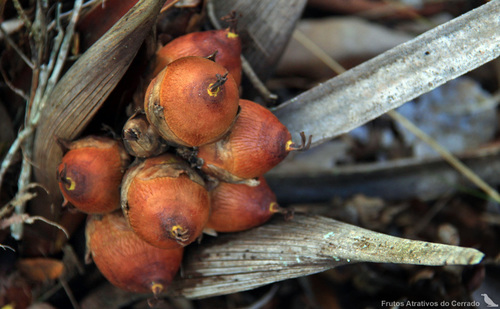
iNaturalist· cc-by
(c) Sue Carnahan, some rights reserved (CC BY), uploaded by Sue Carnahan
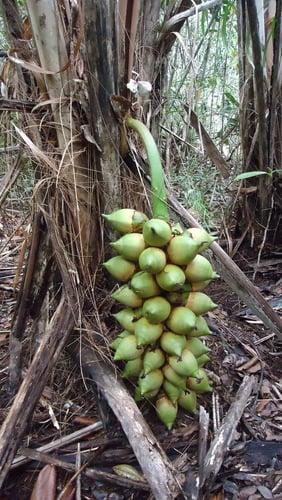
iNaturalist· cc-by-nc
(c) Rene Villanueva, some rights reserved (CC BY-NC)
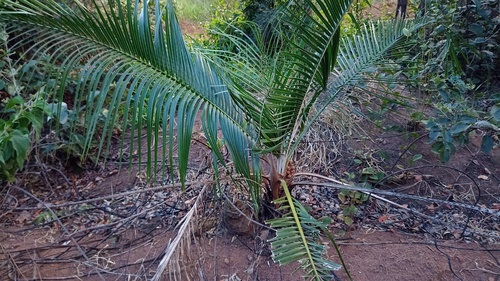
iNaturalist· cc-by
(c) Forest and Kim Starr, some rights reserved (CC BY)
Summary
Source: WikipediaChamaedorea tepejilote, also known as the pacaya palm, is a species of Chamaedorea palm tree found in the understory of the forests of southern Mexico, Central America, and northern Colombia.
Description
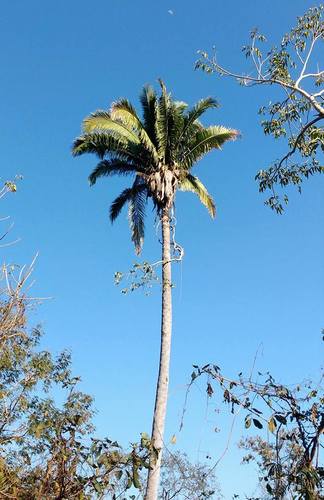
A very slender but robust palm. The trunk has swollen nodes. It has prominent annual rings and prop roots near the base. Plants can be solitary or clumping. They can be 3-7 m high. The stems can be 1.5-5 cm across. The crown is of loose dark green fronds. These leaves are divided into leaflets along the stalk. The leaves can be 1.5 m long and 1 m wide. They arch over. The flowering stalks are borne below the crown. The flowers are fragrant. They are greenish-yellow. The fruit are 1.5 cm long and black when ripe. The fruit stalk is red. There is one seed.
Edible Uses
The immature male inflorescence is the main edible part, eaten raw or cooked. It is harvested before the inflorescence opens, at which stage it resembles an ear of corn. Raw, it can be added to salads — traditionally eaten in Guatemala on the Day of the Dead. Cooked, it is prepared as a vegetable known as 'rellenos de pacaya', often served with tomato sauce in the style of chiles rellenos, or boiled or fried in egg batter. The flavour is bitter and it is sometimes cooked in several changes of water to reduce this. The young leaves are also edible when cooked. The apical bud, known as a palm heart, can be eaten as a vegetable, but removing it kills the tree since the plant cannot produce side shoots.
Traditional Uses
The male flower is eaten while immature in salads. It is also boiled or fried in egg batter. It is usually cooked in several changes of water to remove bitterness. The middle layer of the fruit is edible when fully ripe.
Medicinal Uses
None known.
Known Hazards
The juice of the fruit of most members of this genus is said to be an irritant to the skin.
Distribution
A tropical plant. Shade is essential. It can grow in tropical, subtropical and warm temperate regions. It grows naturally in rainforest. It is often on limestone soils. It suits hardiness zones 10-12. In Townsville palmetum.
Where It Grows
Australia, Belize, Central America, Colombia, Costa Rica, El Salvador, Guatemala, Honduras, Mexico, Nicaragua, North America, Panama, South America,
Cultivation
A plant of the moist tropics, where it is found at elevations up to 1,600 metres. It grows best in areas where annual daytime temperatures are within the range 20° - 28°c, but can tolerate 15° - 32°c. It can be killed by temperatures of 2°c or lower. Plants can tolerate occasional light frosts. It prefers a mean annual rainfall in the range 1,000 - 2,500mm, but tolerates 700 - 3,000mm. An easily grown plant if its basic requirements are met. It requires at least moderate shade, and can tolerate deep shade. It requires a well-drained, moist, humus-rich soil. Prefers a pH in the range 6.5 - 7.5, tolerating 6 - 8. A variable plant in the wild, with some forms growing 7 metres or more tall and others only 2 metres. A fast-growing plant, producing flowers and fruit when only a few years old. A dioecious species - both male and female forms need to be grown if fruit and seed are required.
Propagation
Plants are grown from seed.
Other Uses
None known.
Production
It can be quite fast growing.
Other Information
It is commonly eaten in Guatemala and Mexico. Plants are cultivated for this purpose.
Notes
There are about 100 Chamaedorea species. They are mostly in Central America. There are 77 species in tropical America.
Synonyms
Also Known As
Cana verde, Nurum, Pacaito, Pacaya, Siplina, Tepejilote
References (32)
- Arellanes, Y., et al, 2013, Influence of traditional markets on plant management in the Tehuacan Valley. Journal of Ethnobiology and Ethnomedicine 9:38
- Balick, M.J. and Beck, H.T., (Ed.), 1990, Useful palms of the World. A Synoptic Bibliography. Colombia p 658
- Blomberry, A. & Rodd, T., 1982, Palms. An informative practical guide. Angus & Robertson. p 81, 121 (As Chamaedorea tepijolote), 224 (As Chamaedorea wendlandiana), 437,
- Bodkin, F., 1991, Encyclopedia Botanica. Cornstalk publishing, p 245
- Castaneda, H. & Stepp, J. R., 2007, Ethnoecological Importance Value (EIV) Methodology: Assessing the Cultural Importance of Ecosystems as Sources of Useful Plants for the Guaymi People of Costa Rica. Ethnobotany Research & Applications 5:249-257
Show all 32 references Hide references
- Chizmar Fernandez, C., et al, 2009, Plantas comestibles de Centroamerica. Instituto de Biodiversidad, Costa Rica. p 92
- Condit, R., et al, 2011, Trees of Panama and Costa Rica. PrincetonField Guides. p 80
- Etherington, K., & Imwold, D., (Eds), 2001, Botanica's Trees & Shrubs. The illustrated A-Z of over 8500 trees and shrubs. Random House, Australia. p 207
- Facciola, S., 1998, Cornucopia 2: a Source Book of Edible Plants. Kampong Publications, p 27
- Flora of Barro Colorado Island. (As Chamaedorea wendlandiana)
- Grandtner, M. M., 2008, World Dictionary of Trees. Wood and Forest Science Department. Laval University, Quebec, Qc Canada. (Internet database http://www.WDT.QC.ca)
- Grandtner, M. M. & Chevrette, J., 2013, Dictionary of Trees, Volume 2: South America: Nomenclature, Taxonomy and Ecology. Academic Press p 122
- Haynes, J., & McLaughlin, J., 2000, Edible palms and Their Uses. University of Florida Fact sheet MCDE-00-50-1 p 4
- Hedrick, U.P., 1919, (Ed.), Sturtevant's edible plants of the world. p 182
- Henderson, A., Galeano, G and Bernal, R., 1995, Field Guide to the Palms of the Americas. Princeton. p 104
- Hermandez Bermejo, J.E., and Leon, J. (Eds.), 1994, Neglected Crops. 1492 from a different perspective. FAO Plant Production and Protection Series No 26. FAO, Rome. p18
- Hibbert, M., 2002, The Aussie Plant Finder 2002, Florilegium. p 65
- Hist. nat. palm. 3:308. 1849
- Ibarra-Manriquez, G., et al, 1997, Useful Plants of the Los Tuxtlas Rain Forest (Veracruz, Mexico): Considerations of their Market Potential. Economic Botany, Vol. 51, No. 4, pp. 362-376 (As Chamaedorea alternans)
- Johnson, D.V., 1998, Tropical palms. Non-wood Forest products 10. FAO Rome. p 91, 122, 127
- Jones, D.L., 1994, Palms throughout the World. Smithtonian Institution, Washington. p 180
- Jones, D.L., 2000, Palms of Australia 3rd edition. Reed/New Holland. p 142
- Langlois, H. C., 2004, Ethnobotanical analysis of different successional stages as sources of wild edible plants for the Guaymi people in Costa Rica. M. Sc. thesis University of Florida.
- Mont, J. J., C., and Gallardo, N. R., 1994, The Pacaya Palm (Chamaedorea tepejilote: Arecaceae) and its food use in Guatemala. Economic Botany 48 (1): 68-75
- Piedra-Malagón, E. M. et al, 2022, Edible native plants of the Gulf of Mexico Province. Biodiversity Data Journal 10: e80565 p 11
- Reis, S. V. and Lipp, F. L., 1982, New Plant Sources for Drugs and Foods from the New York Botanical Garden herbarium. Harvard. p 18 (As Chamaedorea wendlandiana)
- Riffle, R.L. & Craft, P., 2003, An Encyclopedia of Cultivated Palms. Timber Press. p 301
- Roa, J. A. G. & Boada, D. S. G., 2018, Fundación para el Fortalecimiento de la Fruticultura y Plantas Alimenticias no Convencionales en Colombia.
- Segura, S. et al, 2018, The edible fruit species in Mexico. Genet Resour Crop Evol (2018) 65:1767–1793
- USDA, ARS, National Genetic Resources Program. Germplasm Resources Information Network - (GRIN). [Online Database] National Germplasm Resources Laboratory, Beltsville, Maryland. Available: www.ars-grin.gov/cgi-bin/npgs/html/econ.pl (10 April 2000)
- Vazquez-Garcia. V., 2008, Gender, ethnicity, and economic status in plant management: Uncultivated edible plants among the Nahuas and Popolucas of veracruz, Mexico. Agriculture and Human Values 25: 65-77
- World Checklist of Useful Plant Species 2020. Royal Botanic Gardens, Kew