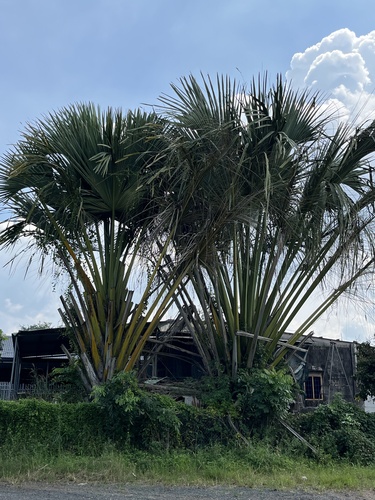
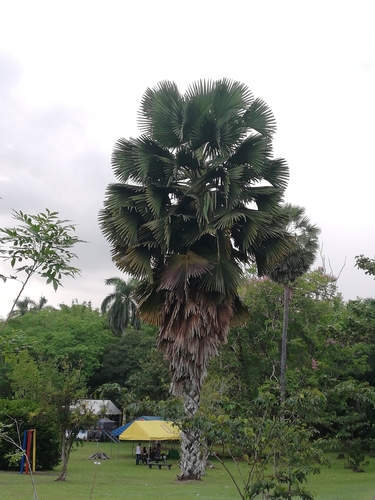
Butia purpurascens
Glassman
Purple yatay palm, Butia-jatai, Butia-roxo
iNaturalist· cc-by-nc
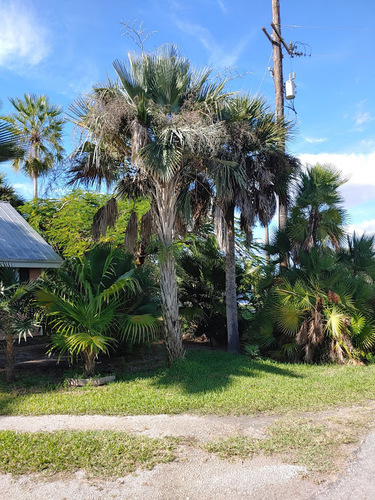
(c) jwlovespalmtrees, some rights reserved (CC BY-NC)
iNaturalist· cc-by-nc
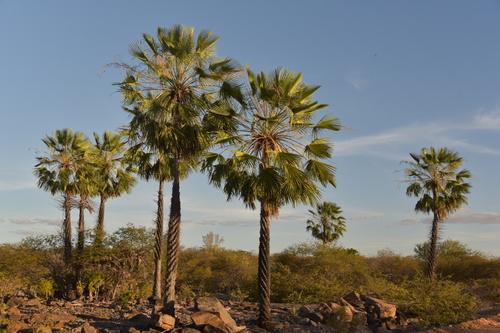
(c) jwlovespalmtrees, some rights reserved (CC BY-NC)
iNaturalist· cc-by-nc
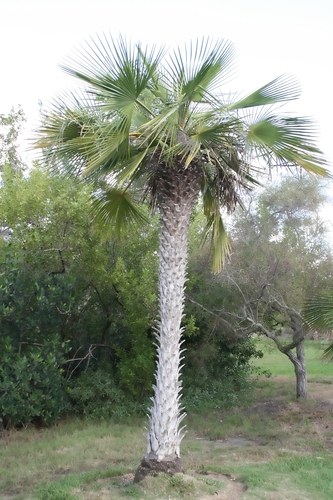
(c) jwlovespalmtrees, some rights reserved (CC BY-NC)
Summary
Source: WikipediaButia purpurascens is a smallish, relatively slender, endangered species of Butia palm, up to 3-7m tall. It is locally known as palmeira-jataí, coqueiro-de-vassoura, butiá or coquinho-azedo in Portuguese. The Kalunga people call this palm cabeçudo.
Description
A solitary palm. It grows 1-4 m tall. The trunk is ringed by persistent leaf bases. The crown-shaft is indistinct. There are about 10-25 leaves that arch over. There are 52-58 leaflets on each side. The flowering stalk comes from within the leaves. The fruit are purple or yellow. The flesh is juicy. It has an acid flavour.
Edible Uses
In its native palm groves near Jataí the fruit is harvested and gathered from the wild, commonly for use to make locally consumed juices. A liquor is also made from them in some areas by soaking the fruit in spirits or white rum. The leaves are harvested for use in making brooms, in many areas likely beyond sustainable levels. Leaves are only harvested from mature specimens with trunks. Among the Kalunga of the village of Engenho II in Cavalcante, Goiás, one person has used the leaves as incense in semi-Catholic rituals.
Traditional Uses
The fruit are used for juice.
This uses section is brief — help expand it
Distribution
It is a tropical plant. It grows in deciduous forest and savannas in Brazil.
Where It Grows
Brazil, South America,
Cultivation
Plants are grown from seed.
Propagation
Seed - best sown as soon as it is ripe in containers. Stored seed is very slow to germinate. Pre-soaking the seed for 24 hours in warm water prior to sowing may shorten the germination time. Plants form a long tap-root some time before forming a shoot. Germination of fresh seed usually takes place in 3 - 4 months at 25°c. Plant out into deep pots or the open ground either as soon as root growth is noticed or as soon as top growth appears.
Notes
There are about 9 Butea species.
Also Known As
Cabecudo
References (3)
- Lorenzi, H., Bacher, L., Lacerda, M. & Sartori, S., 2006, Brazilian Fruits & Cultivated Exotics. Sao Paulo, Instituto Plantarum de Estuados da Flora Ltda. p 75
- Martins, R. C., et al, 2014, Use and Diversity of Palm (Arecaceae) Resources in Central Western Brazil. The Scientific World Journal.. Volume 2014, Article ID 942043
- www.tradewindsfruit.com