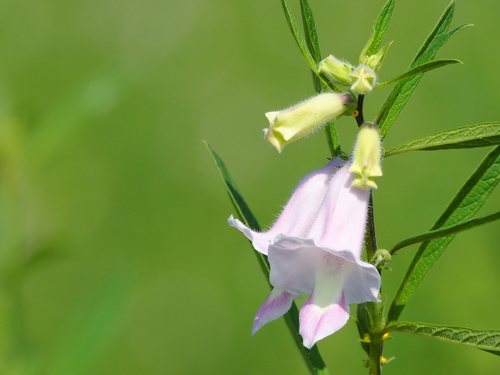
Ceratotheca triloba
(Bernh.) E. Mey. ex Hook. f.
African foxglove, False foxglove
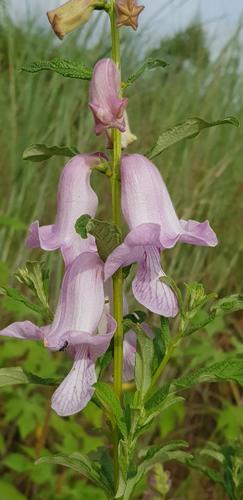
iNaturalist· cc-by-nc-sa
(c) Bernard DUPONT, some rights reserved (CC BY-NC-SA)
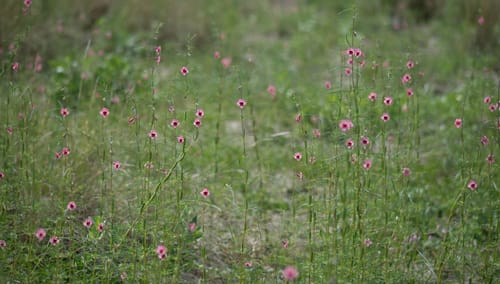
iNaturalist· cc-by-nc
(c) magdastlucia, some rights reserved (CC BY-NC), uploaded by magdastlucia
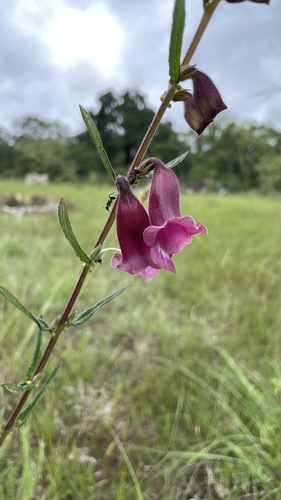
iNaturalist· cc-by-nc
(c) Tony Benn, some rights reserved (CC BY-NC), uploaded by Tony Benn
Description
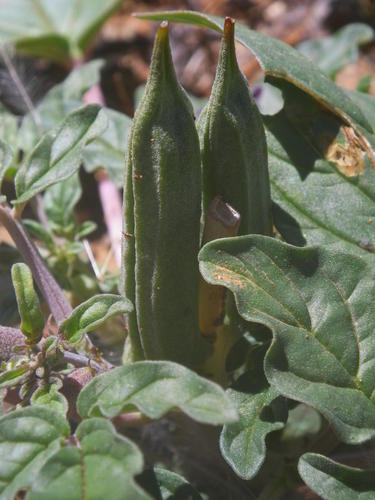
A herb. It is an annual plant. It is erect and grows 2 m high. There are thin hairs. The leaves are opposite. The leaf blades are deeply 3 lobed. There are short teeth along the edges. The leaves are 5 cm long by 4 cm wide. The flowers occur singly. They are in the axils of leaves. The flowers are all turned to one side. The flowers are bell shaped. The fruit is dry and leathery. It is about 2.5 cm long. Probably now Sesamum trilobum.
Edible Uses
The young leaves are cooked and eaten. They are slimy and have an unpleasant smell when crushed, but this disappears with cooking.
Traditional Uses
The young leaves are cooked and eaten. They are slimy. They have an unpleasant smell when crushed but this disappears when cooked.
This uses section is brief — help expand it
Medicinal Uses
The plant is used in traditional medicine to treat painful menstruation, stomach cramps, nausea, fever and diarrhoea.
Distribution
A tropical plant. It grows on sandy soils in open grassland. It needs sandy, well-drained soil.
Where It Grows
Africa, Botswana, East Africa, Eswatini, Mozambique, South Africa, Southern Africa, Swaziland, Zambia, Zimbabwe,
Cultivation
Plants can be grown from seeds. Seeds germinate very easily. Seeds can be collected from dried fruits. Plants can be put 20 cm apart.
Propagation
Seed - can be sown in situ. Existing plants usually self-sow quite freely. The seed can also be sown in a seed tray placed in light shade. Germination is usually quite quick and very good, but seedlings grow slowly. They can be planted out when around 6 - 8 weeks old.
Other Information
It is occasionally used as a vegetable.
Nutrition
| Part | Moisture | kJ | kcal | Protein | Vit A | Vit C | Iron | Zinc |
|---|---|---|---|---|---|---|---|---|
| Leaves | 85 | 259 | 62 | 2 | — | — | — | — |
Synonyms
Also Known As
Inkunzane enkulu, Ludvonca, Mudyangaringa, Munhuhwenhuhwe, Myamanhuwe, Umdonga, Zinyaruninga
References (10)
- Bot. Mag. 114: t. 6974. 1888
- Joffe, P., 2007, Creative Gardening with Indigenous Plants. A South African Guide. Briza. p 341
- Pickering, H., & Roe, E., 2009, Wild Flowers of the Victoria Falls Area. Helen Pickering, London. p 91
- Roodt, V., 1998, Common Wild Flowers of the Okavango Delta. Medicinal Uses and Nutritional value. The Shell Field Guide Series: Part 2. Shell Botswana. p 127
- Ruiters-Welcome, A. K., 2019, Food plants of southern Africa. Ph.D. thesis. Univ. of Johannesburg p 85
Show all 10 references Hide references
- Swaziland's Flora Database http://www.sntc.org.sz/flora
- Tredgold, M.H., 1986, Food Plants of Zimbabwe. Mambo Press. p 40
- In Uusiku, N.P. et al, 2010, Nutritional value of leafy vegetables of sub-Saharan Africa. Journal of Food Composition and Analysis 23 (2010) 499-509
- Welcome, A. K. & Van Wyk, B.-E., 2019, An inventory and analysis of the food plants of southern Africa. South African Journal of Botany 122 (2019) 136–179
- www.zimbabweflora.co.zw 2011