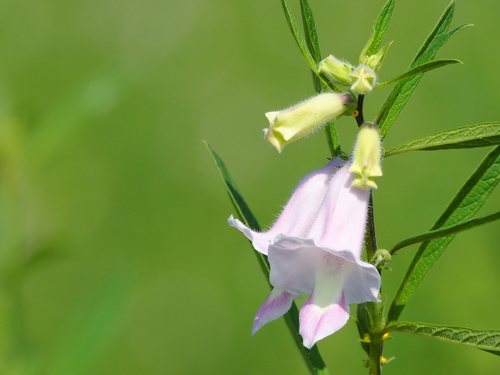
Ceratotheca sesamoides
Endl.
False sesame
iNaturalist· cc-by-sa
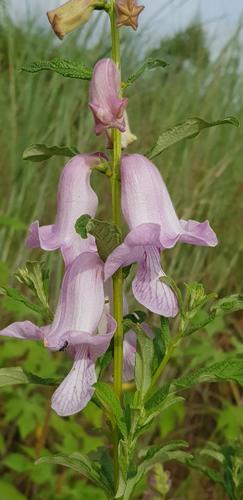
(c) Bernard DUPONT, some rights reserved (CC BY-SA)
iNaturalist· cc-by-sa
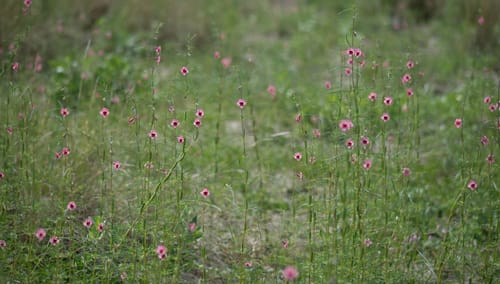
(c) Bernard DUPONT, some rights reserved (CC BY-SA)
iNaturalist· cc-by-nc-sa
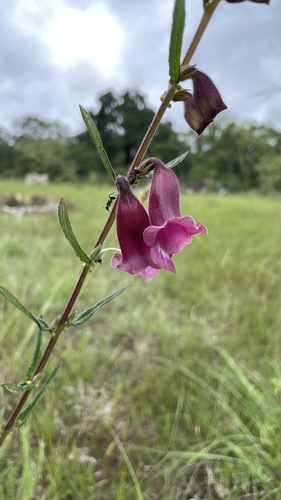
(c) Marco Schmidt, some rights reserved (CC BY-NC-SA)
Summary
Source: WikipediaCeratotheca sesamoides is an annual flowering plant in the genus Ceratotheca. It is indigenous to Africa, and grows both as a wild and locally-cultivated species, and is colloquially referred to as false sesame owing to its marked similarities with common sesame (Sesamum indicum). The plant is most commonly cultivated in the African savannah and other semi-arid areas on the continent, and is found across Africa in both tropical and sub-tropical latitudes, usually growing in sandier soils south of the Sahara. It can be identified by numerous hairs on the stem; its pinkish flowers, often showing brown and purple markings; and a sub-erect growth habit. The leaves and flowers are often consumed as a vegetable or used in sauces. The leaves are thought to have medicinal properties, while the seeds can be used to produce cooking oil. Despite its many uses and increasing domestication at a local level, the plant remains predominantly underused and undervalued.
Description
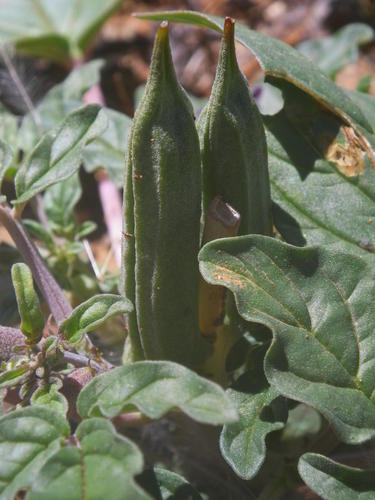
A herb. It has an erect, slender stem. It grows 2-3 m tall. The leaves have stalks. The leaves at the top of the plant are arrowhead shaped and with teeth in their lower section. The lower leaves are wider and have teeth all around. The flowers are tube shaped. At the base of the flower stalk there is a pair of small purple glands on the stem. The fruit have 2 "horns" at the end. Possibly now Sesamum sesamoides
Edible Uses
The leaves are eaten as a vegetable, collected and wilted in the sun, added to soups, or dried and pounded with other vegetables and boiled into a thick paste. The seeds are eaten like sesame seeds, added to soups, or processed into edible oil. Young pods are also edible.
Traditional Uses
The leaves are eaten as a vegetable. They are collected and wilted in the sun. They can be added to soups. Leaves can be preserved by drying. They are also dried in the sun and pounded with other vegetables and boiled as a thick paste. The seeds are eaten like sesame seeds. They are also put into soups. The seeds yield an edible oil.
Medicinal Uses
The leaves, when eaten as a vegetable, act as a laxative. The leaves are steeped in water and the slimy liquid is dropped into the eye to treat conjunctivitis. The mucilage is occasionally used as an emollient and lubricant. The leaves are soaked in warm water and used as a lubricant by women during labour in order to hasten childbirth. The resulting slippery liquid is applied on the walls of the birth canal to facilitate passage of the baby. The leaves are ground with the rhizome of Anchomanes difformis and then applied topically in the treatment of leprosy. The leaves are warmed, ground, mixed with ash and rubbed on inflamed cervical lymph nodes. A decoction of the plant is used as a treatment against diarrhoea.
Distribution
A tropical plant. It grows in the lowlands. It grows in tropical Africa. It grows on sandy soil. It suits wet areas. In Malawi it grows below 900 m altitude. In West Africa it grows in open savannah woodland.
Where It Grows
Africa, Angola, Benin, Botswana, Burkina Faso, Cameroon, Central Africa, Central African Republic, CAR, Chad, Congo, Côte d'Ivoire, East Africa, Eswatini, Ethiopia, Gambia, Ghana, Guinea, Guinée, Guinea-Bissau, Ivory Coast, Kenya, Liberia, Malawi, Mali, Mauritania, Mozambique, Namibia, Niger, Nigeria, Sahel, Senegal, Sierra Leone, South Africa, Southern Africa, Sudan, Swaziland, Tanzania, Togo, Uganda, West Africa, Zambia, Zimbabwe,
Cultivation
Plants are grown from seeds. Seeds are broadcast at the beginning of rains.
Propagation
Seed - sow in situ. Germination percentages are usually low.
Other Uses
The leaf powder is used as a hair lubricant. Adding the leaf sap to the boiling seed pulp of Vitellaria paradoxa while making shea butter aids with the separation of fat.
Production
Leaves are collected during the rainy season. They are available at other times if there is sufficient soil moisture. They can be dried and stored.
Other Information
It is commonly and widely used in Malawi. It is highly palatable.
Notes
Chemical composition (leaves and seeds): Protein (crude) = 8.5% (dry). Fat = 1.5% (dry). Fibre (crude) = 8,5% (dry). Ash (insoluble) = 20.2% (dry). Carbohydrate (soluble): Starch = 3.1% (dry). Sucrose = 3.5% (dry). D-glucose = 1.5% (dry). D-fructose = 0.1% (dry). Amino acids (g [16g N]-1): Aspartic acid = 17.2g. Threonine = 5.1g. Serine = 4.4g. Glutamic acid = 13.3g. Proline = 5.0g. Glycine = 5.7g. Alanine = 6.3g. Valine = 6.5g. Cysteine (performic acid oxidation) = 0.7g. Methionine (performic acid oxidation) = 1.9g. Isoleucine = 5.5g. Leucine = 9.4g. Tyrosine = 4.2g. Phenylalanine = 5.7g. Lysine = 5.2g. Histidine = 2.1g. Arginine = 6.1g. Minerals: Sulphur = 0.23% (dry). Potassium = 0.23% (dry). Magnesium = 0.48% (dry). Calcium = 1.48% (dry). Na = 0.02% (dry). Zinc = 36 mg/kg-1 (dry). Iron = 194 mg/kg-1 (dry). Manganese = 173 mg/kg-1 (dry). Copper = 15 mg/kg-1 (dry). Aluminium = 137 mg/kg-1 (dry).
Nutrition
| Part | Moisture | kJ | kcal | Protein | Vit A | Vit C | Iron | Zinc |
|---|---|---|---|---|---|---|---|---|
| Seeds dried | 7 | 2299 | 550 | 14.2 | — | — | — | — |
| Leaves | 81 | 226 | 54 | 4.2 | — | — | 3.2 | — |
| Pods | — | — | — | — | — | — | — | — |
Synonyms
Also Known As
Abadeib, Agbo, Alodi, Benona, Bulantam-o, Bulatam-o, Bungu, Chewe, Chinchesi, Chintengalalwa, Chinyololo, Chitelelu, Darraba t'al goz, Dowoungbaana, Ebolo, False benniseed, False sesame, Foyito, Gblogblo, Idjabo, Katate, Katate, Kpeewori, Lalo dane, Lalu-caminho, Lele, Ludvonca, Lunembwe, Maope, Mlenda mbata, Mulembwe utali, Mulyangumgu, N'tekou, N'zoti, Nkuyamani, Nor, Siwadompei, Tan-tan, Tchaba-laba, Thove, Tikpainn'tissedonte, Tiwadooti, Tobwe, Toubue, Xononm, Yodo, Yoroxlan, Zombwe
References (57)
- Abbiw, D.K., 1990, Useful Plants of Ghana. West African uses of wild and cultivated plants. Intermediate Technology Publications and the Royal Botanic Gardens, Kew. p 41
- ABDELMUTI,
- Achigan-Dako, E, et al (Eds), 2009, Catalogue of Traditional Vegetables in Benin. International Foundation for Science.
- Acipa, A. et al, 2013, Nutritional Profile of some Selected Food Plants of Otwal and Ngai Counties, Oyam District, Northern Uganda. African Journal or Food, Agriculture, Nutrition and Development. 13(2)
- Ayantunde, A. A., et al, 2009, Uses of Local Plant Species by Agropastoralists in South-western Niger. Ethnobotany Research and Applications. Vol. 7: 53-66
Show all 57 references Hide references
- Avouhou, H. T., et al, 2012, Ethnobotanical Factors Influencing the Use and Management of Wild Edible Plants in Agricultural Environments in Benin. Ethnobotany Research & Applications Vol 10:571-592
- Batawila, K., et al, 2007, Diversite et gestion des legumes de cueillete au Togo. African Journal of Food, Agriculture, Nutrition and Development 7( 3& 4): 67
- Belem, M., et al, 2017, Strategy of Conservation and Protection of Wild Edible Plants Diversity in Burkina Faso. ANADOLU 27 (2) 2017, 82- 90
- Burkill, H. M., 1985, The useful plants of west tropical Africa, Vol. 1. Kew.
- Busson, 1965,
- Codjia, J. T. C., et al, 2003, Diversity and local valorisation of vegetal edible products in Benin. Cahiers Agricultures 12:1-12
- CRÉAC'H,
- Dalziel, J. M., 1937, The Useful plants of west tropical Africa. Crown Agents for the Colonies London.
- Dansi, A., et al, 2008, Traditional leafy vegetables and their use in the Benin Republic. Genet Resour Crop Evol (2008) 55:1239–1256
- Dansi, A., et al, 2012, Diversity of the Neglected and Underutilized Crop Species of Importance in Benin. The Scientific World Journal. Volume 2012, Article ID 932947, 19 pages
- Diarra, N. et al, 2016, Etude ethnobotanique des plantes alimentaires utilisées en période de soudure dans les régions Sud du Mali. Int. J. Biol. Chem. Sci. 10(1): 184-197
- Diouf, M., et al, Leafy Vegetables in Senegal. Bioversity webite
- Facciola, S., 1998, Cornucopia 2: a Source Book of Edible Plants. Kampong Publications, p 168
- Fowler, D. G., 2007, Zambian Plants: Their Vernacular Names and Uses. Kew. p 52
- Gallagher, D. E., 2010, Farming beyond the escarpment: Society, Environment, and Mobility in Precolonial Southeastern Burkina Faso. PhD University of Michigan.
- Grivetti, L. E., 1980, Agricultural development: present and potential role of edible wild plants. Part 2: Sub-Saharan Africa, Report to the Department of State Agency for International Development. p 29, 49
- Grubben, G. J. H. and Denton, O. A. (eds), 2004, Plant Resources of Tropical Africa 2. Vegetables. PROTA, Wageningen, Netherlands. p 175
- Harris, F. M. A. and Salisu Mohammed, 2003, Relying on nature: Wild Foods in Northern Nigeria. AMBIO Vol. 32 No. 1, p 27
- http://www.fao.org/forestry/25323-096344a3de335832e8f363c3ac5184a66.pdf
- Jardin, C., 1970, List of Foods Used In Africa, FAO Nutrition Information Document Series No 2.p 40, 65
- Long, C., 2005, Swaziland's Flora - siSwati names and Uses http://www.sntc.org.sz/flora/
- Lyimo, M., et al, 2003, Identification and nutrient composition of indigenous vegetables of Tanzania. Plant Foods for Human Nutrition. 58: 85-92
- Lykke, A. M., Mertz, O, and Ganaba, S., 2002, Food Consumption in Rural Burkina Faso, Ecology of Food and Nutrition, 41:119-152
- Malaisse, F., 1997, Se nourrir en floret claire africaine. Approche ecologique et nutritionnelle. CTA., p 91.
- Martin, F.W. & Ruberte, R.M., 1979, Edible Leaves of the Tropics. Antillian College Press, Mayaguez, Puerto Rico. p 211
- Masters, T., 2021, Traditional food plants of the upper Aswa River catchment of northern Uganda—a cultural crossroads. Journal of Ethnobiology and Ethnomedicine (2021) 17:24
- Mertz, O., Lykke, A. M., and Reenberg, A., 2001, Importance and Seasonality of Vegetable Consumption and Marketing in Burkina Faso. Economic Botany, 55(2):276-289
- Mpasiwakomu, R. A., 2017, The Diversity and Utilization of Wild Edible and Medicinal Plant Species found in Uvinza Miombo Woodlands, Tanzania. M. Sc. thesis University of Tanzania.
- Nayar, N.M., 1979, Sesame, in Simmonds, N.W., (ed), Crop Plant Evolution. Longmans. London. p 231
- N'Danikou, S. et al, 2010, Eliciting Local Values of Wild Edible Plants in Southern Bénin to Identify Priority Species for Conservation. Economic Botany, 20(10), 2011, pp. 1–15.
- Newman, 1970,
- Okigbo, B.N., Vegetables in Tropical Africa, in Opena, R.T. & Kyomo, M.L., 1990, Vegetable Research and development in SADCC countries. Asian Vegetable Research and development Centre. Taiwan. p 44
- Peters, C. R., O'Brien, E. M., and Drummond, R.B., 1992, Edible Wild plants of Sub-saharan Africa. Kew. p 159
- Pickering, H., & Roe, E., 2009, Wild Flowers of the Victoria Falls Area. Helen Pickering, London. p 91
- Ruffo, C. K., Birnie, A. & Tengnas, B., 2002, Edible Wild Plants of Tanzania. RELMA p 196
- Ruiters-Welcome, A. K., 2019, Food plants of southern Africa. Ph.D. thesis. Univ. of Johannesburg p 85
- Salvi, J. et al, 2016, A review: Underutilized wild edible plants as a potential source of alternative nutrition. International Journal of Botany Studies. Volume 1; Issue 4; May 2016; Page No. 32-36
- Scudder, 1962, 1971,
- Segnon, A. C. & Achigan-Dako, E. G., 2014, Comparative analysis of diversity and utilization of edible plants in arid and semi-arid areas in Benin. Journal of Ethnobiology and Ethnomedicine 2014, 10:80
- Sena, L. P., et al, 1998, Analysis of nutritional components of eight famine foods of the Republic of Niger. Plant Foods for Human Nutrition 52: 17–30
- Swaziland's Flora Database http://www.sntc.org.sz/flora
- Tanaka,
- Uphof,
- USDA, ARS, National Genetic Resources Program. Germplasm Resources Information Network - (GRIN). [Online Database] National Germplasm Resources Laboratory, Beltsville, Maryland. Available: www.ars-grin.gov/cgi-bin/npgs/html/econ.pl (10 April 2000)
- Ulian, T., et al, 2020, Unlocking plant resources to support food security and promote sustainable agriculture. Plants, People, Planet. 2020;2:421–445.
- World Checklist of Useful Plant Species 2020. Royal Botanic Gardens, Kew
- Vanderjagt, F. J., et al, 2000, The trypsin inhibitor content of 61 wild edible plant foods of Niger. Plant Foods for Human Nutrition 55: 335–346, 2000.
- Vernon, R., 1983, Field Guide to Important Arable Weeds of Zambia. Dept of Agriculture, Chilanga, Zambia. p 70
- Welcome, A. K. & Van Wyk, B.-E., 2019, An inventory and analysis of the food plants of southern Africa. South African Journal of Botany 122 (2019) 136–179
- West African Food Composition Tables. 2012. FAO
- Wiersema, J. H. & Leon, B., 2013, World Economic Plants. A Standard Reference CRC Press. 2nd Ed. p 162
- Williamson, J., 2005, Useful Plants of Malawi. 3rd. Edition. Mdadzi Book Trust. p 61