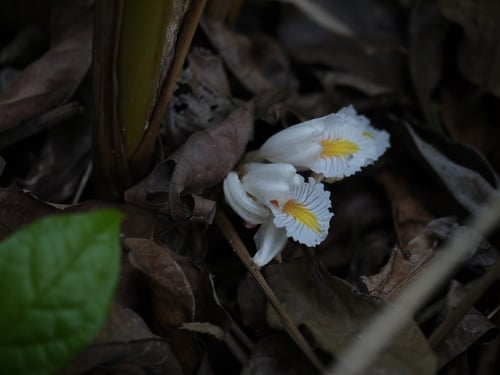
Roscoea tibetica
Batalin
Wikipedia· cc-by-sa
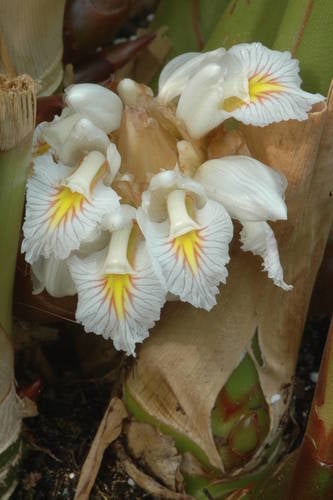
Wikimedia Commons - Roscoea_tibetica_070808.jpg
iNaturalist· cc-by-nc
(c) Sheng-Yuan Qin, some rights reserved (CC BY-NC)
iNaturalist· cc-by-nc
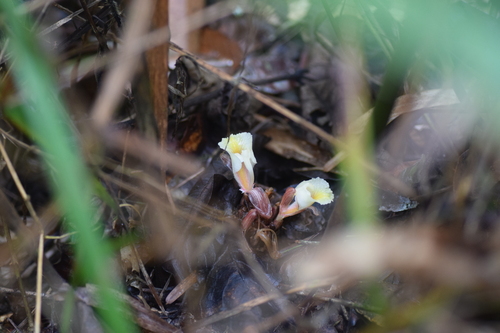
(c) imclye, some rights reserved (CC BY-NC)
Summary
Source: WikipediaRoscoea tibetica is a perennial herbaceous plant native to the mountains of China, being found in Tibet, Sichuan and Yunnan. The species formerly included plants found in Bhutan; in 2000, these were separated into a new species, Roscoea bhutanica. Most members of the ginger family (Zingiberaceae), to which it belongs, are tropical, but R. tibetica, like other species of Roscoea, grows in much colder mountainous regions. R. tibetica is sometimes grown as an ornamental plant in gardens. In 2020, it was proposed that R. tibetica be split again.
Description
A ginger family herb. It grows 5-15 cm tall. There are 1-3 leaves. The leaves are narrowly oval but widest near the base. They are 2-6 cm long by 1-3 cm wide. They are hairy when young. The flowers are enclosed by leaf sheaths. The bracts are oval and 3-4 cm long. The flowers are purple or violet.
Edible Uses
The young leaves are cooked and eaten as a vegetable.
Traditional Uses
The young leaves are cooked and eaten as a vegetable.
This uses section is brief — help expand it
Distribution
It is a subtropical plant. It grows in pine forests and alpine meadows between 2,400-3,800 m above sea level. In Sichuan and Yunnan.
Where It Grows
Asia, Bhutan, China, Himalayas, India, Myanmar, SE Asia, Tibet,
Synonyms
References (1)
- Weckerle, C. S., et al, 2006, Plant Knowledge of the Shuhi in the Hengduan Mountains, Southwest China. Economic Botany 60(1):2-23