Mosannona depressa
(Baill.) Chantrou
Depressed mosannona
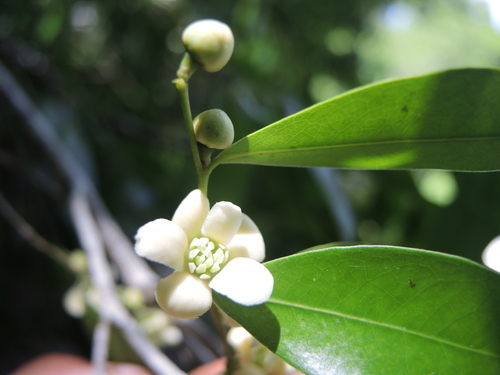
iNaturalist· cc-by-nc-nd
(c) Marcos Millan, some rights reserved (CC BY-NC-ND), uploaded by Marcos Millan
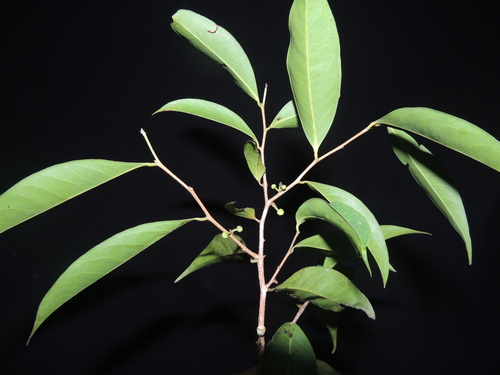
iNaturalist· cc-by-nc
(c) Hebert Cruz, some rights reserved (CC BY-NC)
iNaturalist· cc-by-nc
(c) Hebert Cruz, some rights reserved (CC BY-NC)
Summary
Source: WikipediaMosannona depressa is an evergreen tree within the Annonaceae family native to tropical southern Mexico, Belize, Guatemala, and Honduras. English common names include lancewood and wild soursop. Spanish common names include elemuy and yumel.
Description
A tropical tree in the Annonaceae family growing to approximately 10 m tall, native to the Yucatan peninsula.
This description is brief — help expand it
Edible Uses
The fruit is eaten.
Medicinal Uses
The bark of this tree is used by many people where it is native as medicine for gall stones. The root, cooked with corn silk, was reported used to treat gonorrhea and kidney and bladder problems. Some more modern studies suggest this herb might have cholesterol-lowering properties.
Known Hazards
Extremely high doses (60 mg/kg) of pure alpha-asarone extracted from lancewood caused significant maternal harm when fed to pregnant mice. At doses of 15, 30 and 60 mg/kg, this compound was lethal to embryos and teratogenic. These concentrations are far beyond what can be achieved using the plant as medicine and therefore has no bearing on whether or not it would cause problems in pregnancy.
Distribution
It is a tropical plant. It grows in the Yucatan peninsula.
Where It Grows
Belize, Central America, Honduras, Mexico, Panama,
Other Uses
The wood is used in house construction and for axe handles.
Synonyms
Also Known As
Boox eelemuy, Che-che, Chakni', Ch'ulumay, Eekemuy, Itz-imul, Nazareno prieto, Sak eelemuy
References (3)
- Hellmuth, N. M., 2011, Maya Ethnobotany. Complete Inventory of plants. Associacion FLAAR Mesoamerica. Tenth edition. (As Malmea depressa)
- Piedra-Malagón, E. M. et al, 2022, Edible native plants of the Gulf of Mexico Province. Biodiversity Data Journal 10: e80565 p 9
- Segura, S. et al, 2018, The edible fruit species in Mexico. Genet Resour Crop Evol (2018) 65:1767–1793