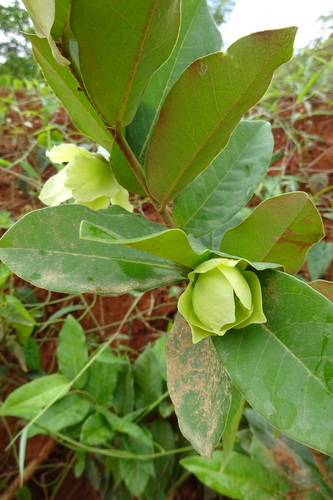
Duguetia macrophylla
R. E. Fr.
Big leaf duguetia
iNaturalist· cc-by-nc
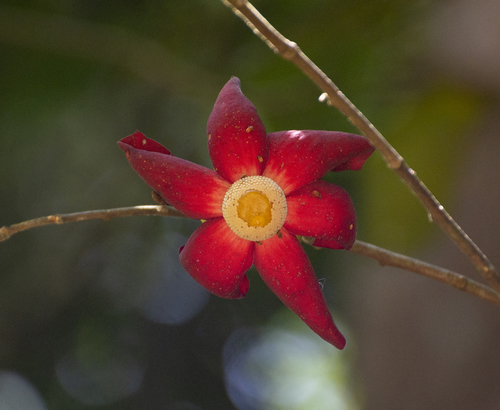
(c) James G. Graham, some rights reserved (CC BY-NC), uploaded by James G. Graham
gbif· cc-by-nc
C. Dennis : Field Museum of Natural History - Botany Department
Description
A small tropical tree of the Annonaceae family.
This description is brief — help expand it
Edible Uses
Fruit - raw. The globose to subglobose, yellow fruit is 30 - 70mm long and 35 - 60mm in diameter, comprising 70 - 100 or more fertile carpels each around 15 - 25mm long and 5 - 12mm in diameter.
Medicinal Uses
The bark is used in a medicinal balm. A tea made from the scrapings of the inner barkis used to relieve body, stomach and chest pains.
Known Hazards
The inner bark, scraped from the stem, is a component of an arrow poisin.
Distribution
It is a tropical plant.
Where It Grows
Amazon, Bolivia, Brazil, Colombia, Ecuador*, Guyana, Peru, South America, Venezuela,
Cultivation
Plants can flower and produce fruit all year round.
Other Uses
The wood can be used as timber.
Synonyms
Also Known As
Anon, Chirimoyo, Juumyba, Majagua, Majagua dura, Majagua hoja fina, Majagua negra, Tortuga caspi
References (6)
- Grandtner, M. M. & Chevrette, J., 2013, Dictionary of Trees, Volume 2: South America: Nomenclature, Taxonomy and Ecology. Academic Press p 209
- Kermath, B. M., et al, 2014, Food Plants in the Americas: A survey of the domesticated, cultivated and wild plants used for Human food in North, Central and South America and the Caribbean. On line draft. p 322
- Kew Plants of the World onLine
- Roa, J. A. G. & Boada, D. S. G., 2018, Fundación para el Fortalecimiento de la Fruticultura y Plantas Alimenticias no Convencionales en Colombia.
- Torre, de la L., et al, 2008, Enciclopedia de las Plantas Útiles del Ecuador. Herbario QCA. Pontificia Universidad Católica del Ecuador. p 164
Show all 6 references Hide references
- Vasquez, R. and Gentry, A. H., 1989, Use and Misuse of Forest-harvested Fruits in the Iquitos Area. Conservation Biology 3(4): 350f