Duguetia megalophylla
R. E. Fr.
Monkey soursop
gbif· cc-by-nc
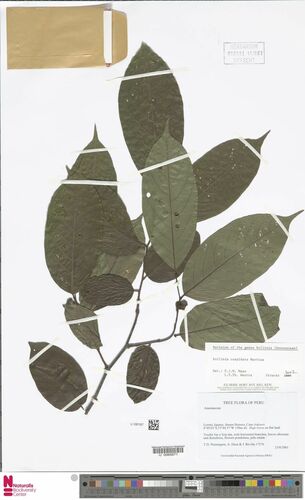
Field Museum of Natural History - Botany Department | GDI 2013-2015
gbif· cc-by-nc
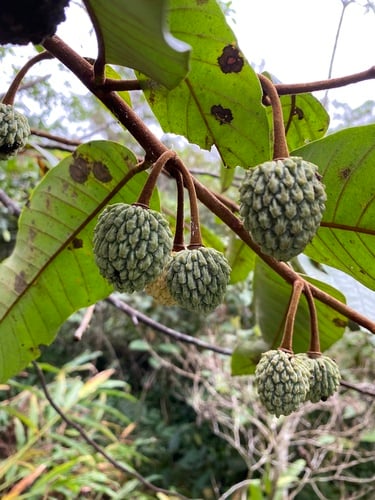
Field Museum of Natural History - Botany Department | GDI 2013-2015
gbif· cc-by-nc
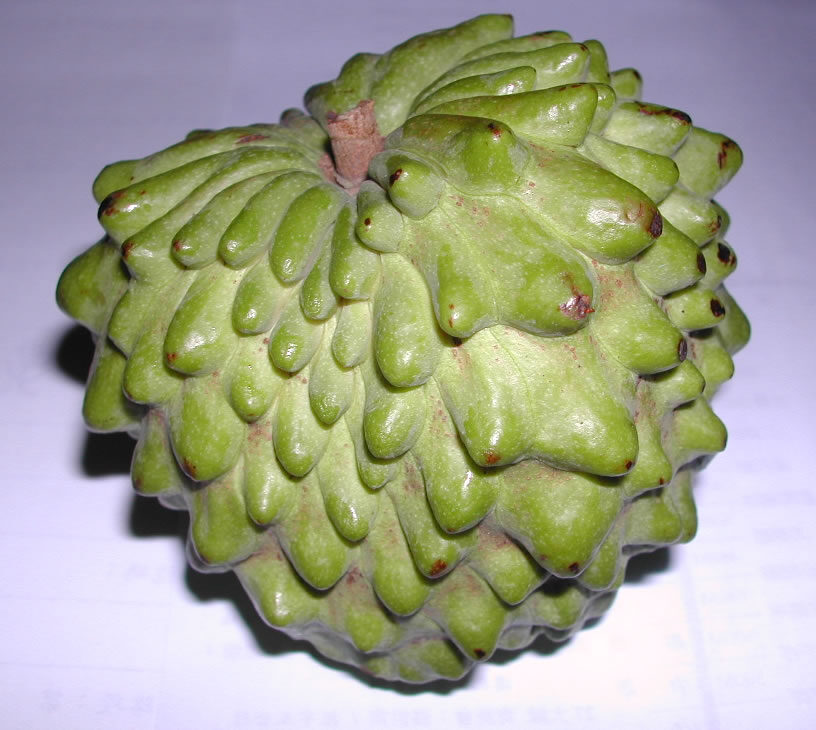
Rapid Reference Collection (RRC) | Field Museum of Natural History - Keller Science Action Center
Description
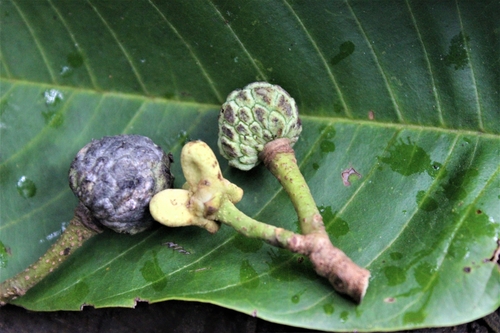
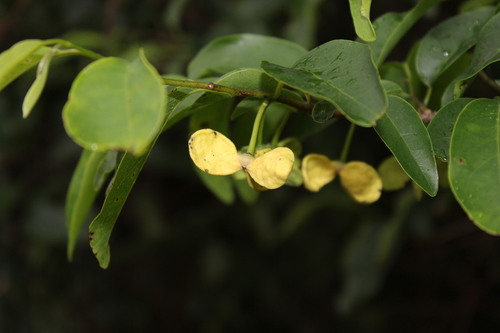
A small tree. The bark strips off easily. The bark has a strong smell. The flowers are large and greenish yellow. The fruit has soft spines.
This description is brief — help expand it
Edible Uses
We have no reports on the edibility of this species, though if the fruit has a fleshy pulp then that will be edible. The green to yellow fruit is ellipsoid, around 45 - 70mm long and 40 - 60mm in diameter, comprising 130 - 180 fertile carpels each 13 - 20mm long and 4 - 11mm in diameter.
Medicinal Uses
The stembark is used to treat snakebite. A decoction of the bark is used to treat snakebites and bites of the 24 hour ant (Paraponera clavata). The (inner?) bark scapings are sucked upon to ease the pain.
Distribution
It is a tropical plant.
Where It Grows
America, Guyana, South America, Venezuela,
Cultivation
Some plants in this species are cauliflorous, producing their flowers along the stems. Plants can flower and produce fruit throughout the year..
Other Uses
The wood is used to make arrow heads.
Also Known As
Dharadhara, Yarayara
References (1)
- van Andel T. R, 2000, Non-timber forest products of the North-West District of Guyana. Part 2. A Field Guide. Tropenbos-Guyana Programme. p 246