Artemisia herba-alba
Asso
White wormwood
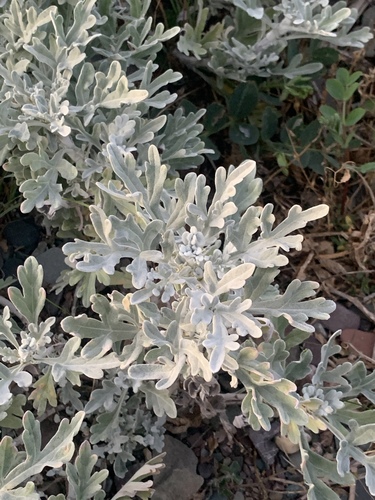
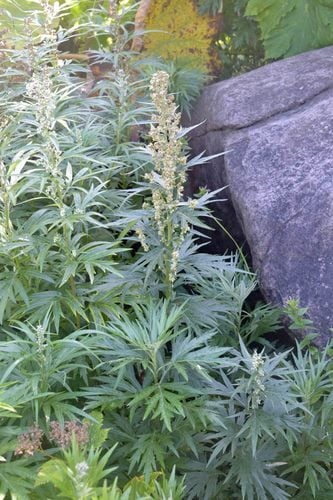
iNaturalist· cc-by-nc
(c) José María, some rights reserved (CC BY-NC), uploaded by José María
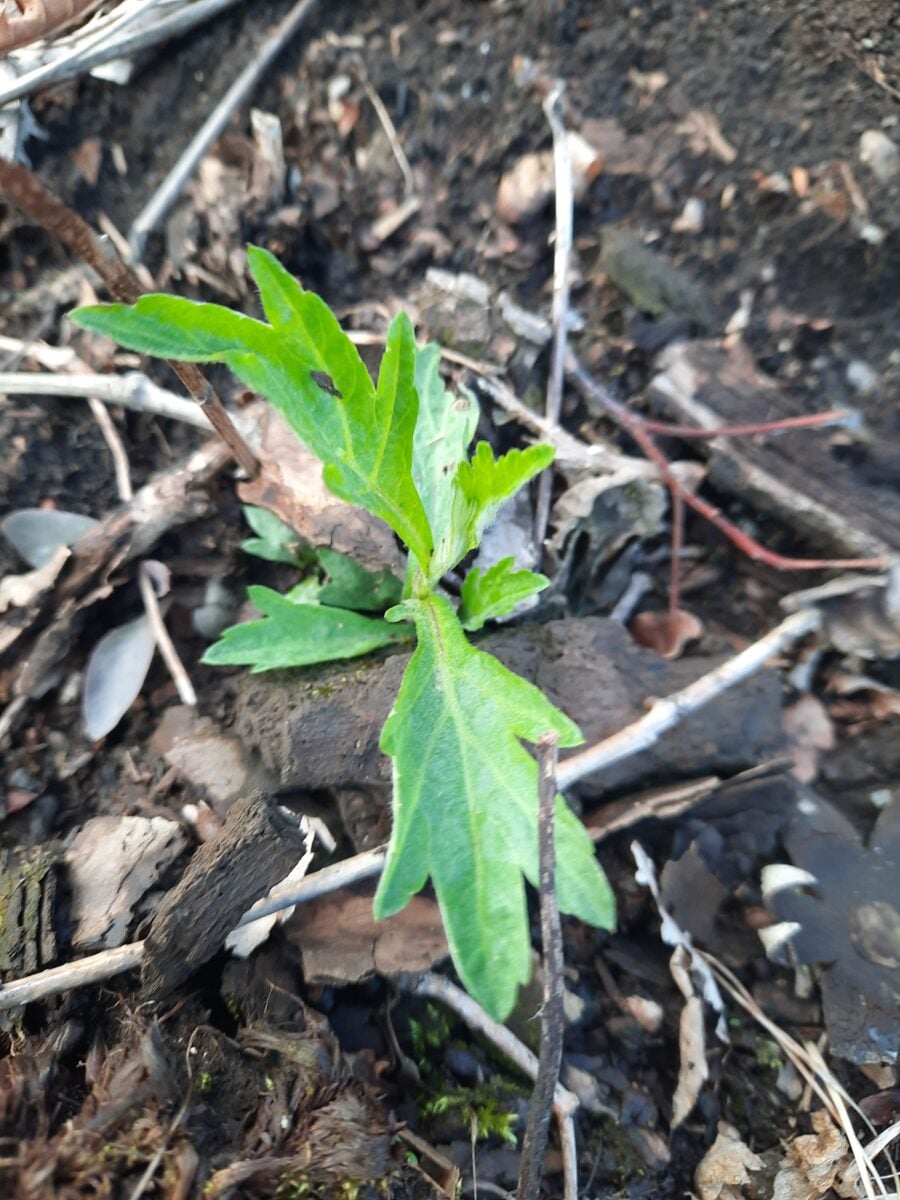
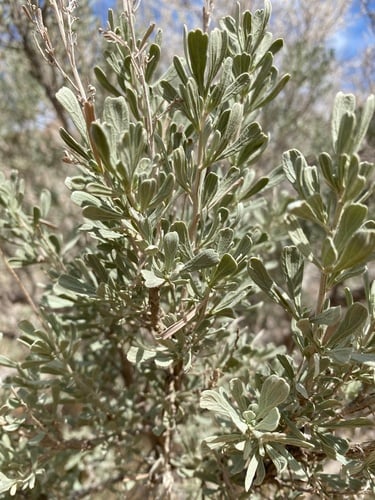
iNaturalist· cc-by-nc
(c) AnaCollados, some rights reserved (CC BY-NC), uploaded by AnaCollados
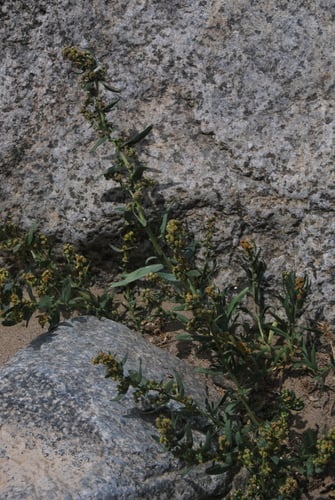
iNaturalist· cc-by-nc
(c) faluke, some rights reserved (CC BY-NC), uploaded by faluke
Summary
Source: WikipediaArtemisia herba-alba, the white wormwood, is a perennial shrub in the genus Artemisia that grows commonly on the dry steppes of the Mediterranean regions in Northern Africa (Saharan Maghreb), Western Asia (Arabian Peninsula) and Southwestern Europe. It is used as an antiseptic and antispasmodic in herbal medicine.
Description
A compact evergreen shrub growing 30cm tall and wide at a fast rate, hardy to UK zone 8 and frost-hardy. Self-fertile with insect-pollinated flowers. Noted for attracting wildlife. Tolerates light and medium soils with good drainage and poor fertility. Grows in neutral to alkaline conditions, including saline soils, in full sun. Drought and maritime exposure tolerant.
Edible Uses
None known
Traditional Uses
The leaves are occasionally used as a spice, especially when cooking snails. They are also used to give a scent to tea and coffee.
This uses section is brief — help expand it
Medicinal Uses
Artemisia herba-alba is a popular herbal treatment in N. Africa, where it is considered a remedy for all kinds of ailments. The plant is considered to be carminative, cholagogue, depurative, diuretic, emmenagogue, sedative, stomachic, tonic and vermifuge. It treats conditions such as diabetes, coughs and colds, lung problems, diarrhoea, vomiting, flatulence, fever, measles, jaundice, poisoning, cardiac arrhythmia, and muscle weakness. It is also used for treating parasitic infections such as roundworms, pinworms, tapeworms, hookworms, and flukes. The plant is burnt, and the fumes are inhaled to treat coughs, chest, stomach and muscular pains. The plant is crushed and applied to the hair to strengthen it and prevent hair loss. The crushed plant is also applied to cuts and various skin disorders. The macerated leaves and olive oil are applied to the skin to treat lesions. The leaves and stem contain an essential oil with irregular monoterpene alcohols, the sesquiterpene lactone santol in herbicides A, B and C; thymol . The leaves contain non-glycosidic flavonoids. Preliminary evidence suggests that taking a water extract of the herb might reduce fasting and postprandial blood sugar in some patients with type 2 diabetes. Preliminary evidence suggests that taking a water extract of the herb might reduce symptoms and cure pinworm infections in adults and children after 3 days of treatment. An essential oil extract from aerial plant parts also appears to have antibacterial activity against some Gram-positive and Gram-negative bacteria in vitro. Santolina alcohol constituent in the essential oil appears responsible for this antibacterial activity. A water extract of Artemisia herba-alba aerial parts and root appears to have various pharmacological effects. It appears to affect blood glucose levels, lowering it in cases of diabetes. Artemisia herba-alba water extract also appears to have an analgesic and anti-inflammatory effect; plus a weak antibacterial activity
Known Hazards
Although no reports of toxicity have been seen for this species, skin contact with some members of this genus can cause dermatitis or other allergic reactions in some people.
Distribution
It is a Mediterranean plant. It grows in desert and arid regions.
Where It Grows
Africa, Arabia, Egypt, Ethiopia, Israel, Mediterranean, Middle East, Morocco, North Africa, Palestine,
Cultivation
Artemisia herba-alba is a plant of semi-arid regions in the Mediterranean and is not very hardy in regions with cold winters. Species in this genus are generally easily grown, succeeding in a well-drained circumneutral or slightly alkaline loamy soil, preferring a sunny position. They tend to be longer lived, more hardy and more aromatic when grown in poor, dry soil. The native range of this species is Canary Islands, Spain, NW. Africa. It is a subshrub and grows primarily in the subtropical biome. Introduced into Great Britain. Soil Texture: Prefers light (sandy) or medium soils. It is adapted to arid regions' poor, rocky, and stony soils. Soil Moisture: Thrives in dry soils. It is drought-tolerant and cannot tolerate wet or waterlogged conditions. Drainage: Requires well-drained soil to prevent root rot. Soil pH: Tolerates a wide range of pH levels, thriving in neutral to alkaline soils. Saline Tolerance: Tolerates mild to moderate saline conditions, making it suitable for semi-arid and arid saline habitats. Tolerance of Poor Soil: It thrives in nutrient-poor soils, particularly in arid and semi-arid environments. Light Requirements: Requires full sun for optimal growth. Shade reduces its vigour and aromatic oil production. Height: Typically grows to about 20–40 cm (8–16 inches) tall, forming a dense, low-growing shrub. Pollination: Pollinated by wind and sometimes small insects that visit its inconspicuous flowers. Temperature: Native to arid and semi-arid regions, it is highly drought-resistant and heat-tolerant, thriving in USDA zones 7–10. Habitat: Commonly found in steppe and desert regions, particularly in North Africa, the Middle East, and parts of southern Europe. Wildlife: Provides cover and food for grazing animals like sheep and goats, though its aromatic compounds make it less palatable. Pests and Diseases: Generally resistant to pests and diseases but susceptible to root rot in poorly drained conditions. The aerial parts can be harvested in summer when they are in full bloom, while roots can be harvested in autumn. Artemisia typically flowers in summer. Artemisia species can vary in growth rate, but many are moderately fast-growing, reaching maturity within 1-2 years under optimal conditions.
Propagation
Seed—surface sow from late winter to early summer. The seed usually germinates within 2 - 26 weeks at 15°c. When they are large enough to handle, prick the seedlings out into individual pots. They can be planted out in the summer or kept in pots in a cold frame for the winter and then planted out in the spring. Cuttings of half-ripe wood mid-summer in a frame.
Other Uses
Agroforestry uses: Artemisia species are often used for soil improvement, as ground cover, and in companion planting due to their pest-repellent properties. Some species are also used for erosion control. Valued for its medicinal properties and use in traditional remedies, also used for its aromatic foliage and soil stabilisation in dry areas. Widely used as a fuel plant, The dried plant is used as a tinder. Due to their pest-repellent properties, Artemisia species are often used for soil improvement, as ground cover, and in companion planting. Some species are also used for erosion control. Nectary - Flowers rich in nectar and pollen: Artemisia species produce flowers that can provide nectar and pollen, attracting various pollinators, including bees. Wildlife - Food (Fruit, Seeds, Leaf litter, Shelter, Nesting, Roosting): The leaves of some Artemisia species are consumed by various insects and herbivores. Additionally, the plant can provide cover for small wildlife. Invertebrate Shelter (Overwintering sites, Leaf litter, Groundcover): The dense foliage can offer shelter and overwintering sites for beneficial insects, and the leaf litter can provide habitat for various invertebrates. Pest Confuser (Smell): Many Artemisia species are aromatic and can confuse or repel pests due to their strong scent, which may deter some insects. Special Uses
Notes
It is the wormwood mentioned in the Bible.
Synonyms
Also Known As
Chih, Ifssi, Izri, Sheeh, White mugwort
References (7)
- Bidak, L. M., et al, 2015, Goods and services provided by native plants in desert ecosystems: Examples from the northwestern coastal desert of Egypt. Global Ecology and Conservation 3 (2015) 433–447 (As Seriphidium herba-album)
- Ghanimi, R., et al, 2022, Ethnobotanical study on wild edible plants traditionally used by Messiwa people, Morocco. Journal of Ethnobiology and Ethnomedicine. 18:16
- INFOODSUpdatedFGU-list.xls
- Nassif, F., & Tanji, A., 2013, Gathered food plants in Morocco: The long forgotten species in Ethnobotanical Research. Life Science Leaflets 3:17-54
- Seidemann J., 2005, World Spice Plants. Economic Usage, Botany, Taxonomy. Springer. p 54
Show all 7 references Hide references
- Trendafilova, A., et al, 2020, Research Advances on Health Effects of Edible Artemisia Species and Some Sesquiterpene Lactones Constituents. Foods 2021, 10, 65. p 4
- World Checklist of Useful Plant Species 2020. Royal Botanic Gardens, Kew (As Seriphidium herba-alba)