Parthenocissus semicordata
(Wall.) Planch.
iNaturalist· cc-by-nc
(c) Phuentsho, some rights reserved (CC BY-NC), uploaded by Phuentsho
iNaturalist· cc-by-nc
(c) Phuentsho, some rights reserved (CC BY-NC), uploaded by Phuentsho
Summary
Source: WikipediaParthenocissus semicordata (Wall) Planch. 1811 (synonym: P. himalayana) is a creeper related to the grapevine family. It is a native plant of the Himalaya. Its name is derived from Latin 'corda' meaning heart.
Description
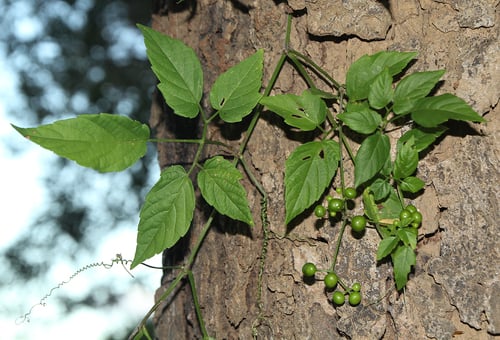
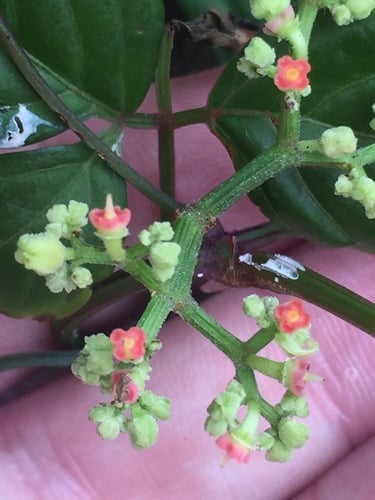
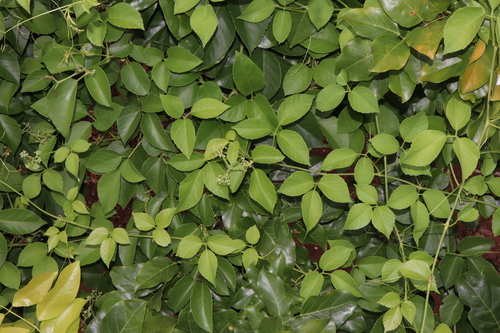
A climbing shrub. It has tuberous roots. The vine loses its leaves during the year. It has tendrils that are divided. It climbs 5-8 m high. The leaves have stalks 9 cm long. The leaves have 3 leaflets divided like fingers on a hand. There are teeth around the edge. The leaflets are about 8 cm long by 5 cm wide but the end leaflet is slightly longer and more narrow. The flowers are green and contain both sexes. There can be 100-200 flowers in a cluster. The fruit are round and black. The fruit have 2-4 seeds. The seeds are 4-5 mm long by 2-3 mm wide.
Edible Uses
Fruit - raw or cooked. A juicy texture with a sweet to acidic flavour. The average yield per plant is about 750g per year. (This seems exceedingly low.) The fruit contains about 8.6% sugars, 2.9% protein, 1.4% ash. Vitamin C content is 12.2mg per 100ml of juice. The fruit is about 6 - 8mm in diameter containing 1 - 2 seeds and is carried on the plant in small grape-like bunches.
Traditional Uses
The ripe fruit are juicy and slightly acid and are eaten.
This uses section is brief — help expand it
Medicinal Uses
A poultice of the roots is used to help set dislocated bones. The plant is used to heal bone fractures. The bark and the twigs are astringent and expectorant.
Distribution
It is a tropical plant. It grows in forests between 500-1,500 m above sea level. In the Indian Himalayas it grows between 2,000-2,800 m above sea level. In Sichuan and Yunnan.
Where It Grows
Asia, Bhutan, China, Himalayas, India, Indochina, Indonesia, Laos, Malaysia, Myanmar, Nepal, Northeastern India, SE Asia, Thailand, Tibet, Vietnam,
Cultivation
Parthenocissus semicordata is a plant of the warm temperate and subtropical zones of Asia. It is not very cold-hardy, tolerating occasional, short-lived temperatures falling as low as -5°c. The young growth in spring is more frost-tender and can be damaged by late frosts. Requires a well-drained moisture retentive fertile soil and a sunny position. Succeeds in semi-shade. In areas close to the limits of hardiness, the plant is best sited in a position that is sheltered from the morning sun - a west-facing wall is ideal, allowing the plant plenty of afternoon sun. A climbing plant, supporting itself by means of adhesive tendrils. A very good climber for walls but it can invade gutters. Fruits are only produced after a long hot summer. The fruit of this species is very late ripening and the plant has potential in breeding programmes with Vitis vinifera, especially in the Himalayas, where this trait could be useful.
Propagation
Seed - best sown as soon as it is ripe. Stored seed germinates best if it is stratified for 6 weeks at 5°c. Germination is variable. When they are large enough to handle, prick the seedlings out into individual pots and grow them on until large enough to plant out. Cuttings of half-ripe wood, 7 - 10cm taken at a node (ensure that it has at least 2 true buds). Easy to root. Basal hardwood cuttings of current seasons growth, 10 - 12 cm long. Layering.
Other Uses
Plants can be allowed to sprawl on the ground, making a good ground cover when spaced about 3 metres apart each way. They are very vigorous, however, and would soon swamp smaller plants.
Production
A vine may yield 750 g of fruit.
Nutrition
| Part | Moisture | kJ | kcal | Protein | Vit A | Vit C | Iron | Zinc |
|---|---|---|---|---|---|---|---|---|
| Fruit | 75.7 | — | — | 2.9 | — | 12.2 | 7 | — |
Synonyms
Also Known As
Amru bail, Arem tsukme-natsu, Bara churcheri, Bhambti, Chappar tang, Laderi, Ladula, Phlankur
References (3)
- Masoodi, H. U. R. & Sundriyal, R. C., 2020, Richness of non-timber forest products in Himalayan communities—diversity, distribution, use pattern and conservation status. Journal of Ethnobiology and Ethnomedicine 16:56
- Parmar, C., & Kaushel, M. K., 1982, In Wild Fruits. Kalyani Publishers, New Delhi, India. p 95-97 (As Vitis himalayana)
- Upreti, K., et al, 2010, Diversity and Distribution of Wild Edible Fruit Plants of Uttarakhand. Bioversity Potentials of the Himalaya. p 179