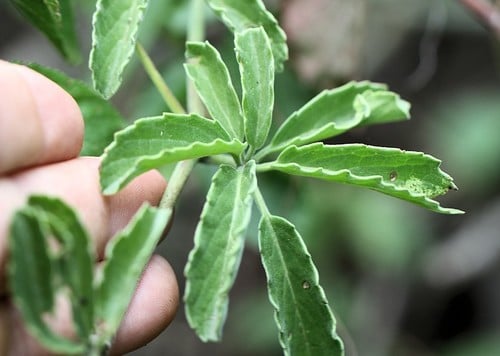
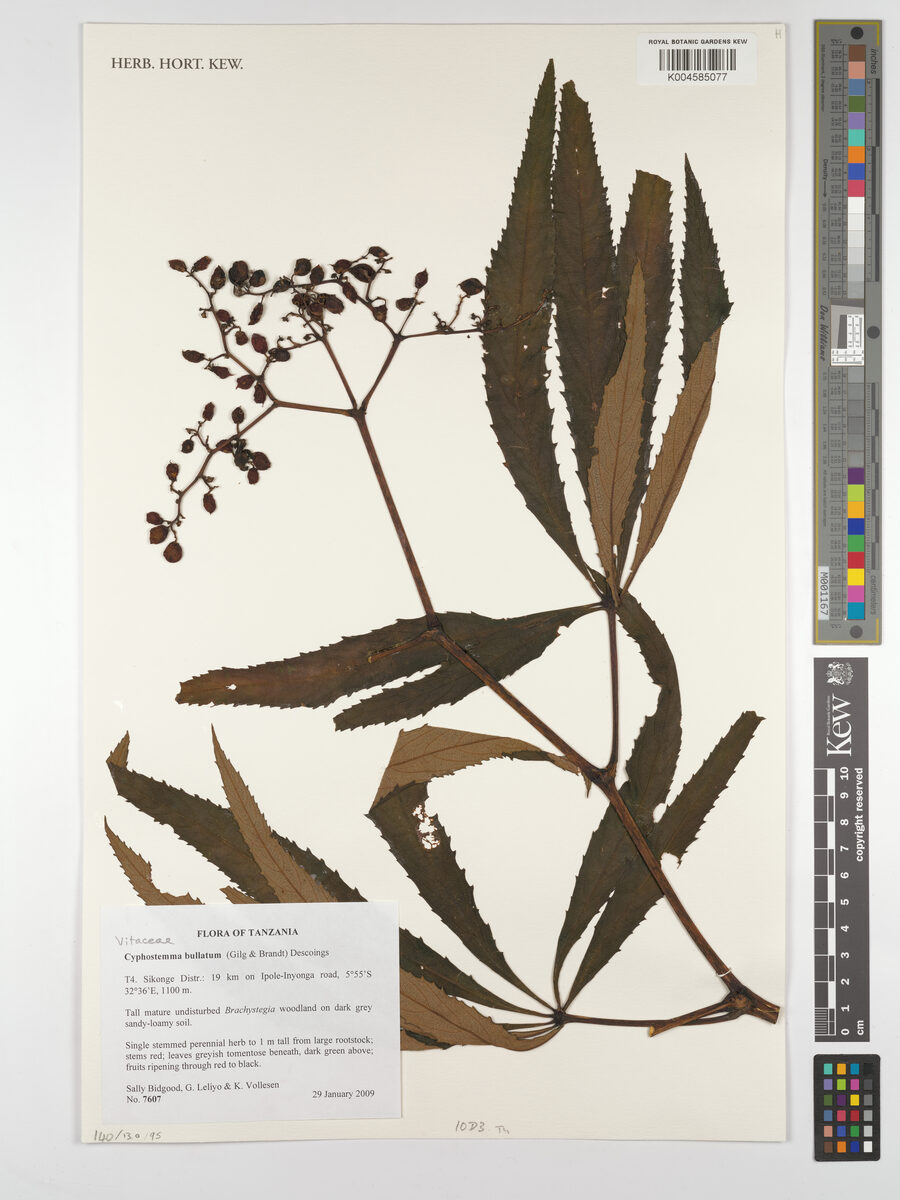
Leea asiatica
(L.) Ridsdale
iNaturalist· cc-by-nc
(c) Nitin Kawthankar, some rights reserved (CC BY-NC), uploaded by Nitin Kawthankar
iNaturalist· cc-by-nc
(c) Radha Veach, some rights reserved (CC BY-NC)
Description
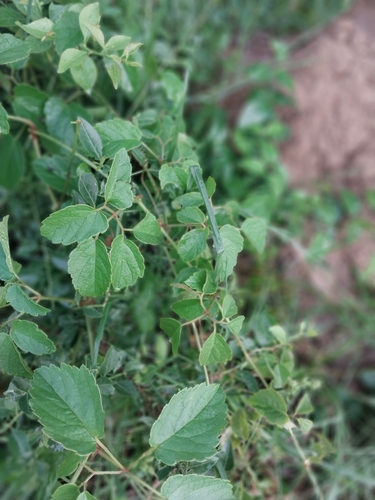
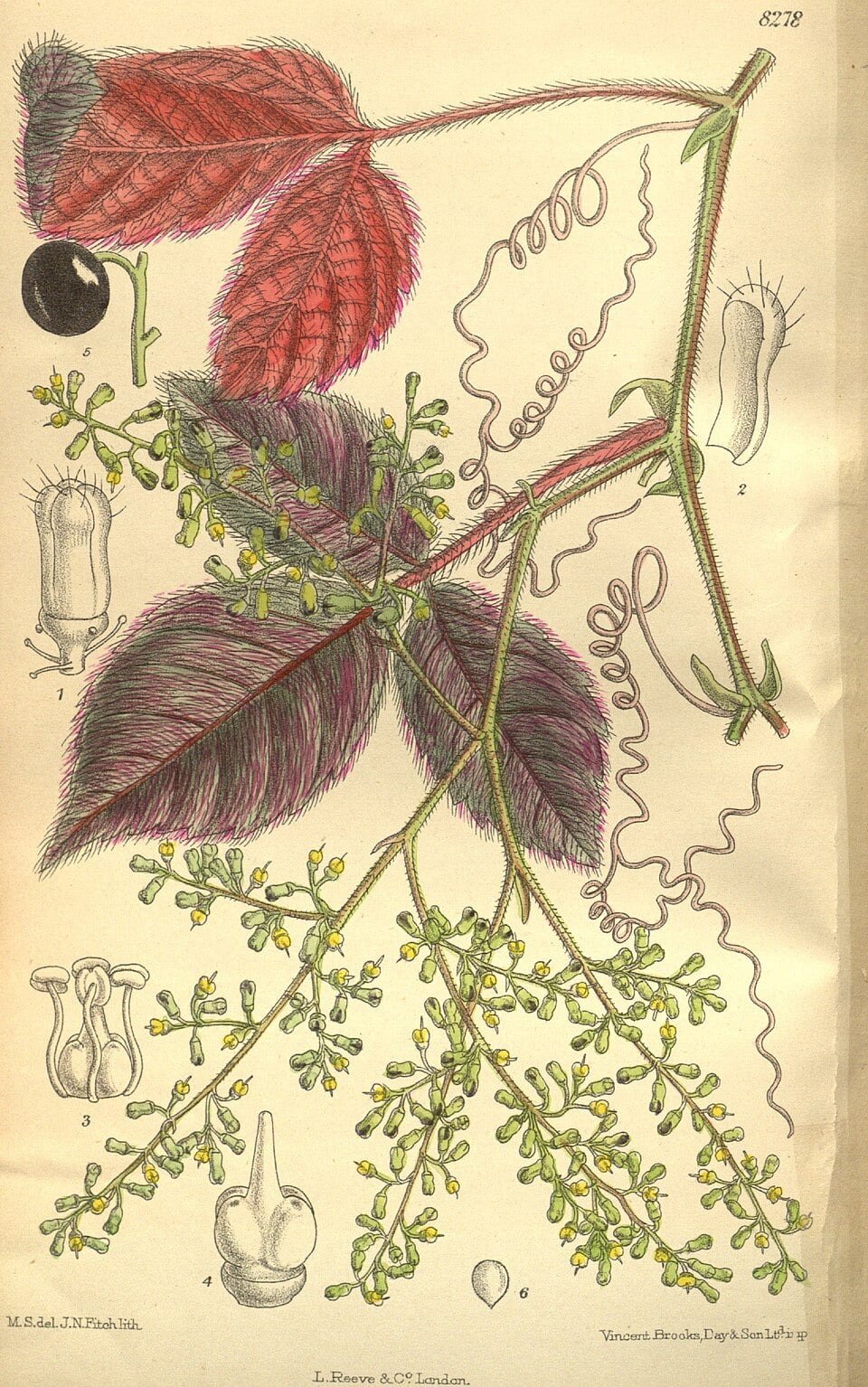
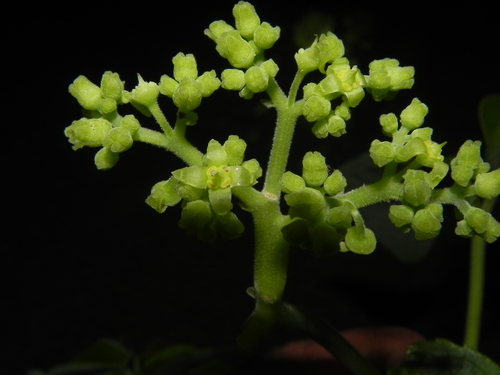
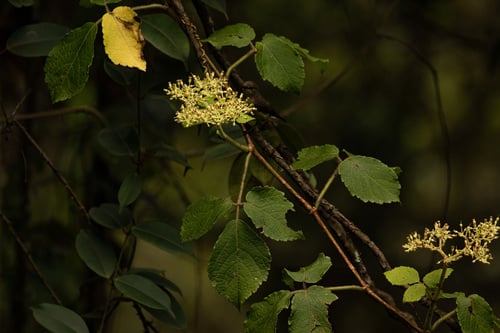
An erect shrub. It grows to about 1 m high. The leaves have stalks. They are twice divided. The upper leaves have 5-7 leaflets. The leaflets are 7.5-20 cm long. They taper to the tip. They are oblong with teeth around the edge. The flowers are white with a yellow tinge. The fruit is a berry. It is green.
Edible Uses
The ripe fruit are eaten raw and are sweet. The fruit, leaves, roots, flowers, and tubers are all edible; tubers are eaten as a vegetable and flowers are cooked as a vegetable.
Traditional Uses
The ripe fruit are eaten raw. They are sweet. The fruit, leaves and roots are edible. The tubers are eaten as a vegetable. The flowers are cooked as a vegetable/
Medicinal Uses
The root tuber is used as a treatment against guineaworms. The root, combined with the bark of Boswellia serrata, is made into paste which is prescribed in cases of snake-bite.
Distribution
A tropical and subtropical plant. In Nepal it grows between 400-1500 m altitude. It grows on open hillsides. In Yunnan in China it grows below 1300 m above sea level. It grows in secondary forest.
Where It Grows
Asia, Bangladesh, Bhutan, Cambodia, China, Himalayas, India, Indochina, Laos, Myanmar, Nepal, Pakistan, SE Asia, Thailand, Vietnam,
Cultivation
Plants are grown from seed.
Propagation
Seed - Cuttings Air layering
Other Uses
A leaf extract is mixed with water and used for washing the hair.
Notes
Also put in the family Leeaceae. Leeaceae occur in the tropics. There are about 70 Leea species.
Synonyms
Also Known As
Aliv, Banchalita, Deenda, Dinda, Domadojei, Dupu, Galena, Gangma-chhangoppa, Gharbanda, Goada, Hansiadhapar, Harva, Hatikanopotro, Holma, Kawa okhar, Kawaokhar, Kukura, Kumala, Kumali, Kumani, Kumoli, Kunwai, Kuram chirpali, Nalugu, Nanidhini, Nellu, Soh-phyrnou-nar, Soh-phyrnou
References (22)
- Ambasta, S.P. (Ed.), 2000, The Useful Plants of India. CSIR India. p 320, p 321 (As Leea edgeworthii)
- Bajracharya, D., 1980, Nutritive Values of Nepalese Edible Wild Fruits. Z. Lebensm. Unters. Forsch. 171: 363-366 (As Leea aspera)
- Bhogaonkar, P. Y. & Devarkar, V. D., 2018, Inventory for ethnovegetable knowledge of the tribals of Satpura hill area-Melghat, Dist. Amravati (India), Plantae Scientia, 2018; Vol. 01 Issue 01: 01-08
- Chauhan, S. H., et al, 2018, Consumption patterns of wild edibles by the Vasavas: a case study from Gujarat, India. Journal of Ethnobiology and Ethnomedicine (2018) 14:5 (Also as Leea edgeworthii)
- Dangol, D. R. et al, 2017, Wild Edible Plants in Nepal. Proceedings of 2nd National Workshop on CUAOGR, 2017.
Show all 22 references Hide references
- Datar, M. N. & Upadhye, A. S., 2016, Forest foods of northern region of Western Ghats. MACS - Agharkar Research Institute, Pune. Pp 1-160. ISBN: 978-93-85735-10-3 p 102
- Dobriyal, M. J. R. & Dobriyal, R., 2014, Non Wood Forest Produce an Option for Ethnic Food and Nutritional Security in India. Int. J. of Usuf. Mngt. 15(1):17-37
- Flora of Pakistan. www.eFloras.org (As Leea edgeworthii)
- Gautam, R. S., et al, 2020, Wild Edible Fruits of Nepal. Int. J. Appl. Sci. Biotechnol. Vol 8(3): 289-304
- GUPTA, (As Leea aspera)
- Jadhav, R., et al, 2015, Forest Foods of Northern Western Ghats: Mode of Consumption, Nutrition and Availability. Asian Agri-History Vol. 19, No. 4: 293-317
- Jin, Chen et al, 1999, Ethnobotanical studies on Wild Edible Fruits in Southern Yunnan: Folk Names: Nutritional Value and Uses. Economic Botany 53(1) pp 2-14
- Kiran, K. C., et al, 2019, Diversity and Seasonal Availability of Potential Wild Edible Plants from Vidarbha Region of Maharashtra State, India. Int.J.Curr.Microbiol.App.Sci (2019) 8(2): 1434-1446
- Manandhar, N.P., 2002, Plants and People of Nepal. Timber Press. Portland, Oregon. p 287
- Martin, F.W. & Ruberte, R.M., 1979, Edible Leaves of the Tropics. Antillian College Press, Mayaguez, Puerto Rico. p 225 (As Leea aspera)
- Pandy, R. K. & Saini, S. K., 2007, Edible plants of tropical forests among tribal communities of Madhya Pradesh. Indian Journal of Traditional Knowledge. 6(1), pp 185-190
- Pasha, M. K. & Uddin, S. B., 2019, Minor Edible Fruits of Bangladesh. Bangladesh J. Plant Taxon. 26(2): 299–313 (As Leea crispa)
- Patil, M. V. & Patil, D. A., 2000, Some More Wild Edible Plants of Nasik District (Maharashtra). Ancient Science of Life Vol. X1X (3&4): 102-104
- Singh, H.B., Arora R.K.,1978, Wild edible Plants of India. Indian Council of Agricultural Research, New Delhi. p 65, (Also as Leea edgeworthii)
- Singh, V. and Singh, P., 1981, Edible Wild Plants of Eastern Rajasthan. J. Econ. Tax. Bot. Vol 2 pp 197-207 (As Leea edgeworthii)
- Trans. Linn. Soc. London 20:36. 1846 (As Leea aspera)
- Upreti, K., et al, 2010, Diversity and Distribution of Wild Edible Fruit Plants of Uttarakhand. Bioversity Potentials of the Himalaya. p 174