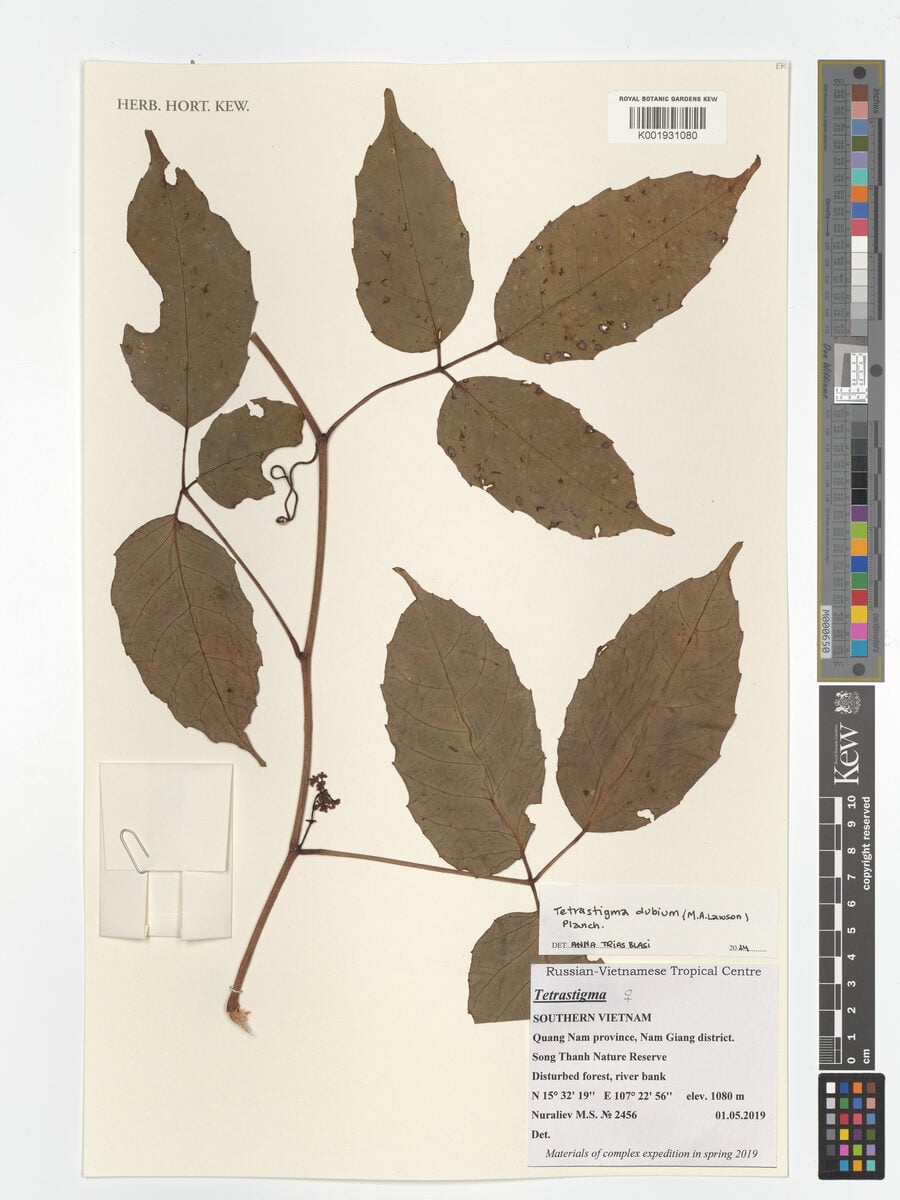
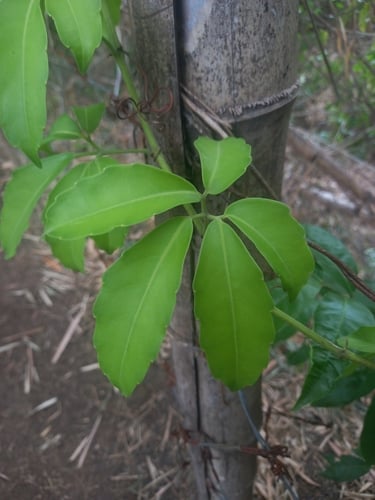
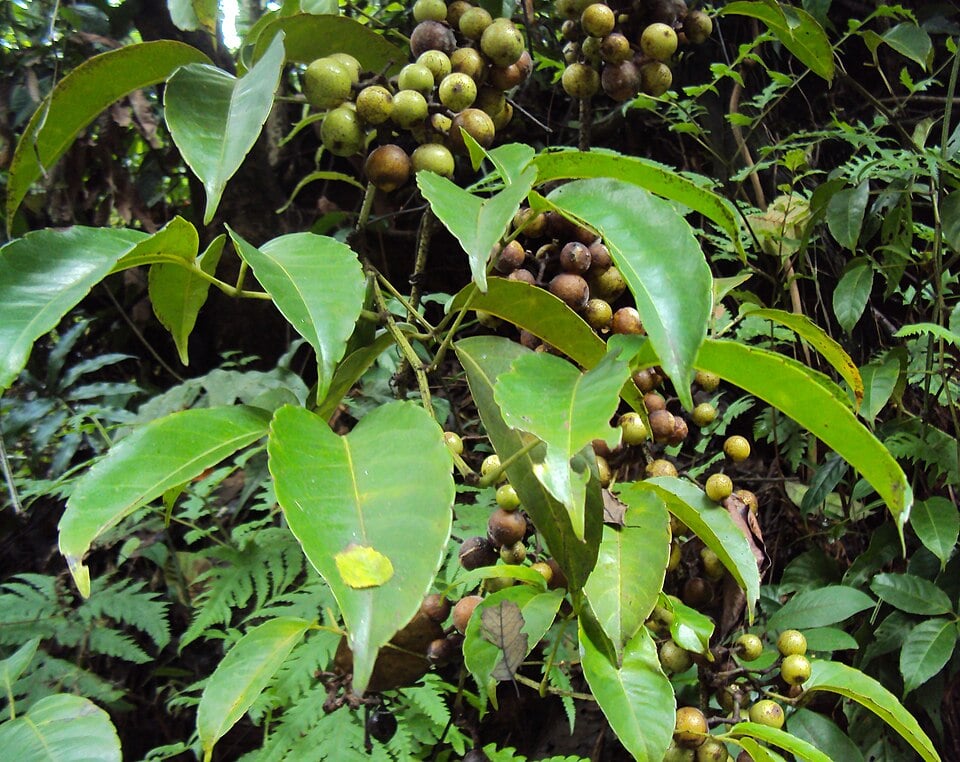
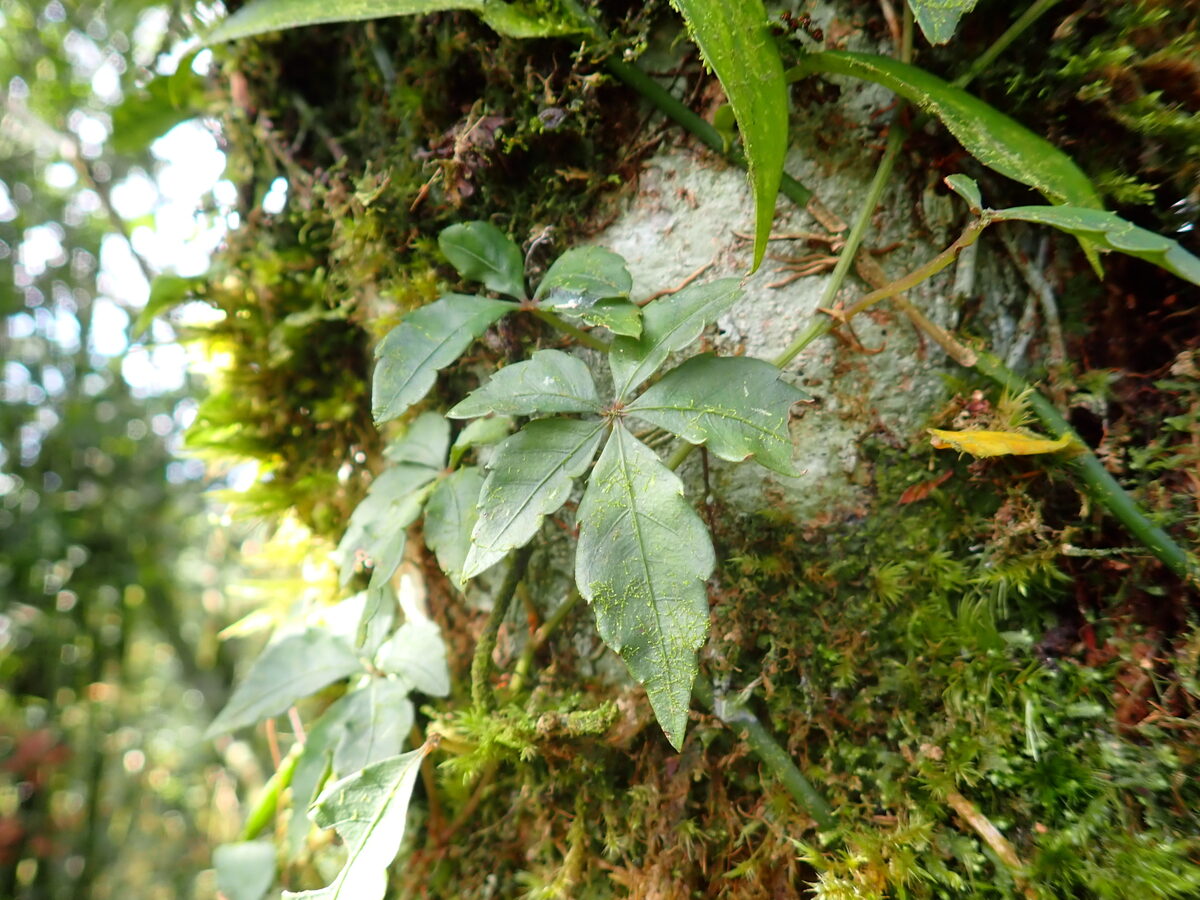
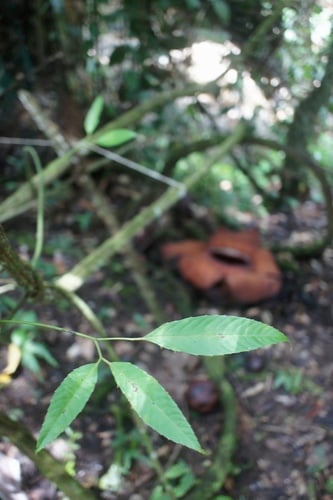
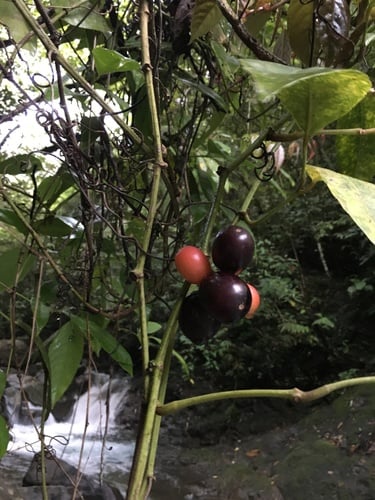
Leea sambucina
Willd.
iNaturalist· cc-by-nc
(c) Wesley Torres-Pérez, some rights reserved (CC BY-NC)
iNaturalist· cc-by-nc
(c) Wesley Torres-Pérez, some rights reserved (CC BY-NC)
iNaturalist· cc-by
(c) Tony KM, some rights reserved (CC BY)
Description
A subtropical shrub in the Vitaceae family (also placed in Leeaceae) with edible leaves, vegetable portions, and fruit.
This description is brief — help expand it
Edible Uses
Leaves, vegetable portions, and fruit are edible.
Distribution
It is a subtropical plant.
Where It Grows
Asia, Himalayas, India, Northeastern India, Sikkim,
Production
In Sikkim the fruit are available August to October.
Notes
Also put in the family Leeaceae.
Nutrition
| Part | Moisture | kJ | kcal | Protein | Vit A | Vit C | Iron | Zinc |
|---|---|---|---|---|---|---|---|---|
| Leaves | 81.3 | — | — | 22.5 | — | — | — | — |
Synonyms
Aquilicia ottilis Gaertn.Aquilicia sambucina L. [Illegitimate]Otillis zeylanica Gaertn.
Also Known As
Galene, Kukurathengia, Thingtupui
References (3)
- Barua, U., et al, 2007, Wild edible plants of Majuli island and Darrang districts of Assam. Indian Journal of Traditional Knowledge 6(1) pp 191-194 (As Leea samcina)
- Seal, T., et al, 2013,Evaluation of Proximate and Mineral Composition of Wild Edible Leaves, traditionally used by the Local People of Meghalaya State in India. Asian Journal of Plant Sciences 12(4): 171-175
- Sundriyal, M., et al, 2004, Dietary Use of Wild Plant Resources in the Sikkim Himalaya, India. Economic Botany 58(4) pp 626-638