Leea aequata
Linn.
Ginggiyang
iNaturalist· cc-by-nc-sa
(c) filibot.web, some rights reserved (CC BY-NC-SA)
gbif· cc0
President and Fellows of Harvard College
Description
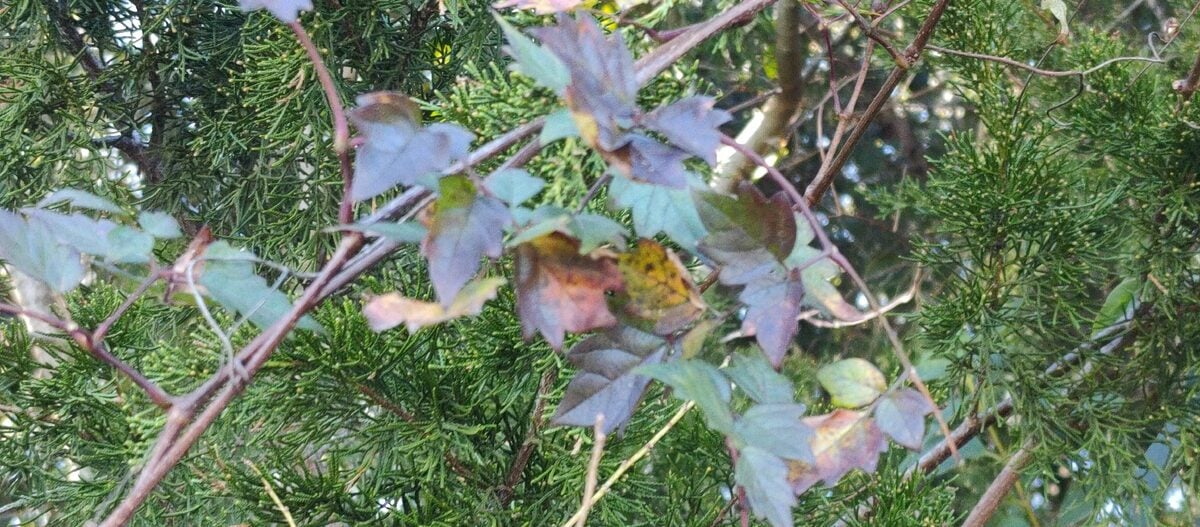
A shrub or small tree. The small branches have ridges along them. They have rusty hairs. The leaves have 1 or 2 leaflets along the stalk. The leaf stalks have rusty hairs. The leaves are oval and 6-22 cm long by 3-7 cm wide. The fruit is 5-7 mm across and has 4-6 seeds.
Edible Uses
The fruit and leaves are edible.
Medicinal Uses
The plant contains an oil that inhibits the growth of Mycobacterium tuberculosis.
Distribution
A tropical plant. It grows in forests and shrublands between 200-1,100 m above sea level in S China.
Where It Grows
Andamans, Asia, Bangladesh, Bhutan, Cambodia, Himalayas, India, Indochina, Indonesia, Malaysia, Myanmar, Nepal, Philippines, SE Asia, Thailand, Vietnam,
Cultivation
Plants can be grown from seeds.
Propagation
Seed - Cuttings Air layering
Production
In China plants flower in April to May and fruit July to September.
Notes
Also put in the family Leeaceae. Leeaceae occur in the tropics. There are about 30-70 Leea species. It has an oil which stops the growth of bacteria Mycobacterium tuberculosis.
Synonyms
Also Known As
Dieng-soh-phyrnu-iong, Ginggiyang, Girang, Jembali makan, Jing jawngla, Kakajangha, Kya-petthein, Lea girang, Lengki, Naga-mauk, Surapadi, Velanasandi
References (5)
- Altschul, S.V.R., 1973, Drugs and Foods from Little-known Plants. Notes in Harvard University Herbaria. Harvard Univ. Press. Massachusetts. no. 2679
- Ambasta, S.P. (Ed.), 2000, The Useful Plants of India. CSIR India. p 320
- Burkill, I.H., 1966, A Dictionary of the Economic Products of the Malay Peninsula. Ministry of Agriculture and Cooperatives, Kuala Lumpur, Malaysia. Vol 2 (I-Z) p 1348
- Sukarya, D. G., (Ed.) 2013, 3,500 Plant Species of the Botanic Gardens of Indonesia. LIPI p 659
- World Checklist of Useful Plant Species 2020. Royal Botanic Gardens, Kew