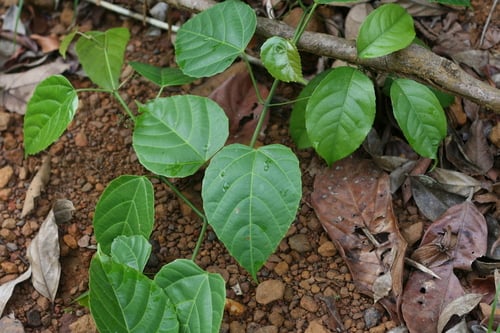
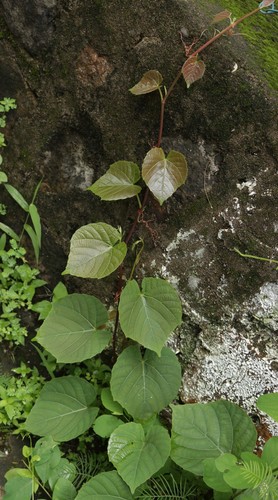
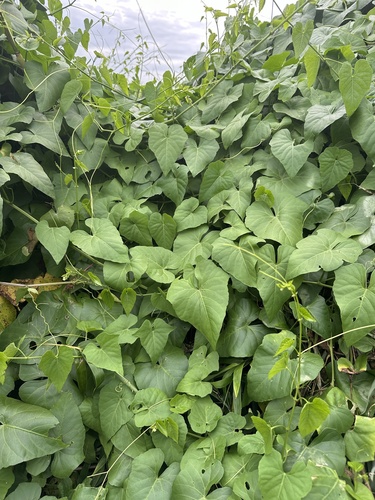
Parthenocissus himalayana
(Royle) Planch.
Charchare
iNaturalist· cc-by-nc
(c) Phuentsho, some rights reserved (CC BY-NC)
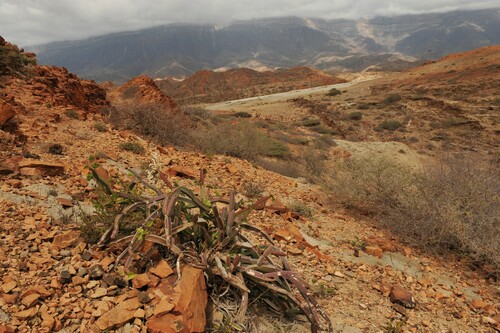
iNaturalist· cc-by-nc
(c) Phuentsho, some rights reserved (CC BY-NC)
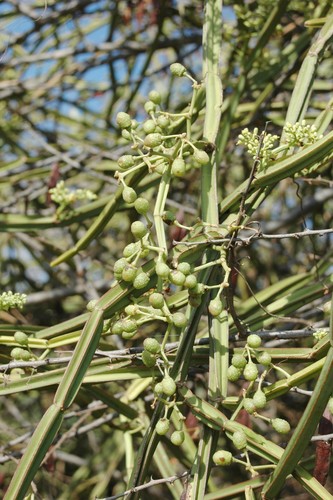
iNaturalist· cc-by-nc
(c) Phuentsho, some rights reserved (CC BY-NC)
Summary
Source: WikipediaA deciduous climbing vine reaching 18 m with fast growth, hardy to UK zone 9 and frost-tender. Flowers from May to July with seed ripening September to October. Hermaphroditic flowers are insect-pollinated. Grows in light sandy, medium loamy, or heavy clay soils with good drainage across mildly acidic to basic pH ranges. Tolerates semi-shade and prefers moist soil.
Description
A climber to 18 m long. The plant climbs by tendrils which attach to objects. The fruit is about 6 mm across and is carried in small bunches like grapes.
Edible Uses
The fruit can be eaten raw or cooked. It has a juicy texture with a sweet to acidic flavour, measures about 6mm in diameter, and is carried in small bunches like grapes. Average yield per plant is about 750g per year. The fruit contains about 8.6% sugars, 2.9% protein, and 1.4% ash, with a vitamin C content of 12.2mg per 100ml of juice.
Medicinal Uses
None known
Distribution
It occurs naturally climbing over rocks between 1200-3300 metres altitude in Western China. It requires a well drained moist soil. It needs a fertile soil and can grow in sunlight of light shade. Young plants are damaged by frosts. Fruiting occurs after a long hot summer.
Propagation
Seed - best sown as soon as it is ripe in a cold frame. Stored seed requires stratifying for 6 weeks at 5°c and should be sown as early in the year as possible. Germination is variable. When they are large enough to handle, prick the seedlings out into individual pots and grow them on in the greenhouse for at least their first winter. Plant them out into their permanent positions in late spring or early summer, after the last expected frosts. Cuttings of half-ripe wood, 7 - 10cm taken at a node (ensure that it has at least 2 true buds), July/August in a frame. Easy to root but they do not always survive the first winter. Basal hardwood cuttings of current seasons growth, 10 - 12cm long, autumn in a frame. Layering.
Other Uses
Plants can be allowed to sprawl on the ground as a ground cover, spaced about 3 metres apart each way. They are very vigorous and would soon swamp smaller plants.
Synonyms
Also Known As
Chappar tang, Hlotagbret, Kandur, Laderi, Philuna, Phlankar, Thulu charchare lahara, Zemaro
References (8)
- Ambasta, S.P. (Ed.), 2000, The Useful Plants of India. CSIR India. p 431
- A. L. P. P. de Candolle & A. C. de Candolle, Monogr. phan. 5:450. 1887
- Masoodi, H. U. R. & Sundriyal, R. C., 2020, Richness of non-timber forest products in Himalayan communities—diversity, distribution, use pattern and conservation status. Journal of Ethnobiology and Ethnomedicine 16:56
- Plants for a Future database, The Field, Penpol, Lostwithiel, Cornwall, PL22 0NG, UK. http://www.scs.leeds.ac.uk/pfaf/
- Savita, et al, 2006, Studies on wild edible plants of ethnic people in east Sikkim. Asian J. of Bio Sci. (2006) Vol. 1 No. 2 : 117-125
Show all 8 references Hide references
- Singh, H.B., Arora R.K.,1978, Wild edible Plants of India. Indian Council of Agricultural Research, New Delhi. p 68
- Sundriyal, M., et al, 1998, Wild edibles and other useful plants from the Sikkim Himalaya, India. Oecologia Montana 7:43-54
- Sundriyal, M., et al, 2004, Dietary Use of Wild Plant Resources in the Sikkim Himalaya, India. Economic Botany 58(4) pp 626-638