Horsfieldia grandis
(Hook. f.) Warb.
iNaturalist· cc-by-nc-sa
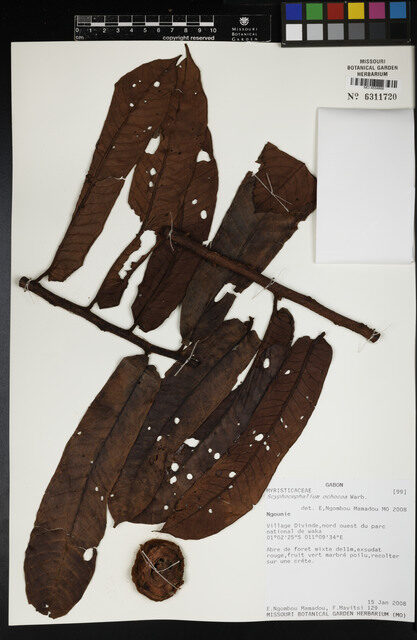
(c) Smithsonian Institution, National Museum of Natural History, Department of Botany, some rights reserved (CC BY-NC-SA)
Summary
Source: WikipediaHorsfieldia grandis is a species of plant in the family Myristicaceae. It is found in Indonesia, Malaysia, and Singapore.
Description
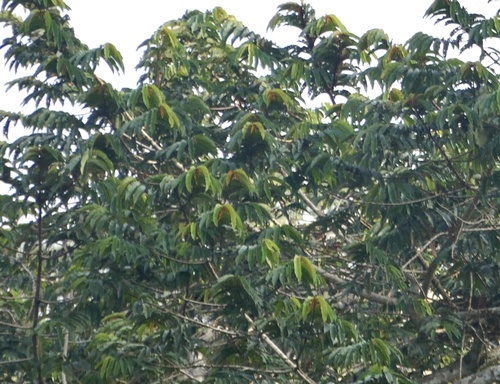
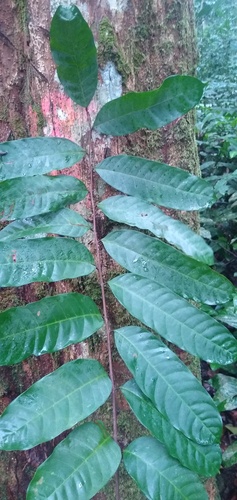
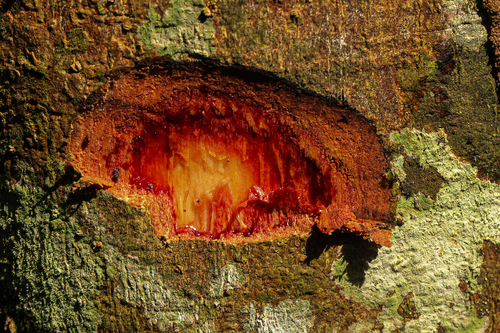
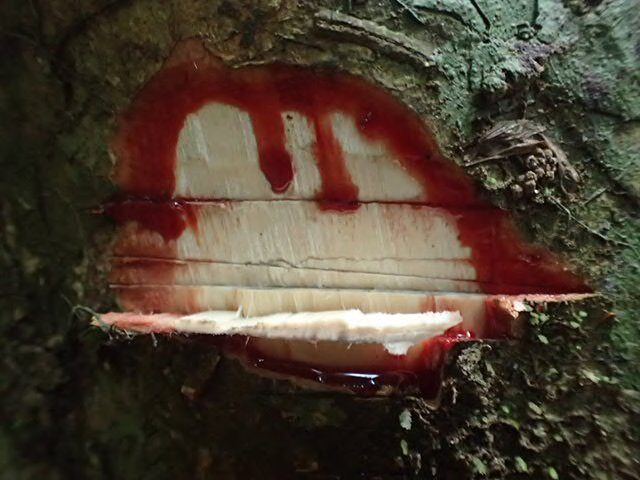
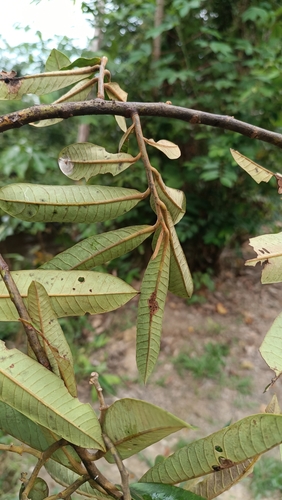
A small tree. It grows 19 m tall. The stem has red sap. The leaves are alternate and simple. They are hairy underneath. The flowers are 2 mm across. They are green to yellow. They occur in groups. The fruit are 13 mm long and orange. The seeds have a fleshy covering or aril around them.
Edible Uses
The fruit are beaten then eaten.
Traditional Uses
The fruit are beaten then eaten.
This uses section is brief — help expand it
Medicinal Uses
The sap is used to treat broken lips and mouth ulcers.
Distribution
It is a tropical plant. It grows in mixed forest including swamp forest up to 300 m above sea level. It is often along rivers and can be on sandy or clay soils.
Where It Grows
Asia, Indonesia, Malaysia, SE Asia,
Cultivation
A plant of the moist tropical lowlands, where it can be found at elevations up to 600 metres. The tree can flower and fruit all year round. A dioecious species, both male and female forms need to be grown if fruit and seed are required.
Propagation
Seed - dries out easily, loses its viability rapidly, and cannot be stored. It is best sown in a shaded position in a nursery seedbed - germination is usually fairly quick with the seed of most species sprouting within 2 - 17 weeks. Grow the young plants on in a shady position, planting them out in their permanent positions when large enough.
Other Uses
The heartwood is pale brown, the sapwood whitish to yellowish pink. It is used locally to carve rice-field (padi) guards.
Also Known As
Dara-dara, Kumpang, Kumpang api, Pendrahan
References (1)
- Slik, F., www.asianplant.net