Virola sebifera
Aubl.
Pintri
iNaturalist· cc-by-nc-sa
(c) Mauricio Mercadante, some rights reserved (CC BY-NC-SA)
iNaturalist· cc-by-nc
(c) Laurent Quéno, some rights reserved (CC BY-NC), uploaded by Laurent Quéno
iNaturalist· cc-by-nc-sa
(c) Mauricio Mercadante, some rights reserved (CC BY-NC-SA)
Summary
Source: WikipediaVirola sebifera is a species of tree in the family Myristicaceae, from North and South America.
Description
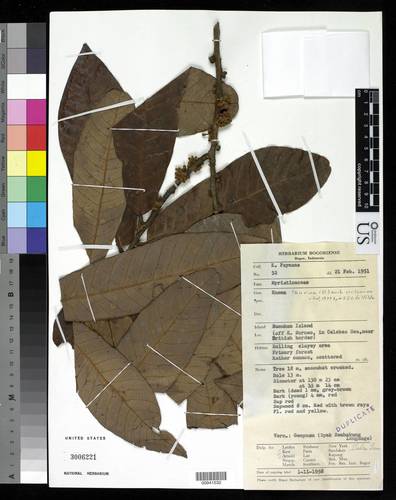
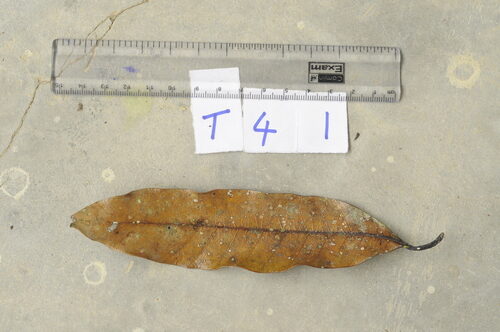
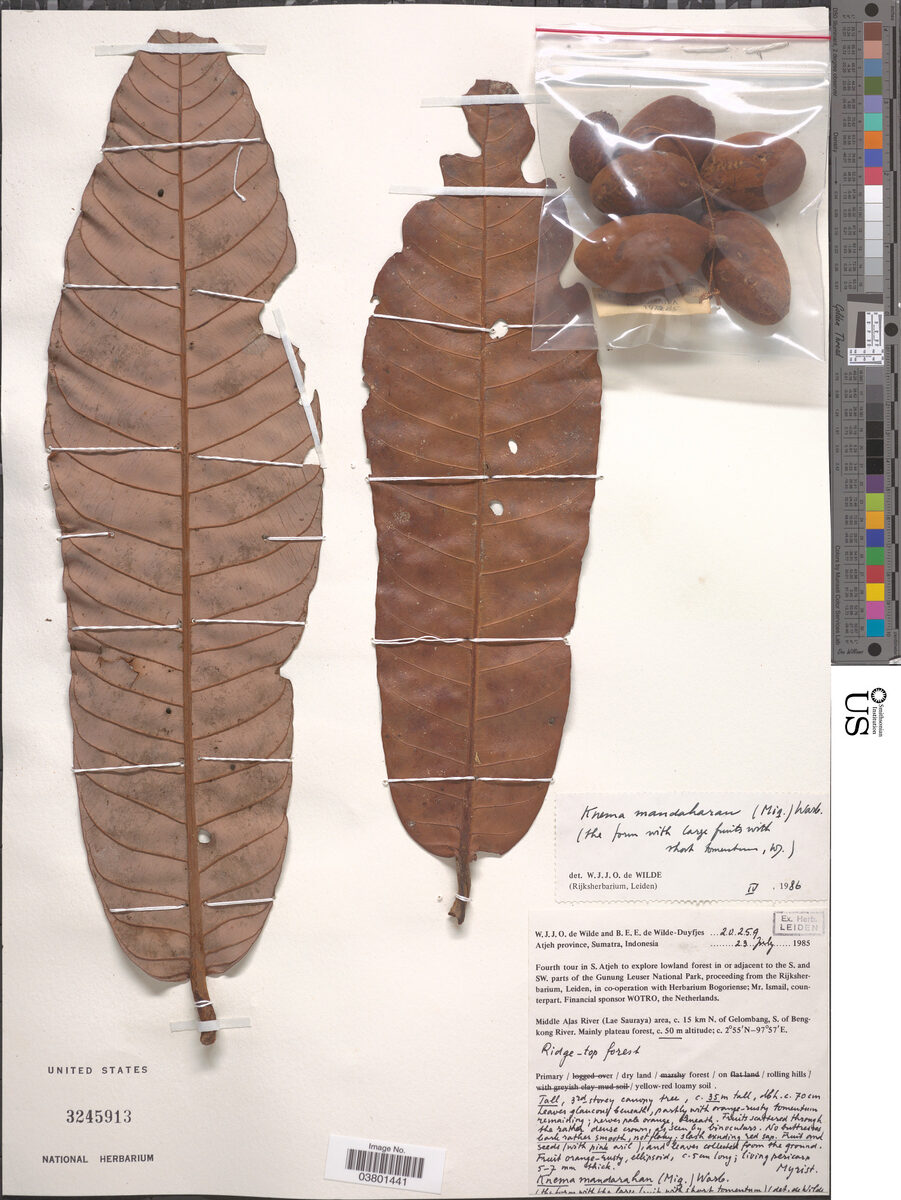
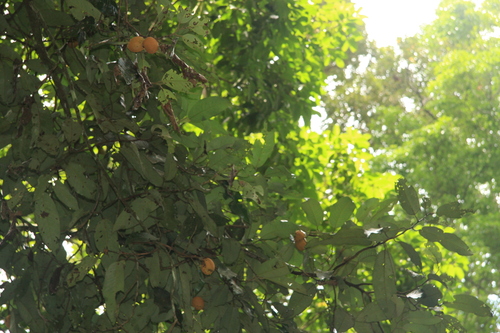
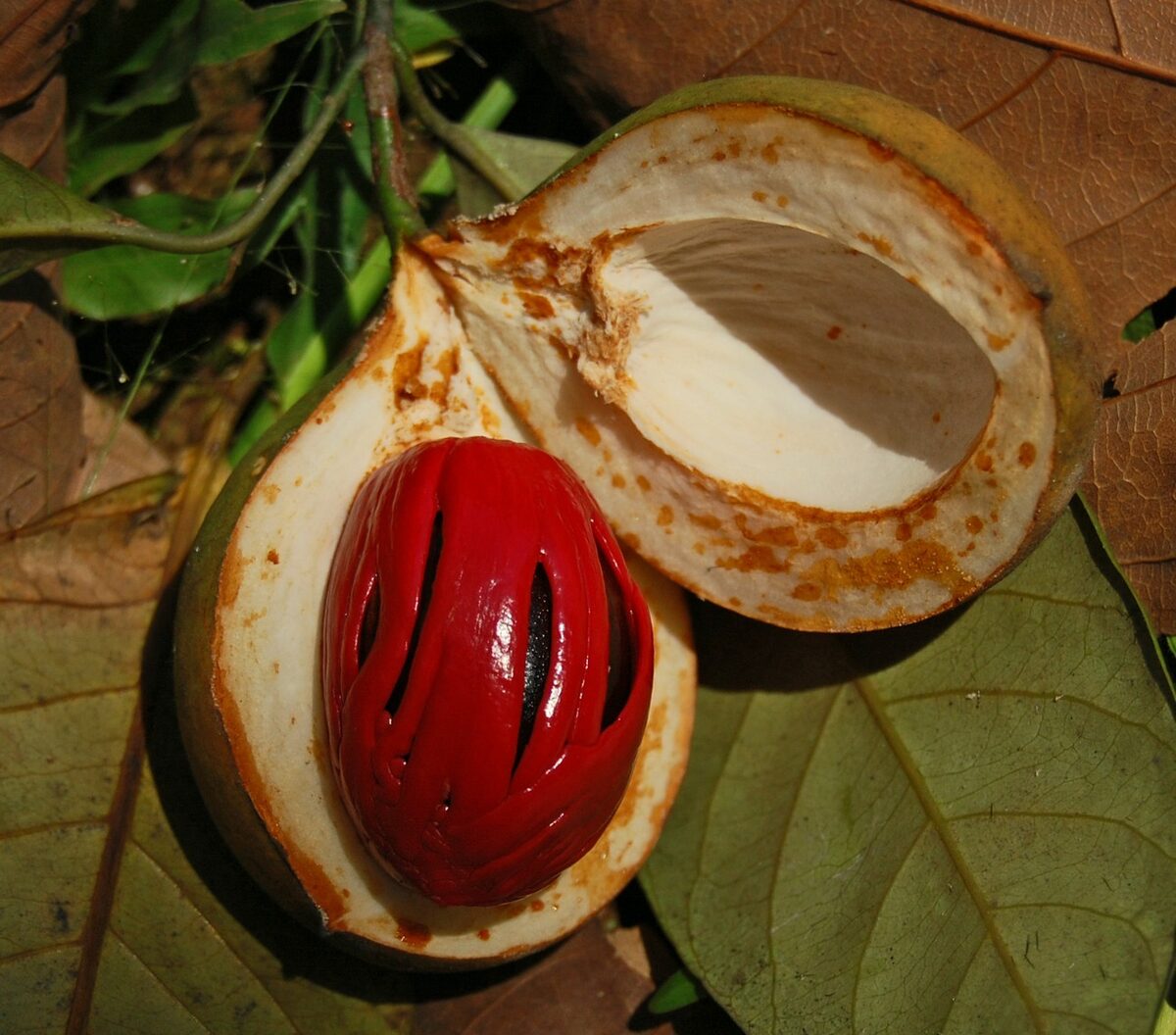
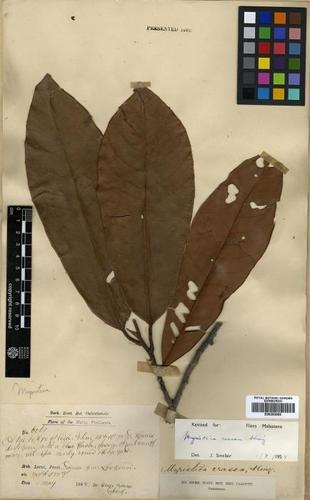
A medium sized tree. It grows 20 m tall. The branches are arranged in rings. The twigs have red hairs. The leaves are alternate and are regularly spaced. The leaves underneath are bluish green with red veins. Broken pieces produce sap that turns red. The flowers are in groups in the axils of leaves or at the ends of branches. The fruit is a capsule 1.5 cm long by 1 cm wide. It has a rusty covering.
Edible Uses
No edible uses are known for this plant.
Traditional Uses
The leaves are used for tea.
This uses section is brief — help expand it
Medicinal Uses
The sap is used to treat ulcers and skin eruptions. The bark is astringent, emetic, and stimulant. An infusion of the bark treats dyspepsia, intestinal colic, erysipelas, and inflammations. The bark is boiled in water to induce vomiting, or macerated and soaked in water as an anti-diarrhoeal drink. Juice from the bark is applied externally as an analgesic for cracked heels. A bark infusion serves as a wash for contusions and ulcers. A decoction of the bitter red sap is gargled or drunk to treat thrush and mouth sores. On exposure to air the sap becomes resinous and is used to relieve toothache pain and to cauterize aphthae. Native peoples of South America work a bark exudate into preparations with psychotropic properties.
Distribution
A tropical plant. It grows in the rainforest, often on sandy soils.
Where It Grows
Bolivia, Brazil, Central America, Costa Rica, Guiana, Guianas, Guyana, Honduras, Panama, South America, Suriname, Venezuela,
Cultivation
Grows best in a sunny position. Newly planted young trees are fairly slow to grow away, rarely surpassing 2 metres in height in the second year. A dioecious species, both male and female forms need to be grown if seed is required.
Propagation
Sow seed as soon as it is ripe, as viability is limited. Sow in individual containers in a lightly shaded position. Germination rates are generally below 30%, with sprouting occurring within 30 to 50 days. Seedlings grow quite slowly.
Other Uses
The seeds yield an oil formerly used for illumination, and are also used to make candles and soap. The seeds burn readily with a clear light; native peoples skewer them on thin hardwood sticks and use them as torches in the dark. Cut or damaged trees exude a blood-red, watery latex similar to commercial kino. The heartwood is a uniform light reddish, greyish, or brown, merging gradually into pale golden to pale rose-brown sapwood. The wood is straight-grained, medium-textured, with medium to high lustre, and has an indistinct odour and taste. It is moderately heavy and of low durability, being very susceptible to termite and pinhole borer attack. It works easily with ordinary tools, finishes well, nails and screws without splitting, and can be stained, varnished, polished, turned, and glued readily. It is used for construction, internal building finishes, toys, light boxes, and toothpicks.
Synonyms
Also Known As
Banak, Bogamani, Cacao de monte, Camaticaro, Carpeto, Cebo, Coco, Come monos, Copidijo, Cozoiba, Cuaiquer, Cuajo, Cuajo negro, Cuajo pequeno, Cuangare, Cuangare de loma, Cuangare puntelanza, Egron-baboen, Man-dalli, Masarico, Nuanamo, Piassam, Picana negra, Pintri, Sacha membrillo, Sangre de gallina, Sangre de grado, Sangretoro, Sangrino, Sebo, Shafuj, Sota, Sota amarilla, Tarara, Tartago, Tirasucio, Tzimbo, Unay, Velario colorado
References (9)
- Condit, R., et al, 2011, Trees of Panama and Costa Rica. Princeton Field Guides. p 342
- Grandtner, M. M. & Chevrette, J., 2013, Dictionary of Trees, Volume 2: South America: Nomenclature, Taxonomy and Ecology. Academic Press p 690
- Hist. pl. Guiane 2:904. 1775
- Kermath, B. M., et al, 2014, Food Plants in the Americas: A survey of the domesticated, cultivated and wild plants used for Human food in North, Central and South America and the Caribbean. On line draft. p 916
- Menninger, E.A., 1977, Edible Nuts of the World. Horticultural Books. Florida p 83 (As Myristica sebifera)
Show all 9 references Hide references
- Prodr. 96. 1788 (As Myristica sebifera)
- Smith, N., Mori, S.A., et al, 2004, Flowering Plants of the Neotropics. Princeton. p 261 (Drawing)
- van Roosmalen, M.G.M., 1985, Fruits of the Guianan Flora. Utrecht Univ. & Wageningen Univ. p 316
- Zuchowski W., 2007, Tropical Plants of Costa Rica. A Zona Tropical Publication, Comstock Publishing. p 244