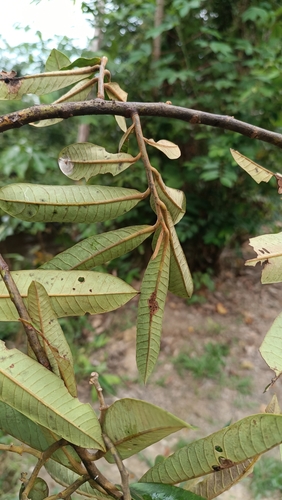
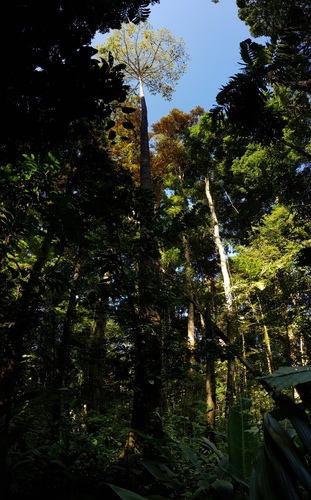
Virola guatemalensis
(Hemsl.) Warb.
gbif· cc-by-sa
GBIF
Description
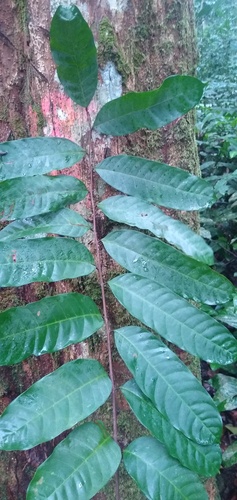
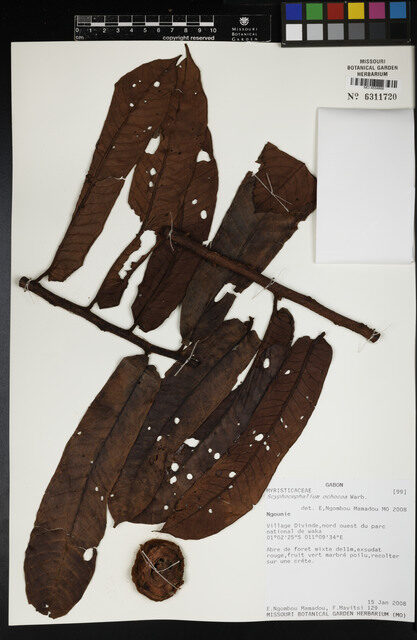
A tropical tree reaching 30 m tall in the Myristicaceae family, found from sea level to 1,150 m elevation in Central and South America.
This description is brief — help expand it
Edible Uses
The seeds are dried and used as a flavouring for chocolate.
Traditional Uses
The seeds are dried and used to flavour chocolate.
This uses section is brief — help expand it
Distribution
A tropical plant. It grows from sea level to 1,150 m above sea level.
Where It Grows
Central America, Costa Rica, Guatemala, Honduras, Mexico, Panama, South America,
Cultivation
A dioecious species, both male and female forms need to be grown if seed is required.
Other Uses
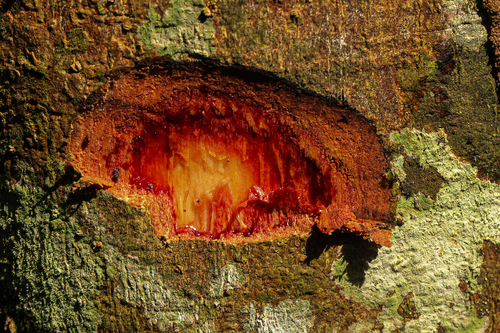
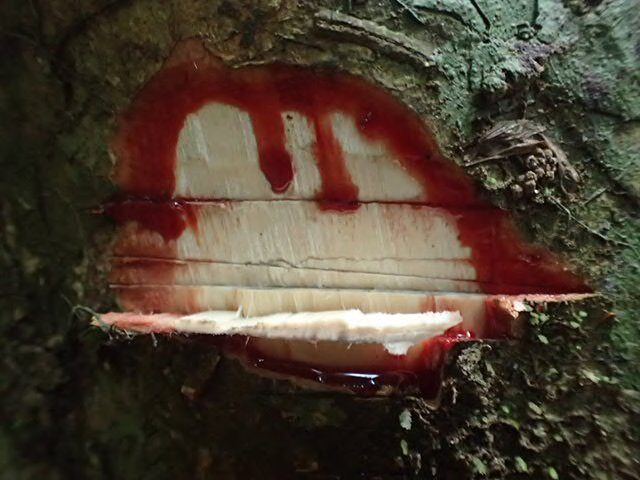
An oil is obtained from the seeds. It is used in some quantity for making soap and candles and for oiling machinery. The seeds are sometimes strung on splinters and burnt like candles. The young branches often appear in whorls at the ends of the larger ones and such whorls are used like egg-beaters for whipping chocolate and for stirring food in the process of cooking. Cut or damaged trees exude a blood-red, watery latex that is similar to the kino of commerce. The wood is pale brown, light in weight but firm, rather coarse-textured, easy to work, not durable. It is said to be suitable for general carpentry and construction, for boxes, and for other purposes where great durability is not necessary. It is suitable also for paper pulp. We do not have any more information on the wood of this species. However, a general description of the wood from this genus is as follows:- Upon drying and exposure, the heartwood becomes a pinkish golden-brown or a deep reddish-brown; it is sharply demarcated from the cream to tan coloured sapwood. The texture is rather coarse; the grain straight; lustre is low to medium; there is no distinctive odour or taste. The wood is not resistant to attack by decay fungi and is very susceptible to attack by termites and other insects; logs require prompt conversion or water storage to prevent damage by pinhole borers; bacterial attack resulting in the formation of odoriferous compounds is also reported. It is generally reported to be difficult to season, with a strong tendency to warp and check as well as collapse and honeycomb; thick stock is slow to dry. It works easily with both hand and machine tools and produces a good finish; it glues well; cuts well into veneers. The wood is used for purposes such as veneer and plywood, particle and fiberboard, furniture components, boxes and crates, light construction, general carpentry, millwork.
Notes
There are 45 Virola species in tropical America.
Synonyms
Also Known As
Cacao volador, Cedrillo, Sangre
References (3)
- Nov. Act. Nat. Cur. 68:220. 1897
- Kermath, B. M., et al, 2014, Food Plants in the Americas: A survey of the domesticated, cultivated and wild plants used for Human food in North, Central and South America and the Caribbean. On line draft. p 916
- Segura, S., et al, 2018, The edible fruit species in Mexico. Genet Resour Crop Evol (2018) 65:1767–1793