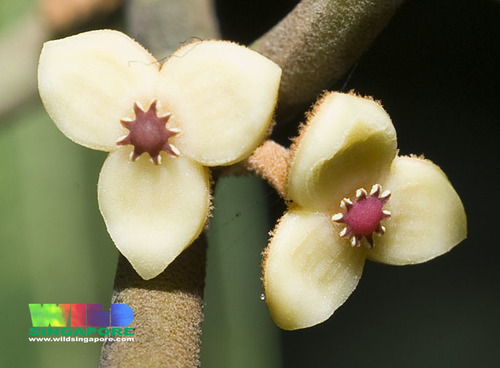
Virola koschnyi
Warb.
Koschny virola
iNaturalist· cc-by-nc
(c) Leonardo Álvarez-Alcázar, some rights reserved (CC BY-NC), uploaded by Leonardo Álvarez-Alcázar
iNaturalist· cc-by-nc
(c) Marvin López M., some rights reserved (CC BY-NC), uploaded by Marvin López M.
iNaturalist· cc-by-nc
(c) Marvin López M., some rights reserved (CC BY-NC), uploaded by Marvin López M.
Description
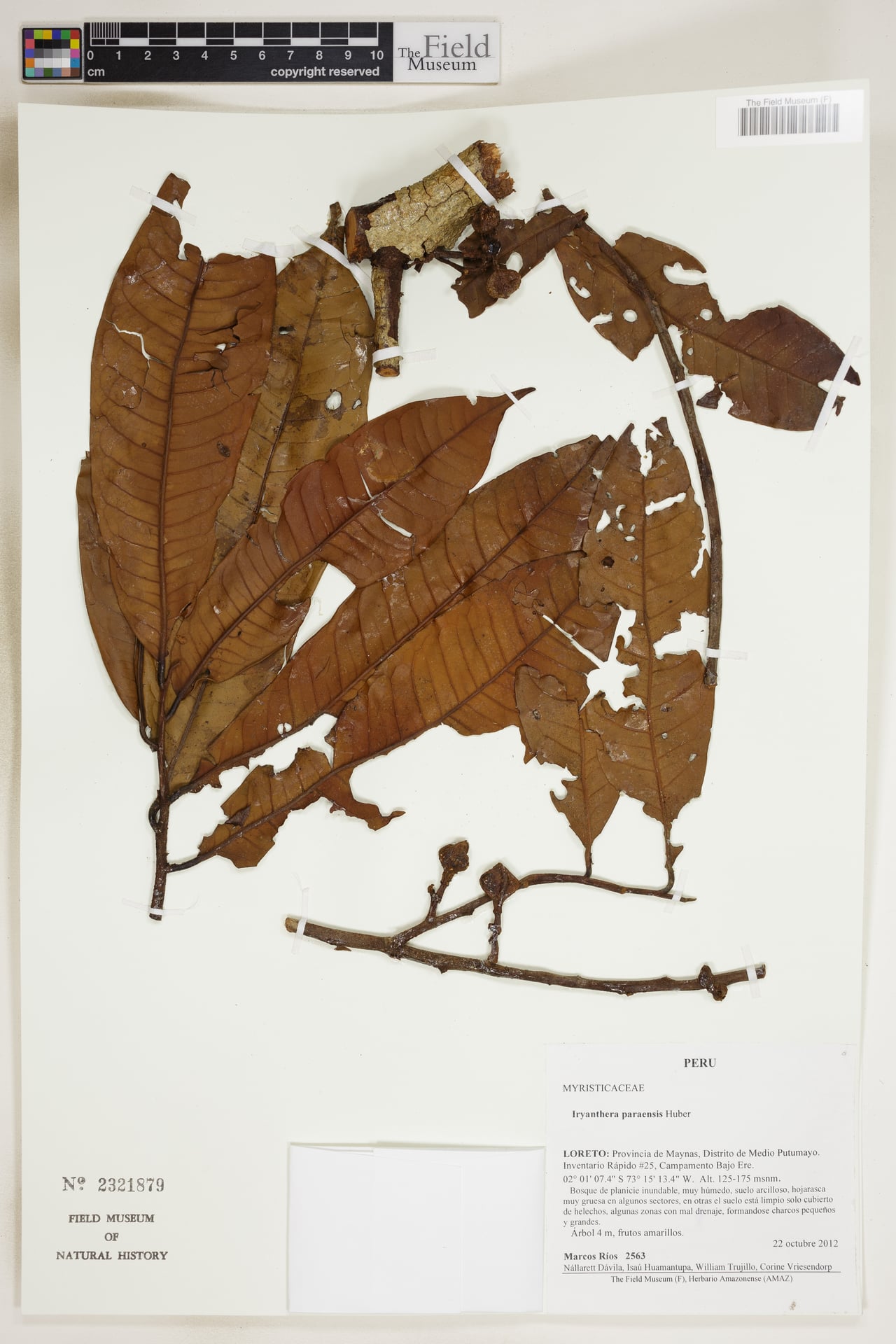
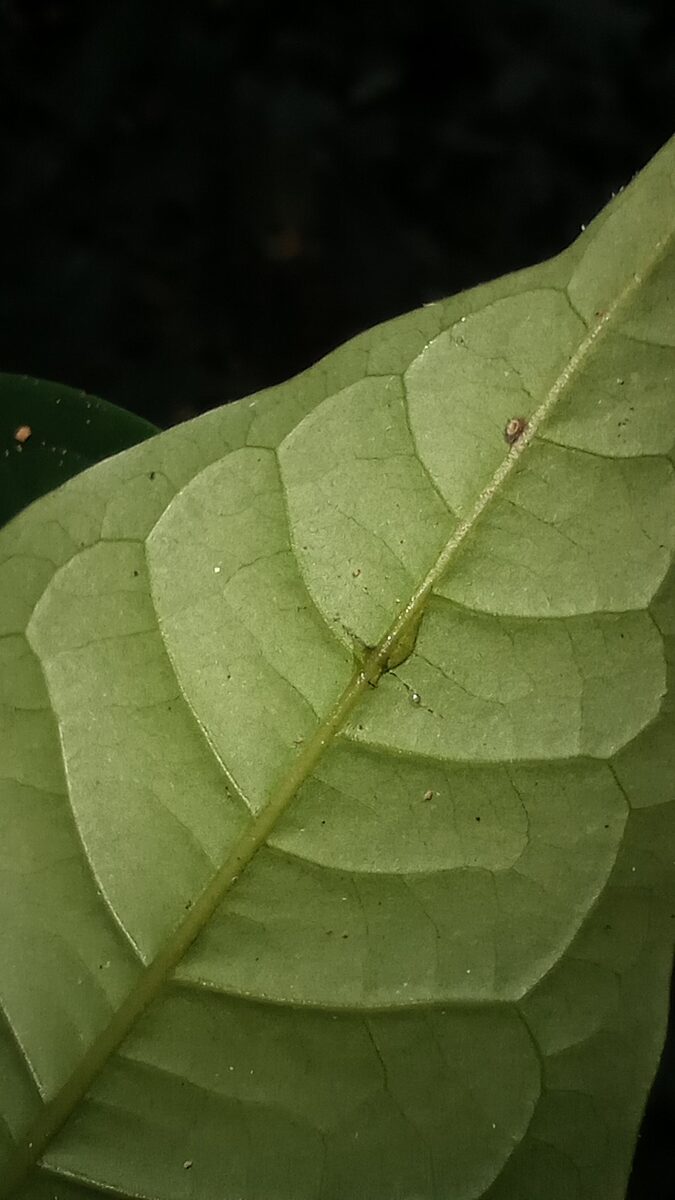
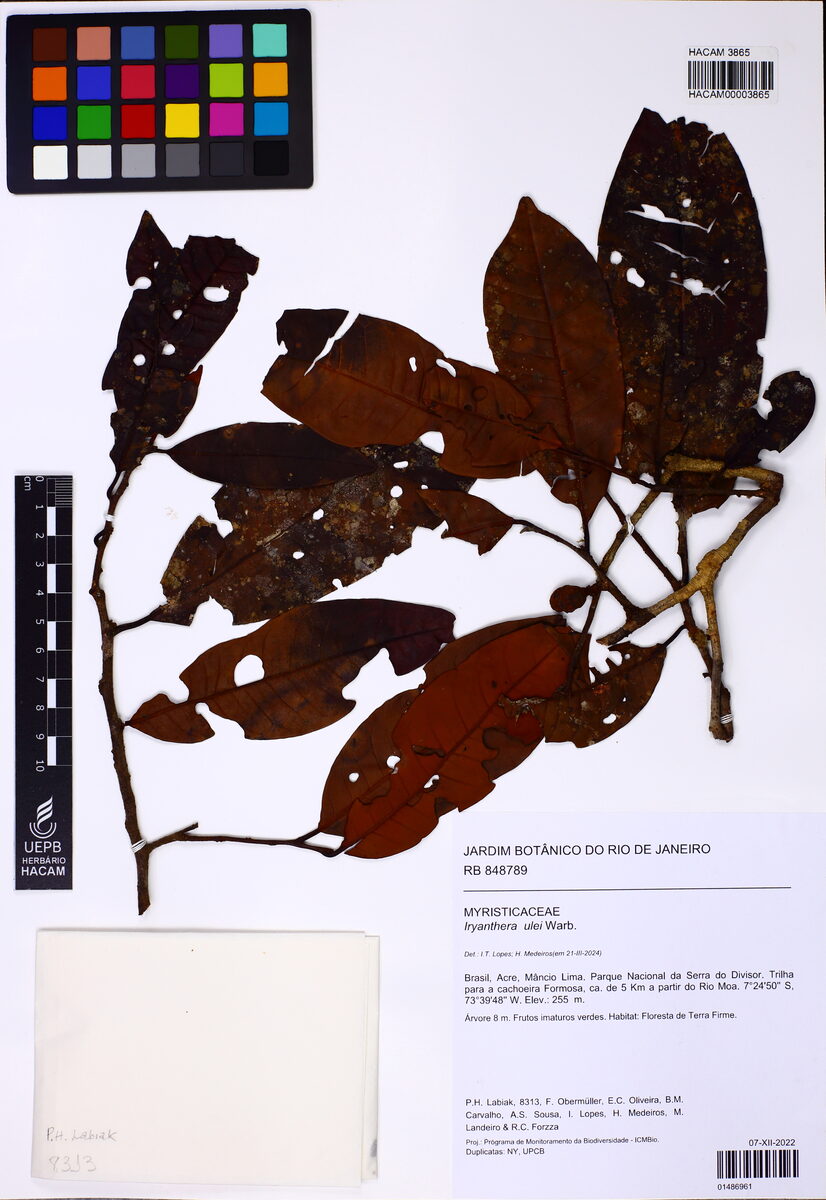
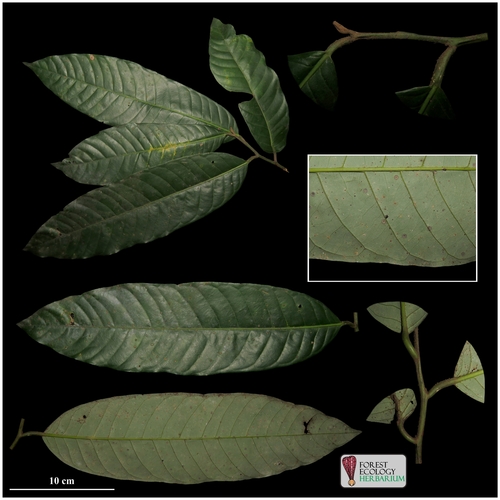
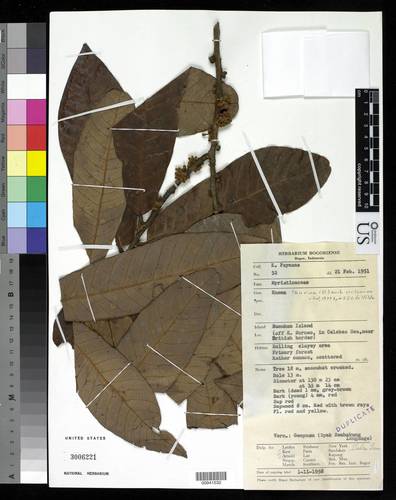
A tall tree. It can have large buttresses. The branches are high up and in groups of four held out from the trunk. The twigs have red hairs. The leaves are large and alternate. They are lighter green underneath with red hairs on the veins underneath.
Distribution
It is a tropical plant. It grows in wet lowland forest.
Where It Grows
Belize, Central America, Colombia, Costa Rica, Ecuador, El Salvador, Guatemala, Honduras, Nicaragua, Panama, South America, Venezuela,
Cultivation
A plant of low elevations in the moist tropics. Found in the wild on a wide range of soils. A dioecious species, both male and female forms need to be grown if seed is required.
Other Uses
The seeds are rich in oil. It is used for making candles and soap. Cut or damaged trees exude a blood-red, watery latex that is similar to the kino of commerce. When freshly cut, the heartwood and sapwood are indistinguishable; both having the same cream to tan colour. The heartwood darkens on exposure and drying, however, becoming a pinkish, golden brown, or deep reddish brown. The grain is straight; texture medium to coarse; the lustre low; and, when seasoned, it has no characteristic odour or taste. The wood works easily and very satisfactorily. It cuts easily with hand and power saws and a good surface is obtained with jack and smoothing planes, both along and across the grain. Good clear holes are readily obtained with brad, awl, gimlet, centre bit, and twist drill, without tendency to split. Nails and screws can be driven into the woods easily without, splitting it and hold fairly well. It cuts with facility in a mortising machine and works easily with gouge and chisel. The wood turns satisfactorily, though the fibres tear slightly, and a good finish is obtainable. It absorbs glue well, can be stained without difficulty to resemble mahogany fairly well and gives satisfactory results in polishing and varnishing. It holds its place when manufactured, does not warp or check, and is free from many knots and other defects. The wood is not resistant to decay, is very susceptible to attack by termites and other insects, and has little resistance to marine borers. The wood is mainly used for plywood, but is also suitable in lumber form for many uses that require a light, easily worked, nondurable timber including the manufacture of boxes, crates, cigar boxes, coffins, matches, and matchboxes. In some areas of the Caribbean, the wood is rapidly replacing mahogany plywood in the manufacture of furniture, millwork, cabinet work, and for panelling and other decorative uses. The wood is also suitable for pulping to make paper.
Synonyms
Also Known As
Achiotillo, Banak, Black banak, Fruta dorada, Sangrillo, Sangro drago, Sangre real, Sebo, Soto, Virola
References (3)
- Condit, R., et al, 2011, Trees of Panama and Costa Rica. Princeton Field Guides. p 340
- Grandtner, M. M., 2008, World Dictionary of Trees. Wood and Forest Science Department. Laval University, Quebec, Qc Canada. (Internet database http://www.wdt.qc.ca)
- Grandtner, M. M. & Chevrette, J., 2013, Dictionary of Trees, Volume 2: South America: Nomenclature, Taxonomy and Ecology. Academic Press p 689