Virola loretensis
A. C. Sm.
wikimedia· cc0
Wikimedia Commons - National Museum of Natural History
gbif· cc-by-nc
C. Dennis : Field Museum of Natural History - Botany Department
gbif· cc-by-nc
I. Huamantupa : Universidad Nacional San Antonio Abad de Cusco
Description
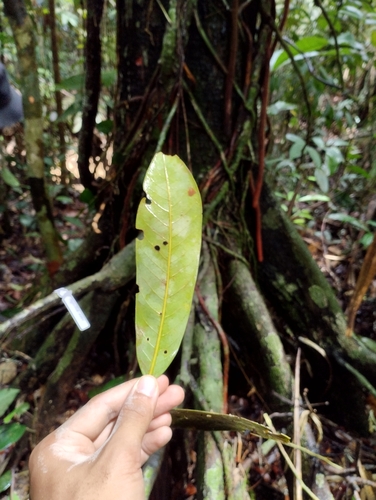
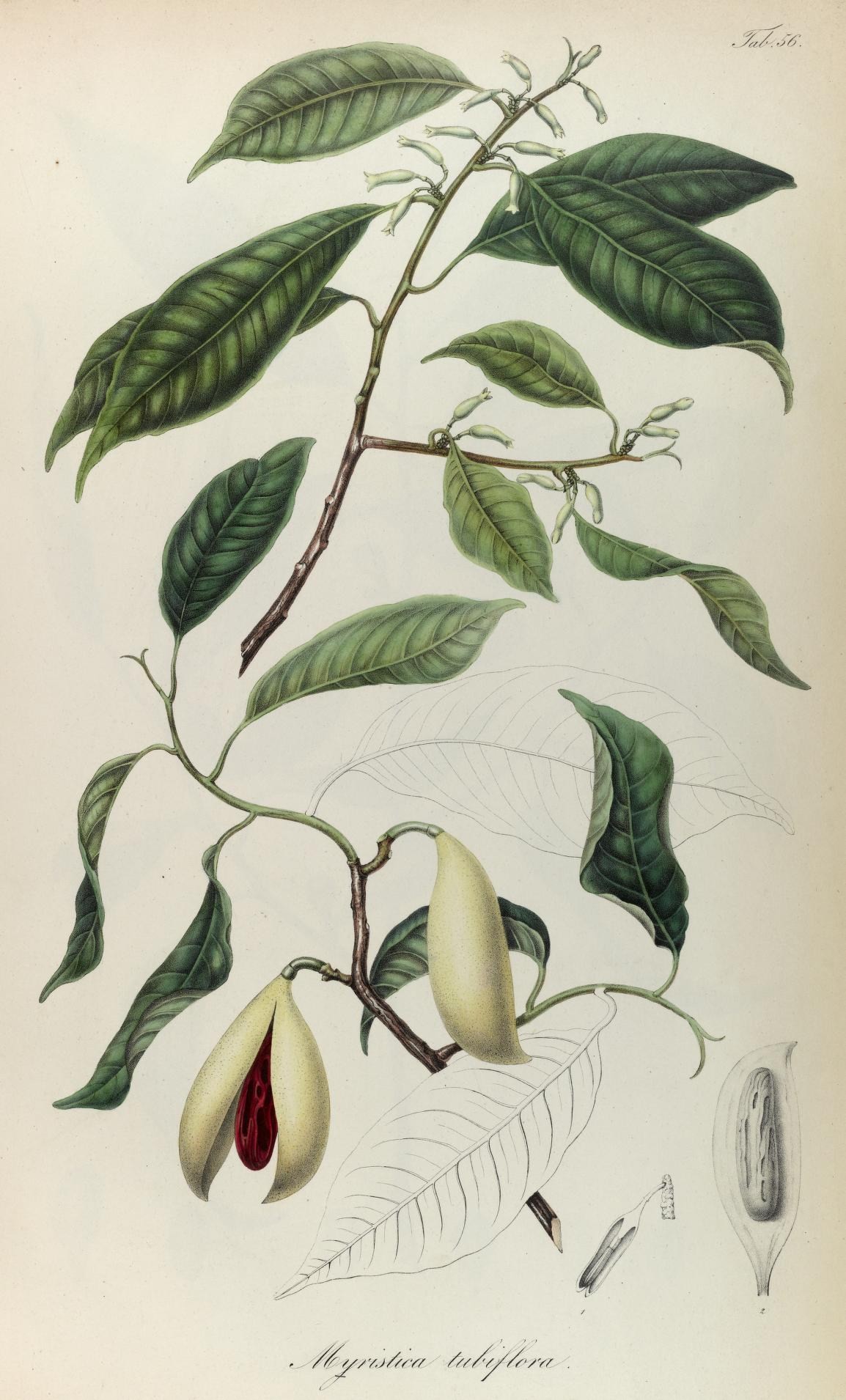
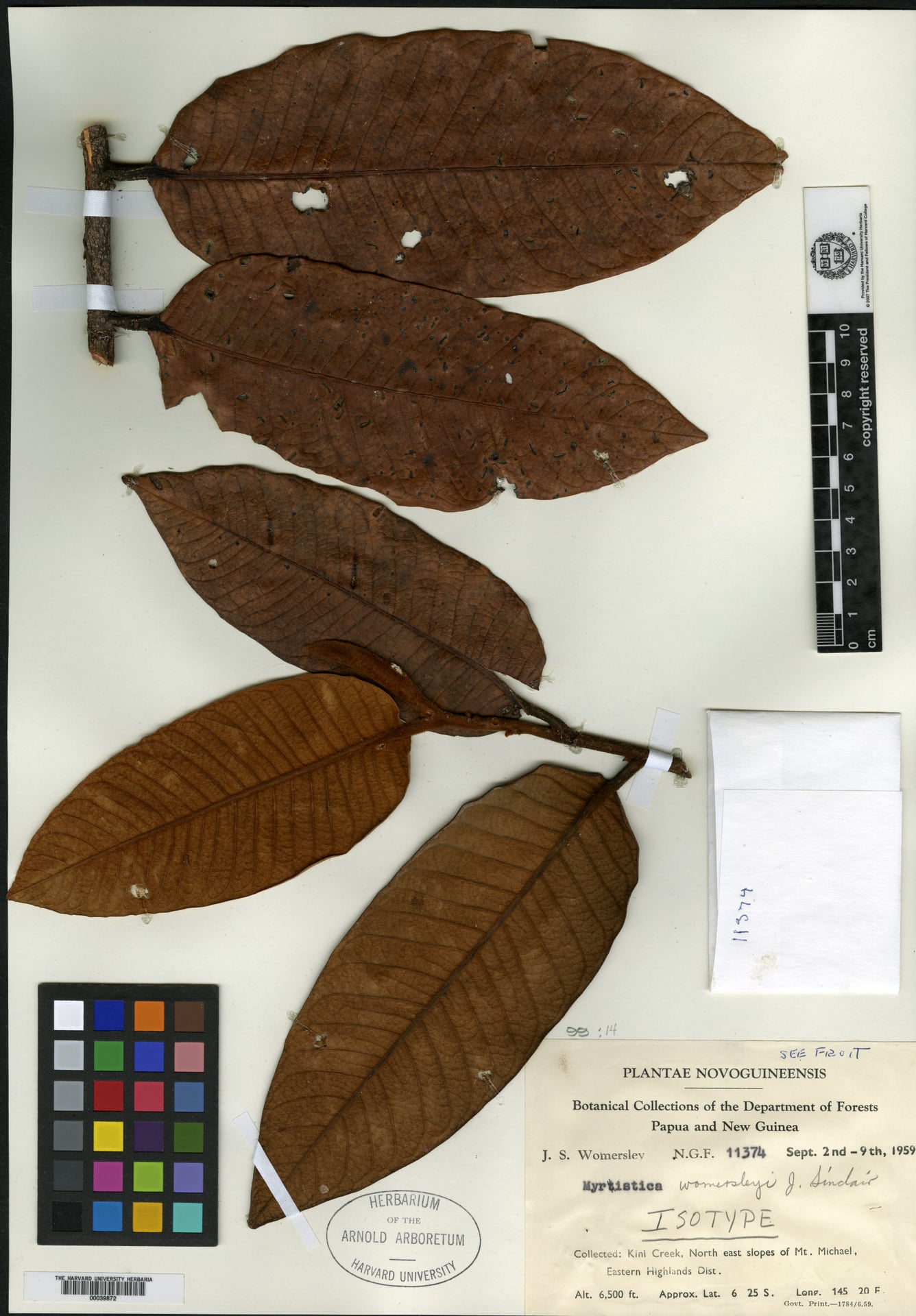
A tree. It grows 6-11 m tall. The crown can be open or pyramid shaped. Male and female flowers are on separate plants.
This description is brief — help expand it
Edible Uses
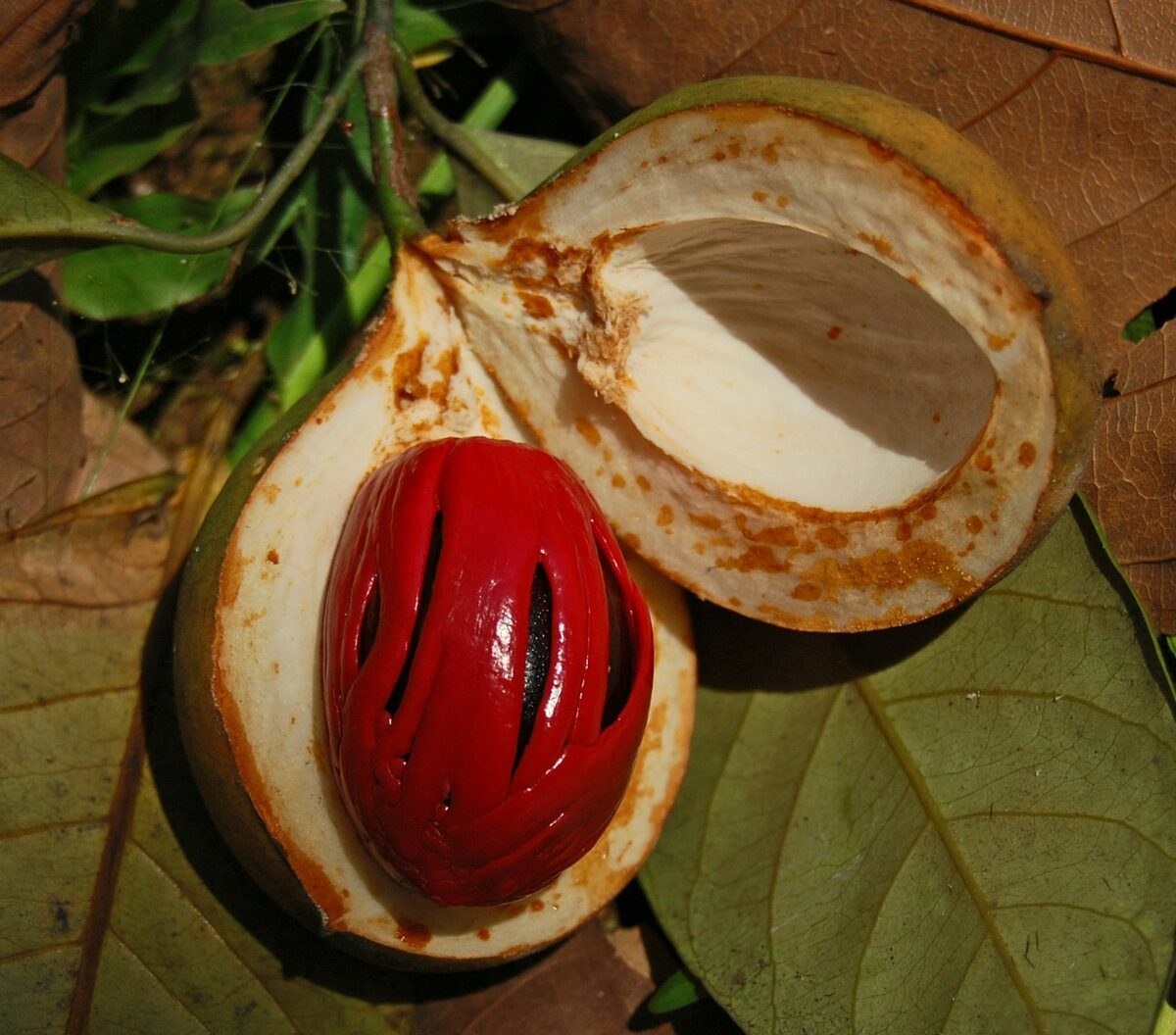
The fruit pulp is eaten, typically after roasting the fruit.
Traditional Uses
The pulp of the fruit is eaten. The fruit are roasted.
This uses section is brief — help expand it
Distribution
It is a tropical plant. It grows in dense rainforest. It grows in lowland areas that are not flooded.
Where It Grows
Amazon, Bolivia, Brazil, Colombia, Ecuador, Peru, South America,
Cultivation
A dioecious species, both male and female forms need to be grown if seed is required.
Other Uses
The seeds are used as a substitute for soap. The seeds are rich in oil. It is used for making candles and soap. Cut or damaged trees exude a blood-red, watery latex that is similar to the kino of commerce. The wood is pale brown throughout; the fresh wood slightly fragrant, but tasteless. It is straight-grained; fine- or medium-textured; of light or medium weight; slightly fibrous, easy to cut, takes a smooth polish with a moderate lustre, and holds its place well when finished. Growth rings are absent or poorly defined.
Synonyms
Also Known As
Cudu ni, Cumala, Cumala blanca, Cumala peluda, Cumula
References (4)
- Fern, K., 2012, Tropical Species Database http://theferns.info/tropical/
- Gilmore, M. P., et al, 2013, The socio-cultural importance of Mauritia flexuosa palm swamps (aguajales) and implications for multi-use management in two Maijuna communities of the Peruvian Amazon. Journal of Ethnobiology and Ethnomedicine 2013, 9:29
- Grandtner, M. M. & Chevrette, J., 2013, Dictionary of Trees, Volume 2: South America: Nomenclature, Taxonomy and Ecology. Academic Press p 690
- Kew Plants of the World Online