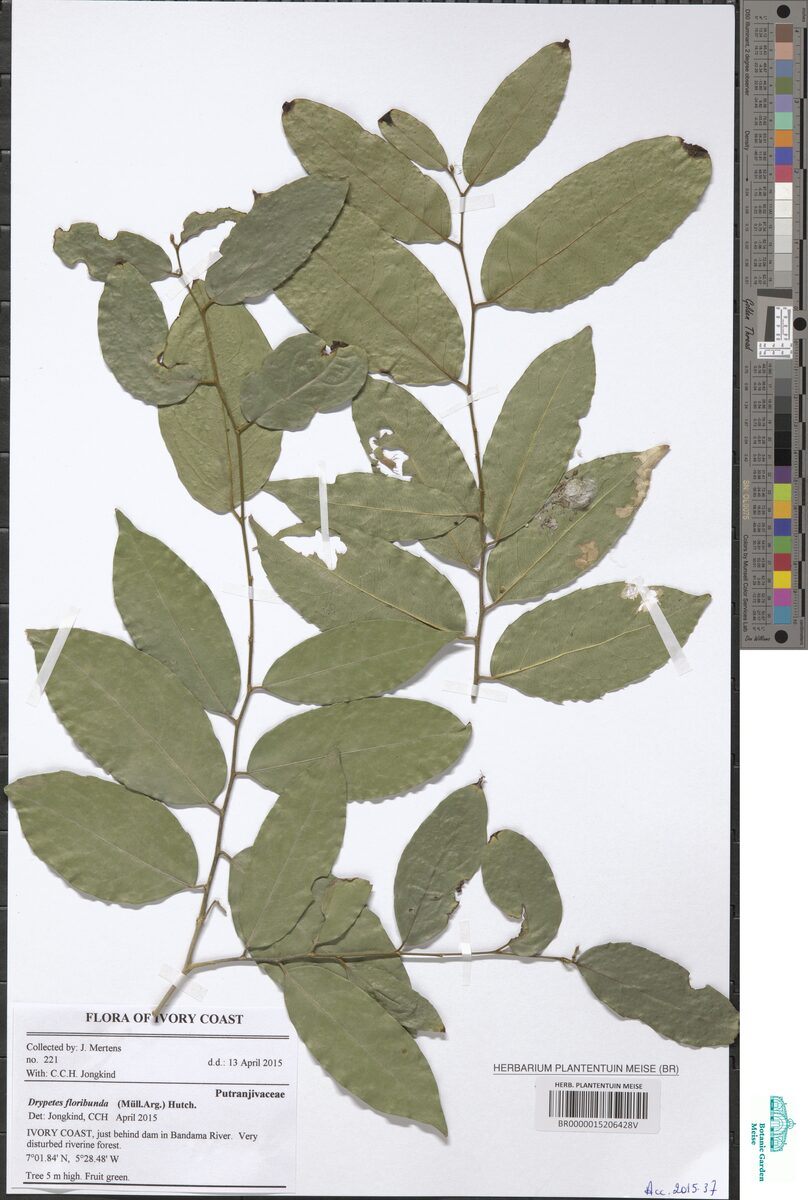
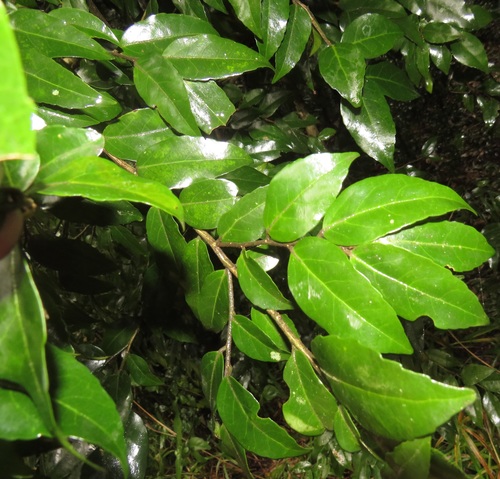
Drypetes assamica
(Hook. f.) Paxet & Hoffm.
gbif· cc0
Royal Botanic Garden Edinburgh
gbif· cc-by
The New York Botanical Garden
gbif· cc0
Royal Botanic Garden Edinburgh
Description
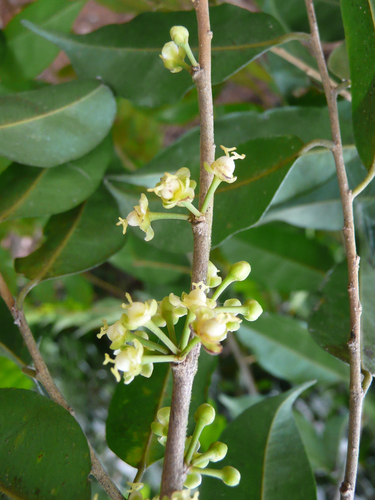
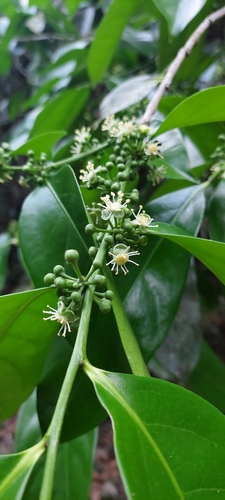
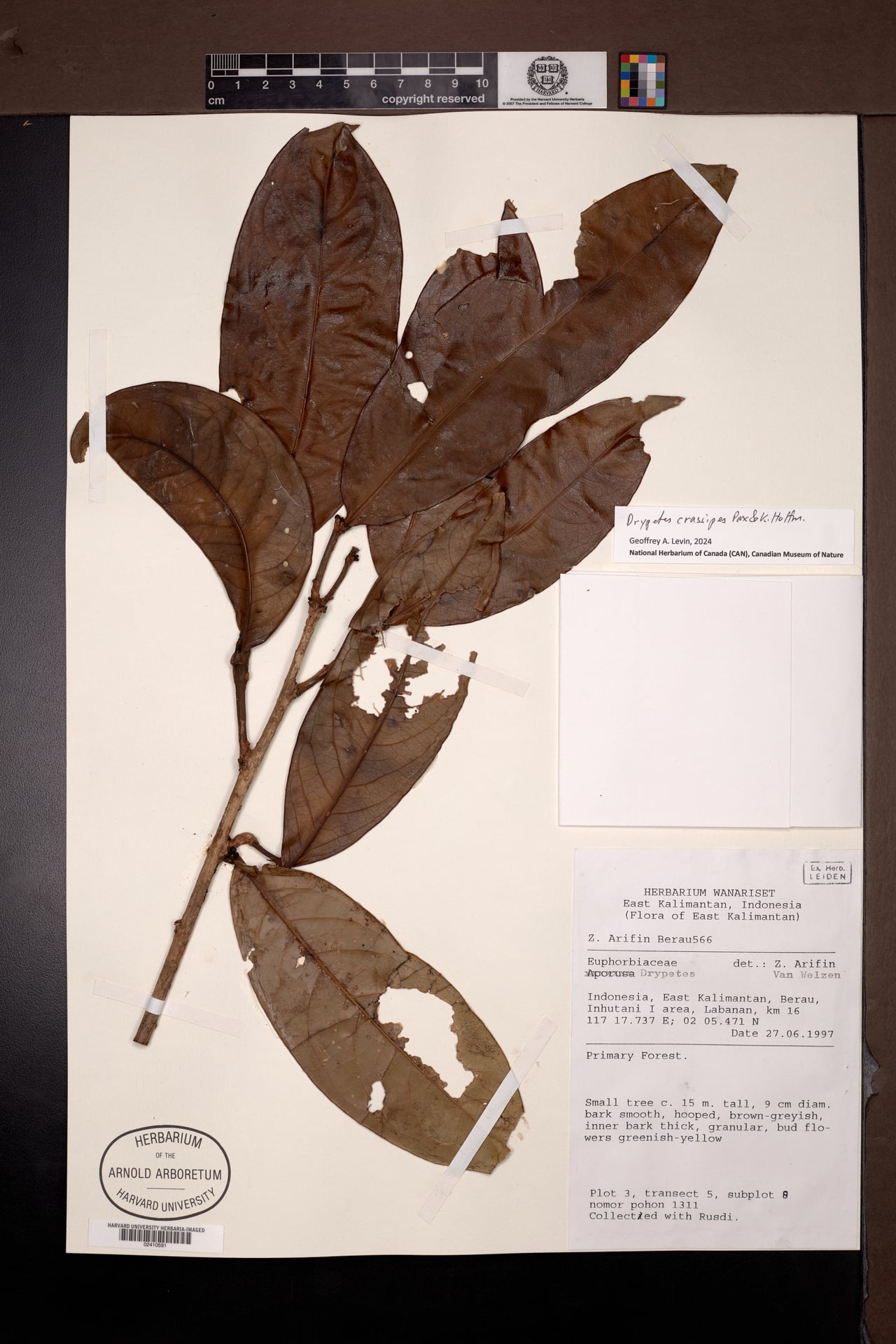
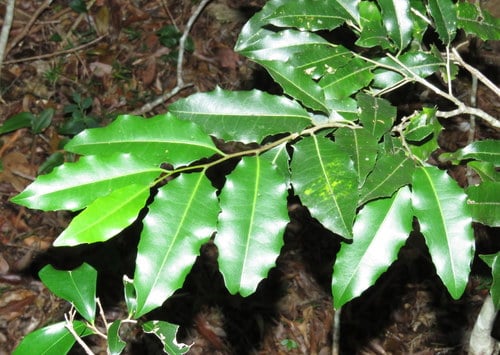
A small tree. It grows 6-13.5 m tall. The bark is thin and ashy. It keeps its leaves throughout the year. The branches are slender and hang down. The leaves are oblong and narrow and have teeth along the edge. The leaves are leathery and shiny green. The flowers are in groups with a single sex in a group. They are yellow. The fruit are round to oval and deep red when ripe. They have 2 seeds.
Edible Uses
The ripe fruit are eaten raw, though they have a sour taste.
Traditional Uses
The ripe fruit are eaten raw. They are sour.
This uses section is brief — help expand it
Distribution
It is a tropical and subtropical plant. In north India it grows up to 750 m above sea level.
Where It Grows
Andamans, Asia, Bangladesh, Cambodia, India, Indochina, Laos, Myanmar, Northeastern India, SE Asia,
Production
In NE India plants flower and fruit October to April.
Notes
Also put in the family Euphorbiaceae.
Synonyms
Also Known As
Ban bokul, Chipla, Dieng-pankher, Dukaha, Jiaput, Phang-gait arong
References (7)
- Jeeva, S., 2009, Horticultural potential of wild edible fruits used by the Khasi tribes of Meghalaya. Journal or Horticulture and Forestry Vol. 1(9) pp. 182-192
- Majumdar, K and Datta, N., 2009, Traditional wild edible fruits for the forest dwellers of Tripura, India. Pleione 3(2) 167-178
- Pasha, M. K. & Uddin, S. B., 2019, Minor Edible Fruits of Bangladesh. Bangladesh J. Plant Taxon. 26(2): 299–313
- Patiri, B. & Borah, A., 2007, Wild Edible Plants of Assam. Geethaki Publishers. p 128
- Sarma, H., et al, 2010, Updated Estimates of Wild Edible and Threatened Plants of Assam: A Meta-analysis. International Journal of Botany 6(4): 414-423
Show all 7 references Hide references
- Sawian, J. T., et al, 2007, Wild edible plants of Meghalaya, North-east India. Natural Product Radiance Vol. 6(5): p 415
- Wild edible plants of Himachal Pradesh