Drypetes floribunda
(Mull. Arg. ) Hutch.
gbif· cc-by
Meise Botanic Garden
Description
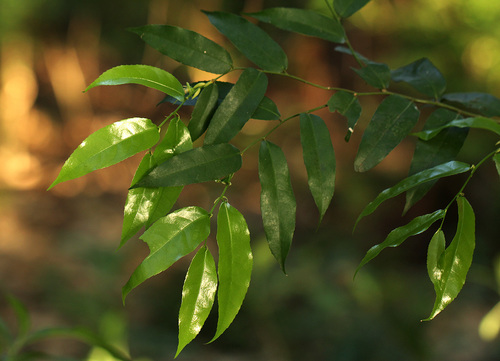
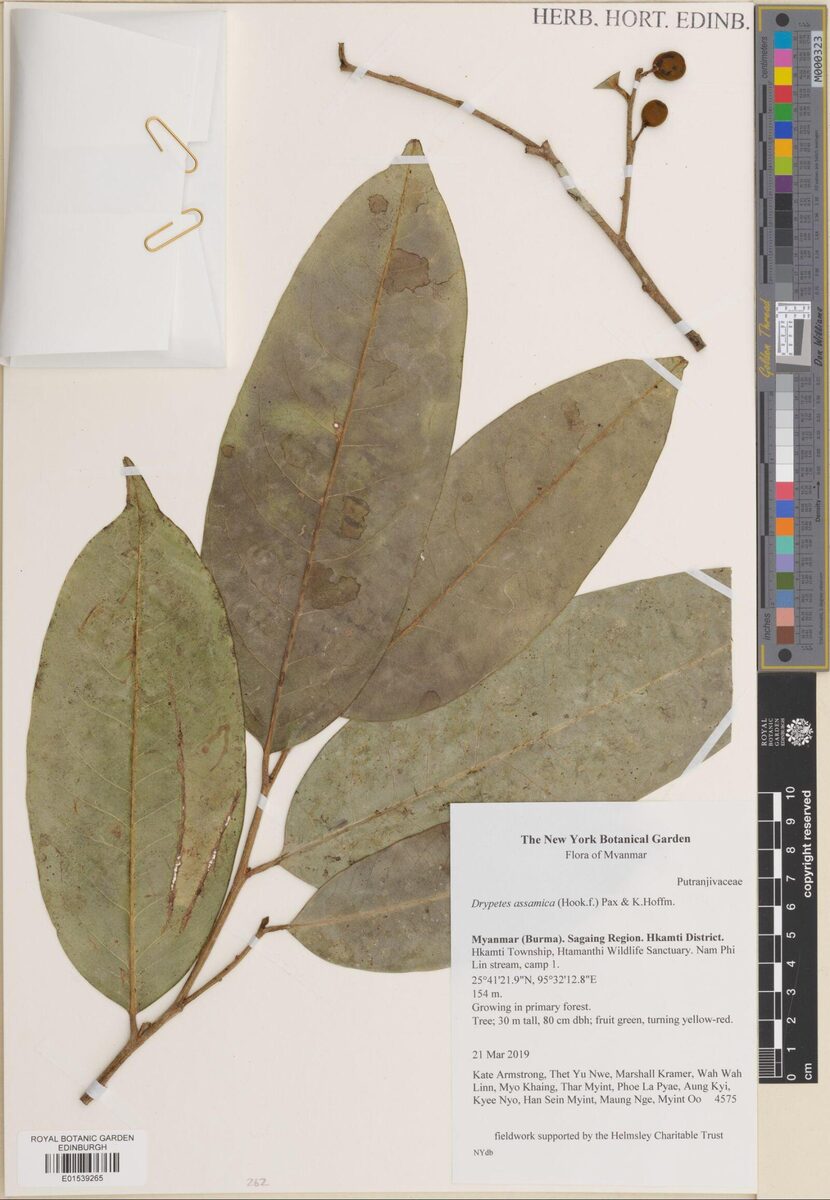
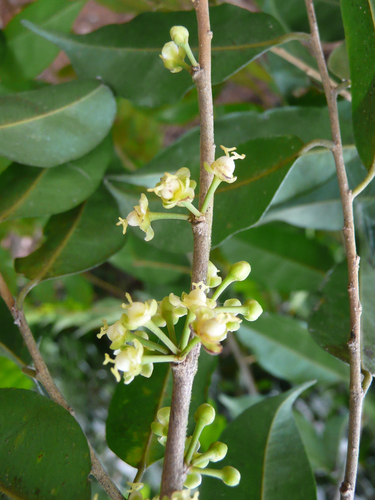
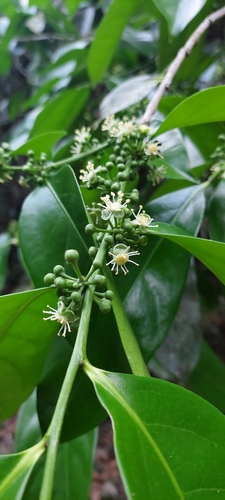
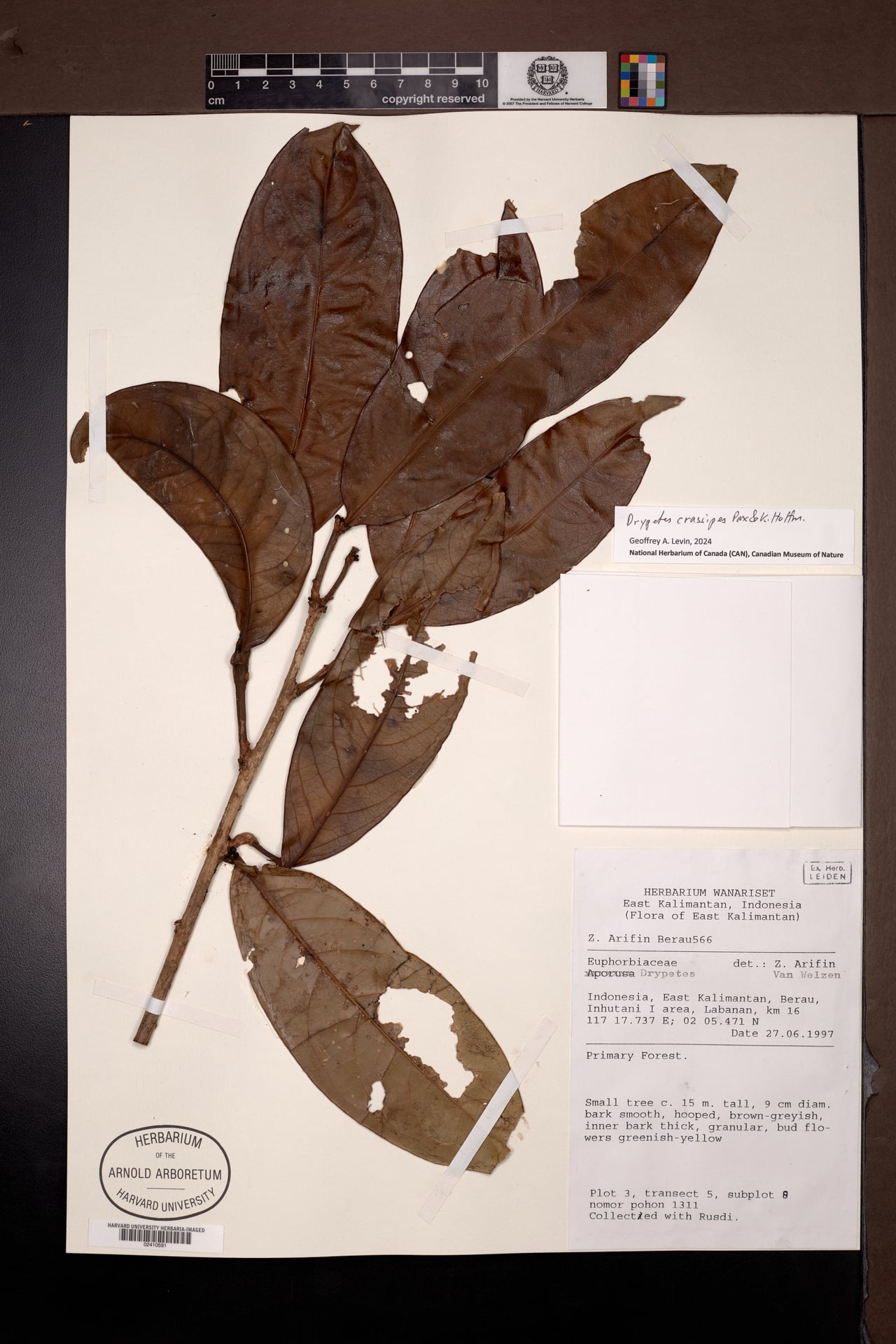
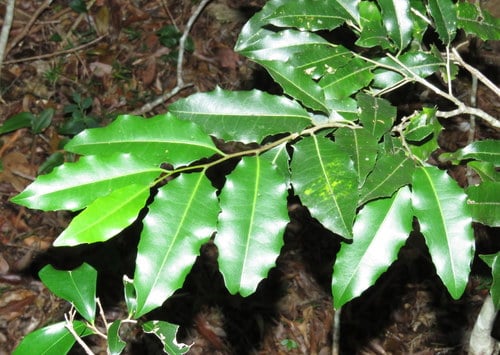
A shrub or small tree. It grows 10 m high. The crown is low and the branches are crowded. The bark is pale brown and smooth. The twigs are slender and slightly hairy. The leaves are 3.5-12.5 cm long by 1-6 cm wide. Often there are short spiny teeth along the edge. The leaf stalk is 6 mm long. The flowers are cream and 6 mm across. They occur in small clusters on the twigs. The are also on the stem on ridges which run across the stem. The fruit become yellow. They are round and 12 mm across. There are 3-4 seeds in an edible pulp.
Edible Uses
The fruit are eaten for their sweet pulp surrounding the seeds.
Distribution
It is a tropical plant. It grows in drier parts of forest regions and extends into savannah regions. It can be on the edge of mangroves.
Where It Grows
Africa, Benin, Burkina Faso, Cameroon, Central Africa, Congo, Ghana, Guinea, Guinée, Guinea-Bissau, Nigeria, Senegal, Sudan, West Africa,
Cultivation
A dioecious species, both male and female forms need to be grown if fruit and seed are required.
Other Uses
The wood has a sweetish taste and is commonly used as a chew-stick to maintain healthy teeth and gums. The white wood is very hard and strong. It is used in hut-construction, for yam-poles and for carving into spoons etc. The wood is used for fuel.
Other Information
The fruit are sweet.
Notes
There are about 200 Drypetes species. They are also put in the Euphorbiaceae family.
Synonyms
Also Known As
Ako tagbeso, Bedibesa, Bu solen, Fu kinora, Kleti, Sui-sui, Tagbesso
References (12)
- Abbiw, D.K., 1990, Useful Plants of Ghana. West African uses of wild and cultivated plants. Intermediate Technology Publications and the Royal Botanic Gardens, Kew. p 47
- Agbahoungba, S., et al, 2016, Ecological diversity and conservation of wild edible fruit trees species in the Lama Forest Reserve in Benin. Bois et Forets des Tropiques 2016, No. 329(3)
- Boedecker, J., et al, 2014, Dietary contribution of Wild Edible Plants to women’s diets in the buffer zone around the Lama forest, Benin – an underutilized potential. Food Sec. 6:833–849
- Burkill, H. M., 1985, The useful plants of west tropical Africa, Vol. 2. Kew.
- Busson, 1965,
Show all 12 references Hide references
- Codjia, J. T. C., et al, 2003, Diversity and local valorisation of vegetal edible products in Benin. Cahiers Agricultures 12:1-12
- Dalziel, J. M., 1937, The Useful plants of west tropical Africa. Crown Agents for the Colonies London.
- Djihounouck, Y., et al, 2018, Diversité Et Importance Socio-Economique Des Espèces Fruitières Sauvages Comestibles En Zone Kasa (Sud-Ouest Du Sénégal). European Scientific Journal December 2018 edition Vol.14, No.36 ISSN: 1857 – 7881
- Jardin, C., 1970, List of Foods Used In Africa, FAO Nutrition Information Document Series No 2.p 134
- Keay, R.W.J., 1989, Trees of Nigeria. Clarendon Press, Oxford. p 165
- Vivien, J., & Faure, J.J., 1996, Fruitiers Sauvages d'Afrique. Especes du Cameroun. CTA p 148
- World Checklist of Useful Plant Species 2020. Royal Botanic Gardens, Kew