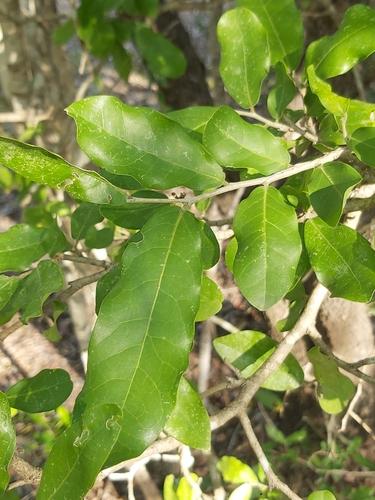
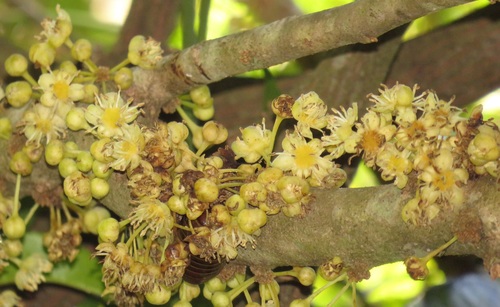
Drypetes aubrevillei
Leandri
Pepper stick, Pepper tree
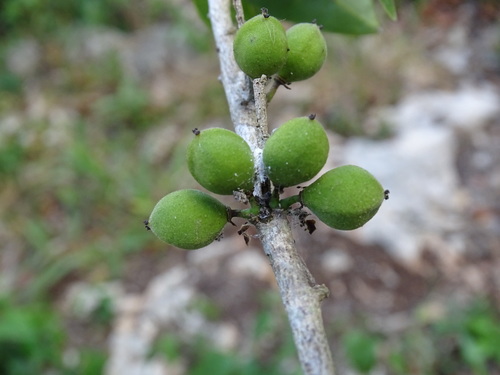
iNaturalist· cc-by-nc
(c) Carel Jongkind, some rights reserved (CC BY-NC), uploaded by Carel Jongkind
iNaturalist· cc-by-nc
(c) Carel Jongkind, some rights reserved (CC BY-NC), uploaded by Carel Jongkind
iNaturalist· cc-by-nc
(c) Carel Jongkind, some rights reserved (CC BY-NC), uploaded by Carel Jongkind
Description
A tropical tree reaching about 15 m in height, native to tropical regions. The bark has a distinctive peppery taste.
This description is brief — help expand it
Edible Uses
The bark has a peppery taste. Although not stated specifically, the report suggests it has been used as a flavouring.
Traditional Uses
The bark has a peppery taste. It is occasionally used as a spice.
This uses section is brief — help expand it
Medicinal Uses
A pap made from the bark is taken as an expectorant and bronchial decongestant. A decoction of the macerated bark and fruit is used as a liniment for application in the treatment of fevers, rheumatism and general fatigue. The powdered bark is used to treat a skin-condition called dishcloth, the symptoms of which are a blotchiness.
Distribution
It is a tropical plant.
Where It Grows
Africa, Côte d'Ivoire, Ivory Coast, Liberia, Sierra Leone, West Africa,
Cultivation
A dioecious species, both male and female forms need to be grown if fruit and seed are required.
Other Uses
The wood is pale yellow, hard and heavy, with a rather fine texture, finishing well and taking a good polish. It is used for timbers and house-poles but it is probably not durable and is subject to fungus stain.
Also Known As
Menieua
References (3)
- Burkill, H. M., 1985, The useful plants of west tropical Africa, Vol. 2. Kew.
- Seidemann J., 2005, World Spice Plants. Economic Usage, Botany, Taxonomy. Springer. p 140
- World Checklist of Useful Plant Species 2020. Royal Botanic Gardens, Kew