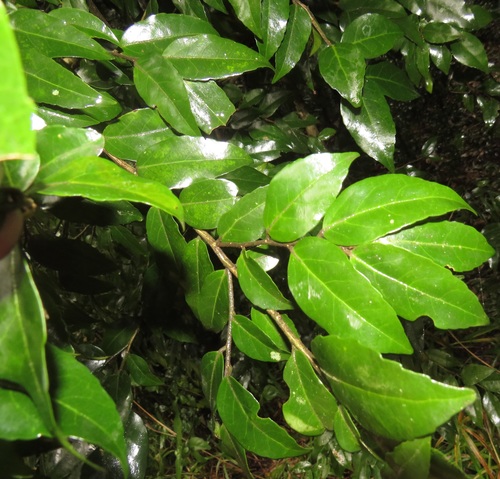
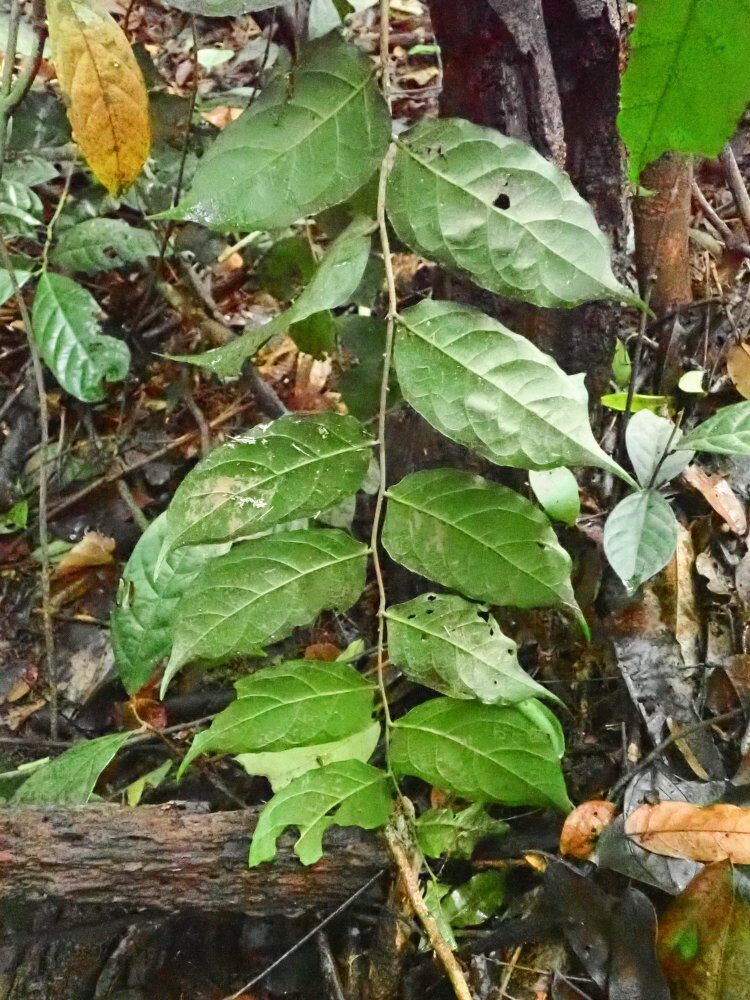
Drypetes brownii
Standl.
Brown drypetes
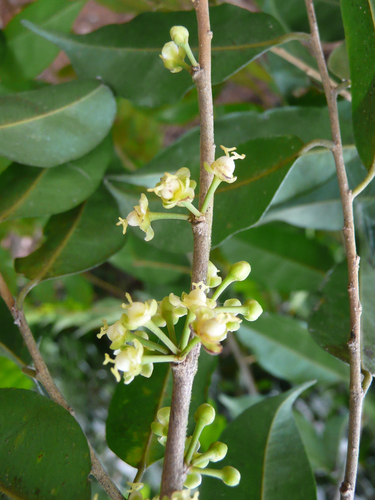
iNaturalist· cc-by-nc
(c) delbert, some rights reserved (CC BY-NC), uploaded by delbert
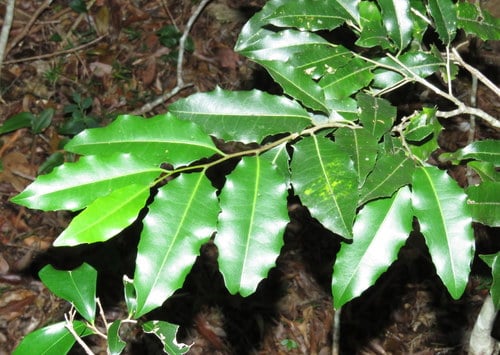
iNaturalist· cc-by-nc
(c) sarievanbelle, some rights reserved (CC BY-NC), uploaded by sarievanbelle
iNaturalist· cc-by-nc
(c) sarievanbelle, some rights reserved (CC BY-NC)
Description
A tropical tree in the Putranjivaceae family (also classified as Euphorbiaceae).
This description is brief — help expand it
Distribution
It is a tropical plant.
Where It Grows
Belize, Central America, Costa Rica, El Salvador, Guatemala, Honduras, Mexico, Nicaragua, North America, Panama,
Cultivation
A dioecious species, both male and female forms need to be grown if fruit and seed are required.
Other Uses
Freshly cut heartwood is a pale yellowish brown, turning a light reddish brown on exposure; a dark brown core up to 25cm in diameter is often present in the heart of old trees. The grain is usually straight; the texture fine and uniform. The wood is hard, heavy, strong, tough, somewhat brittle, moderately resistant to decay in contact with the ground and moderately resistant, to insect attack. It is only moderately difficult to work with hand and machine tools; it saws cleanly but with some difficulty because of its hardness; a smooth finish is obtained in planing without any tendency to roughened grain. It can be drilled and recessed easily with clean unchipped holes and turns readily to a smooth finish with about the same resistance to working as English oak; nailing necessitates preboring nail holes to prevent splitting and bending of the nails. It is widely used in the round form for rafters, as axed squares for beams and sills in the construction of native houses, and for shafts in agricultural instruments. Except for some splitting and checking, it has given good service as railway ties. The wood seems suitable for many uses where a strong, tough, heavy wood is required as in both light and heavy construction. Because of its light colour, close texture, and good turning qualities, the wood may be suitable for utility grade plywood.
Notes
Also as Euphorbiaceae family.
Also Known As
Areno, Bullhoof macho, Luin macho, Luinche, Succoutz
References (2)
- Grandtner, M. M., 2008, World Dictionary of Trees. Wood and Forest Science Department. Laval University, Quebec, Qc Canada. (Internet database http://www.WDT.QC.ca)
- Grandtner, M. M. & Chevrette, J., 2013, Dictionary of Trees, Volume 2: South America: Nomenclature, Taxonomy and Ecology. Academic Press p 208