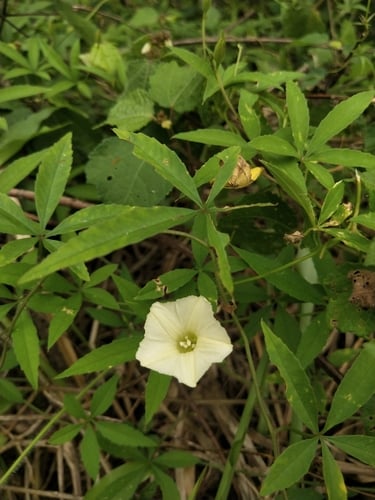
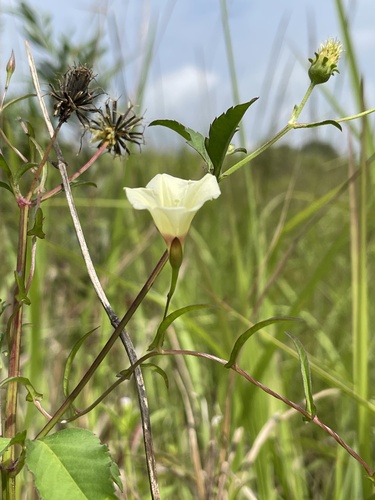
Ipomoea tiliacea
(Willd.) Choisy
Wild potato
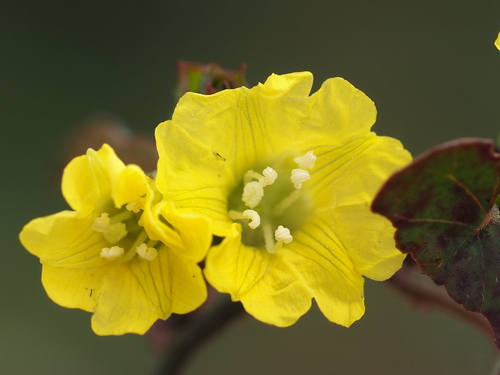
iNaturalist· cc-by-nc
(c) Leonardo Álvarez-Alcázar, some rights reserved (CC BY-NC), uploaded by Leonardo Álvarez-Alcázar
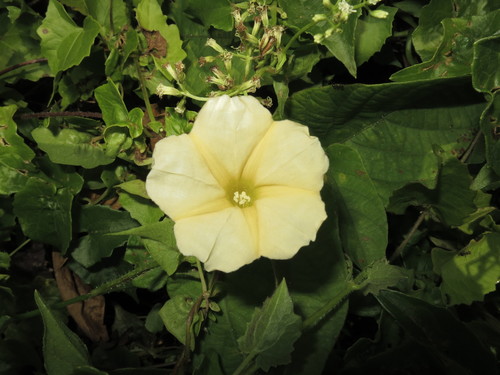
iNaturalist· cc-by-nc
(c) Steve Maldonado Silvestrini, some rights reserved (CC BY-NC), uploaded by Steve Maldonado Silvestrini
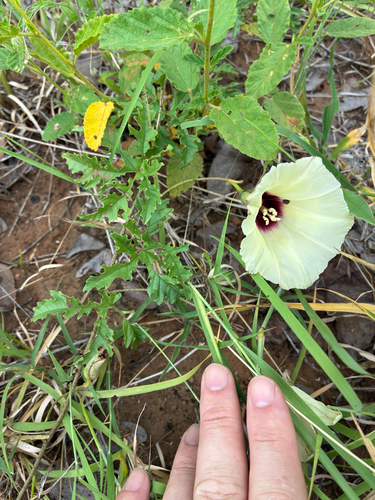
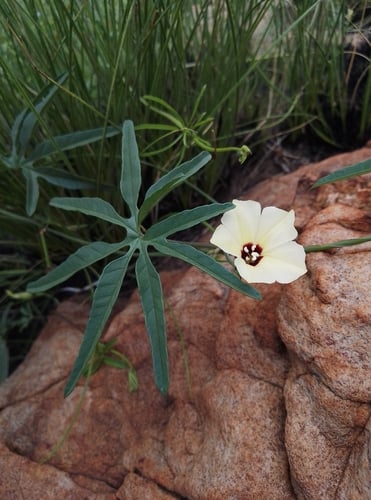
iNaturalist· cc-by-nc
(c) Benoît Segerer, some rights reserved (CC BY-NC), uploaded by Benoît Segerer
Description
A herb. It is a creeper or slightly woody vine. It is twining. It grows 5-10 m long. It has milky sap. The stems have lines along them. The leaves are alternate and the blades simple. They are 5-20 cm long by 4-14 cm wide. They are oval and papery. They can have 3-5 lobes. They are dull dark green on the upper surface and pale green underneath. The flowers are orange-yellow. The fruit are round and flattened and 8-10 mm across.
Edible Uses
The leaves, tubers, and roots are edible.
Distribution
It is a tropical plant.
Where It Grows
Africa, Antilles, Bahamas, Brazil, Central America, Dominican Republic, Guatemala, Guiana, Guianas, Guyana, Mexico, North America, Puerto Rico, Sao Tome and Principe, South America, Suriname, USA, Venezuela, West Indies,
Synonyms
Also Known As
Bejuco blanco, Bejuco de puerco, Goat foot, Wild potato, Wild vine
References (3)
- Diaz-Betancourt, M., et al, 1999, Weeds as a future source for human consumption. Rev. Biol. Trop. 47(3):329-338
- Hedrick, U.P., 1919, (Ed.), Sturtevant's edible plants of the world. p 358 (As Ipomoea fastigiata)
- Hort. brit. ed. 1:288. 1826 (As Ipomoea fastigiata)