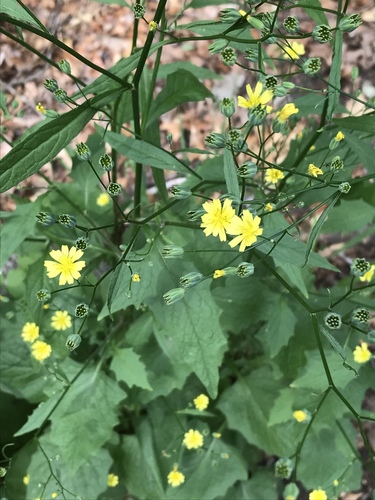
Carpesium abrotanoides
L.
Pig's head
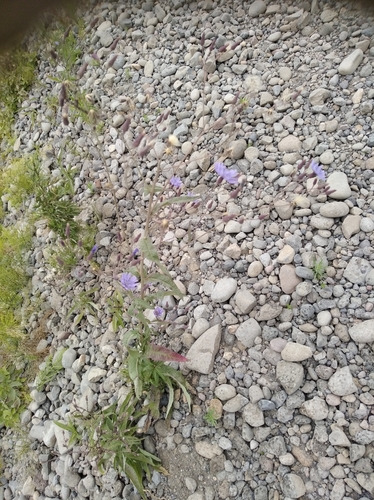
iNaturalist· cc0
no rights reserved, uploaded by Takashi KOIKE
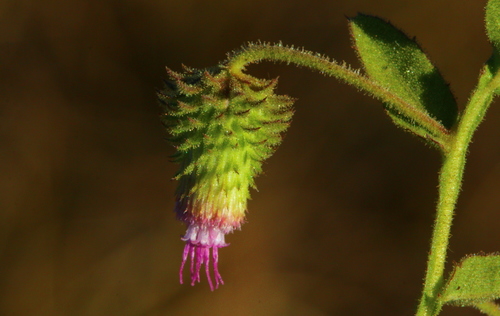
iNaturalist· cc-by-nc
(c) starkattila, some rights reserved (CC BY-NC)
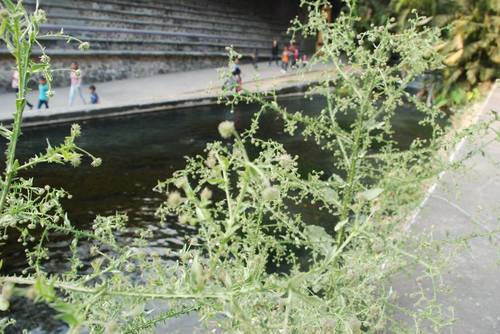
iNaturalist· cc-by-nc
(c) 小铖/Smalltown, some rights reserved (CC BY-NC), uploaded by 小铖/Smalltown
Summary
Source: WikipediaA perennial plant reaching 1m in height, flowering September to November with seeds ripening October to November. The species is hermaphroditic and insect-pollinated. It adapts to light, medium, or heavy soils with mildly acid to mildly alkaline pH. The plant grows in semi-shade or full light and prefers moist soil conditions.
Description
A herb. It grows 1 m tall. The stems are stout and leafy. It is hairy towards the top. The lower leaves are thin and oblong. They are 20-28 cm long by 9-15 cm wide. The edges have irregular teeth.
Edible Uses
The cooked leaves have a sweet flavour, though they carry a fox-like smell.
Traditional Uses
The shoots and young leaves are eaten cooked.
This uses section is brief — help expand it
Medicinal Uses
The whole plant is alterative, antiscorbutic, astringent, depurative, discutient, emetic, expectorant, febrifuge, laxative, and vulnerary. A decoction is used to treat bronchitis, tonsillitis, boils, ulcers, and snakebites. The stem juice treats insect bites and is also an effective remedy for sore throat. A decoction of the fruit is vermifuge. The seed is antiphlogistic, diuretic, laxative, pectoral, and vermifuge, and is used to expel roundworms, tapeworms, and pinworms — a 20% concentrate of seed decoction cured 69% of children with worms and produced improvement in a further 19%. The root is diuretic and vermifuge.
Distribution
It is a temperate plant. It can withstand frost. It can grow on a range of soils. It can grow in light shade. It needs moist soil. In China it grows on grassy slopes and near streams below 2,800 m above sea level. In Sichuan and Yunnan.
Where It Grows
Afghanistan, Asia, Bhutan, Caucasus, China, Europe, Himalayas, India, Indochina, Iran. Japan, Korea, Laos, Middle East, Myanmar, Nepal, Russia, SE Asia, Taiwan, Tibet, Vietnam,
Cultivation
We have very little information on this species and do not know if it will be hardy in Britain, though judging by its native range it should succeed outdoors in many parts of this country. See the plants native habitat for ideas on its cultivation needs.
Propagation
Sow seed in spring in a cold frame, barely covering it and keeping the compost moist at all times. Prick seedlings out into individual pots once large enough to handle, and grow on in a cold frame for at least their first winter. Plant out into permanent positions in late spring or early summer, after the last expected frosts. Can also be propagated by division in spring.
Other Uses
The seed has insecticidal properties, and there is a separate report suggesting the plant as a whole may share this quality.
Synonyms
Also Known As
Dambaepul, Wotiangil
References (6)
- Ambasta S.P. (Ed.), 2000, The Useful Plants of India. CSIR India. p 106
- Famine foods
- Kim, H. & Song, M., 2013, Ethnobotanical analysis for traditional knowledge of wild edible plants in North Jeolla Province (Korea). Genetic. Resour. Crop Evol. (2013) 60:1571-1585
- Plants for a Future database, The Field, Penpol, Lostwithiel, Cornwall, PL22 0NG, UK. http://www.scs.leeds.ac.uk/pfaf/
- READ
Show all 6 references Hide references
- Sp. pl. 2:860. 1753