Smilax corbularia
Kunth
iNaturalist· cc-by-nc
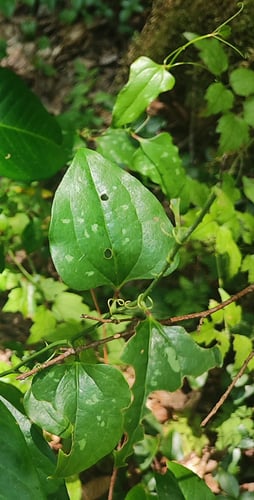
(c) Young Chan, some rights reserved (CC BY-NC), uploaded by Young Chan
iNaturalist· cc-by-nc
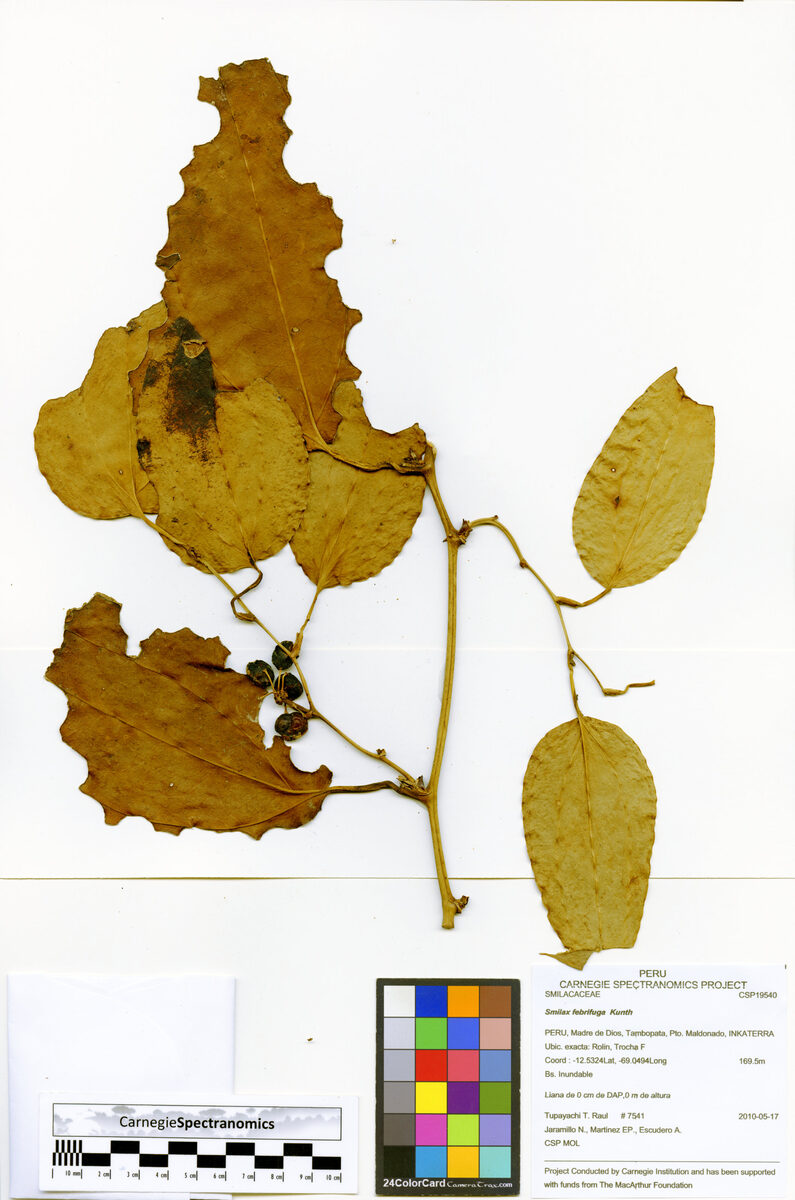
(c) Dailun Shi, some rights reserved (CC BY-NC), uploaded by Dailun Shi
iNaturalist· cc-by-nc
(c) Dailun Shi, some rights reserved (CC BY-NC), uploaded by Dailun Shi
Description
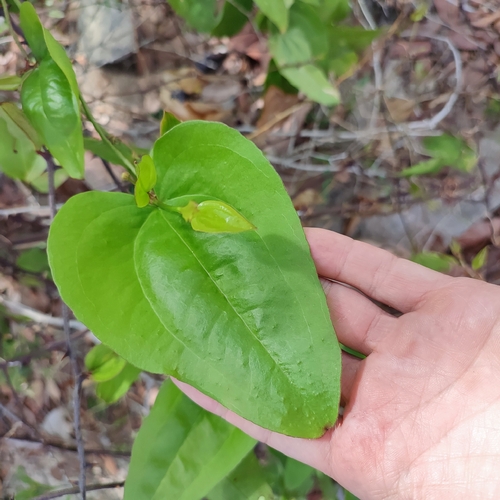
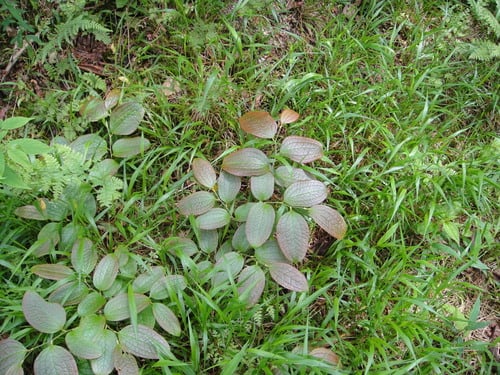
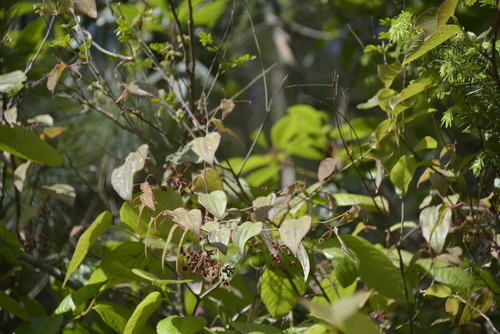
A climbing vine. The stems are branched and 3-9 m long. The leaf stalk has a narrow wing for part of its length. The leaves are oblong to narrowly oval and 4-14 cm long by 2-5 cm wide. The flowering arrangement is a single flat topped group. Male and female flowers are separate. The fruit are dark red, round berries 6-7 mm across.
Edible Uses
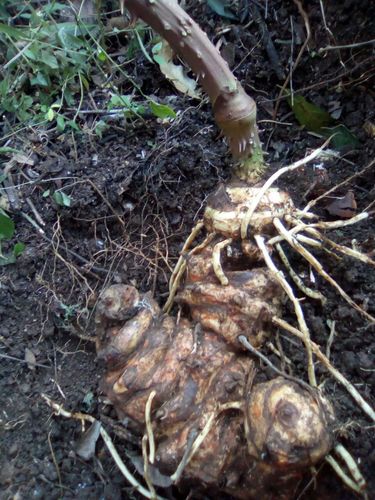
The roots are edible.
Medicinal Uses
It is used as a medicinal plant in Thailand, with roots containing oestrogens.
Distribution
It is a tropical plant. It south China it grows from sea level to 1,600 m above sea level.
Where It Grows
Asia, China, Indochina, Indonesia, Laos, Malaysia, Myanmar, SE Asia, Thailand, Vietnam,
Cultivation
It can be grown from seeds or rhizomes.
Notes
It is used as a medicinal plant in Thailand. The roots have oestrogens.
Synonyms
Also Known As
Hua-khao-yen-nua, Kaoyennaey
References (3)
- Anderson, E. F., 1993, Plants and people of the Golden Triangle. Dioscorides Press. p 221
- Hill, M. & Hallam, D., (eds), 1997, Na Hang Nature Reserve, Tat Ke Sector. Site description and conservation evaluation. Hanoi. p 76
- Jiwajinda, S., et al, 2002, Suppressive Effects of Edible Thai Plants on Superoxide and Nitric Oxide Generation. Asian Pacific Journal of Cancer Prevention, Vol 3, 2002