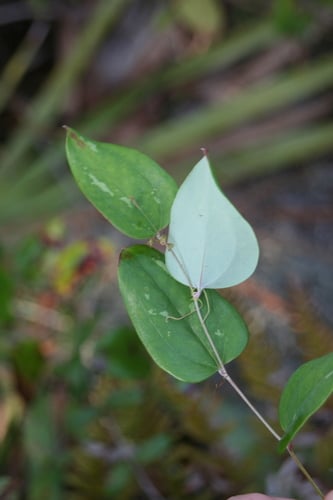
Smilax ornata
Lem.
Jamaican sarsaparilla, Brown sarsaparilla
wikimedia· cc0
Wikimedia Commons - Franz Eugen Köhler, Köhler's Medizinal-Pflanzen
wikimedia· cc0
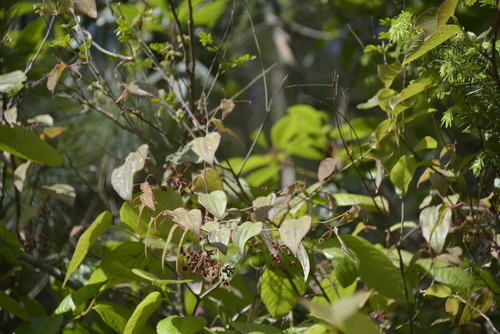
Wikimedia Commons - makamuki0
gbif· cc-by-sa
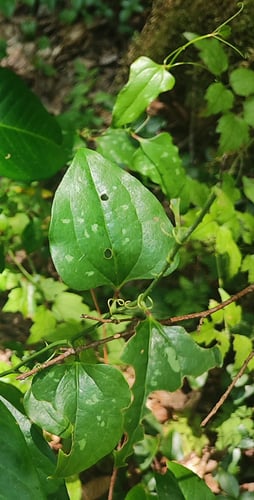
GBIF
Summary
Source: WikipediaSmilax ornata is a perennial trailing vine with prickly stems that is native to Mexico and Central America. Common names include sarsaparilla, Honduran sarsaparilla, and Jamaican sarsaparilla. It is known in Spanish as zarzaparrilla, which is derived from the words zarza meaning "bramble" (from Basque sartzia "bramble"), and parrilla, meaning "little grape vine".
Description
A trailing vine in the Smilacaceae family found in tropical regions, commonly cultivated for its aromatic root.
This description is brief — help expand it
Edible Uses
The root is used as a flavoring agent to impart a sarsaparilla flavor to drinks.
Traditional Uses
The root is used to give a sarsaparilla flavour to drinks.
This uses section is brief — help expand it
Medicinal Uses
Smilax ornata was considered by Native Americans to have medicinal properties, and was a popular European treatment for syphilis when it was introduced from the New World. From 1820 to 1910, it was registered in the U.S. Pharmacopoeia as a treatment for syphilis.
Distribution
It is a tropical plant.
Where It Grows
Amazon, Belize, Brazil, Central America, Guianas, Jamaica, Mexico, West Indies,
Other Information
It is cultivated.
Synonyms
Also Known As
Honduran sarsaparilla
References (6)
- Encyclopedia of Life
- Kermath, B. M., et al, 2014, Food Plants in the Americas: A survey of the domesticated, cultivated and wild plants used for Human food in North, Central and South America and the Caribbean. On line draft. p 811 (As Smilax regelii)
- Jamaica: A country report to the FAO International Technical Conference on Plant Genetic Resources for Food and Culture. 2008 (As Smilax regelii)
- Wiersema, J. H. & Leon, B., 2013, World Economic Plants. A Standard Reference CRC Press. 2nd Ed. p 641 (As Smilax regelii)
- Wikipedia (As Smilax regelii)
Show all 6 references Hide references
- World Checklist of Useful Plant Species 2020. Royal Botanic Gardens, Kew