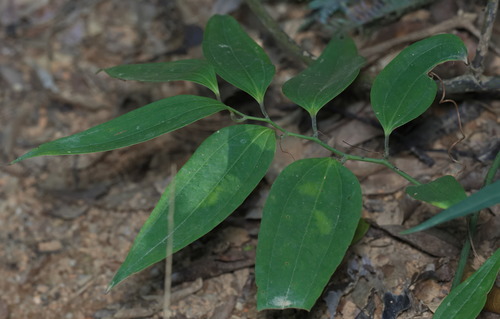
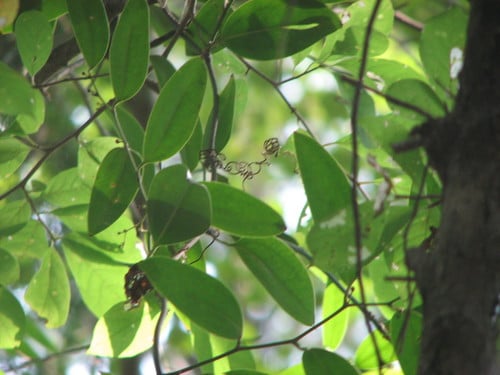
Smilax officinalis
Kunth
Honduran sarsaparilla
iNaturalist· cc-by-nc
(c) ramon_d, some rights reserved (CC BY-NC), uploaded by ramon_d
wikimedia· cc-by
Wikimedia Commons - Dick Culbert from Gibsons, B.C., Canada
wikimedia· cc-by
Wikimedia Commons - Dick Culbert from Gibsons, B.C., Canada
Summary
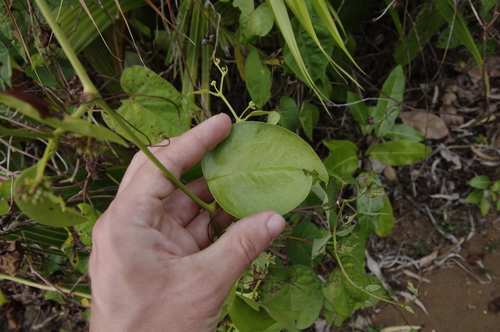
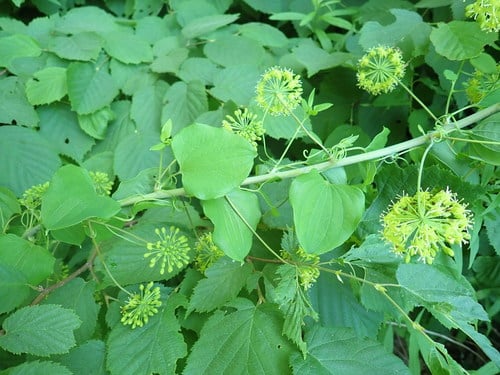
Source: WikipediaSmilax officinalis is a species of flowering plant in the family Smilacaceae, native to southern Central America and northwest South America; Honduras, Nicaragua, Costa Rica, Panama, Colombia, and Ecuador. A vine reaching 50 m (160 ft) as it climbs trees into the canopy, its roots are collected and used to make traditional medicines and, like other Smilax species, the soft drink sarsaparilla.
Description
Evergreen perennial climbing vine growing rapidly to 25 m height with 0.5 m spread, hardy to UK zone 10. Tolerates light sandy, medium loamy, and heavy clay soils across mildly acidic to mildly alkaline pH ranges, preferring well-drained conditions. Grows in semi-shade or full sun and prefers moist soil.
Edible Uses
The root has been used as an ingredient in root beer and other beverages, valued for its foaming properties rather than its flavour.
Traditional Uses
The dried roots are used to flavour root beer, soft drinks, ice cream, candy and baked goods. They are mixed with other spices because of their bitter taste.
Medicinal Uses
Sarsaparilla root has a long history of traditional use in Central and South America for sexual impotence, rheumatism and joint pain, headaches, the common cold, skin ailments including leprosy, and general physical weakness. The root's key active compounds include plant steroids, saponins, and flavonoids. The saponins have been shown to improve the body's absorption of other drugs and phytochemicals, giving sarsaparilla a role in herbal formulas as a bioavailability enhancer. Clinical research supports its traditional use for skin conditions such as psoriasis, eczema, acne, and leprosy. In one clinical study involving 92 patients, the root improved psoriasis lesions in 62% of cases and cleared them completely in 18%. These effects are largely attributed to its blood-cleansing properties, particularly the steroid sarsaponin, which has been shown to remove endotoxins from the blood. A 1959 human trial documented sarsaparilla's effectiveness against leprosy. Some experimental evidence also supports its use for adolescent acne related to excess androgens. Flavonoids in the root have demonstrated immune-modulating and liver-protective activity. Clinical observations in China found sarsaparilla effective — based on blood tests — in approximately 90% of acute and 50% of chronic cases of syphilis. Studies have also demonstrated antibiotic, antifungal, and antimycobacterial properties, and anti-inflammatory activity has been confirmed in multiple in vitro and in vivo studies. In humans, the root has shown stimulatory effects on the kidneys, and in chronic nephritis it increased urinary excretion of uric acid. Saponins and plant steroids in sarsaparilla can be converted into human steroids such as oestrogen and testosterone in laboratory conditions, though this conversion has not been documented to occur in the human body. The steroids sarsasapogenin and smilagenin have been claimed to help treat senile dementia, cognitive dysfunction, and Alzheimer's disease, but supporting studies have not yet been published in peer-reviewed literature. In modern herbalism, the root is considered anodyne, antibacterial, antibiotic, antifungal, anti-inflammatory, depurative, diaphoretic, diuretic, digestive, febrifuge, hepatic, and tonic. It is used for conditions including gout, syphilis, gonorrhoea, rheumatism, wounds, arthritis, fever, cough, scrofula, hypertension, digestive disorders, psoriasis, and various skin diseases, as well as cancer. The root is widely sold in health food stores in tablet, capsule, and tincture form, used alone or in combination products targeting skin disorders, libido, hormone balance, and sports nutrition.
Known Hazards
No known toxicity or side-effects have been documented for sarsaparilla; however, ingestion of large dosages of saponins may cause gastrointestinal irritation.
Distribution
A tropical plant.
Where It Grows
Central America, Colombia, Ecuador, Honduras, Nicaragua, Panama, South America,
Cultivation
The root, when used for medicinal purposes, is long and tuberous-spreading 180 - 250cm long. It is odourless and fairly tasteless.
Propagation
Seed only — no further details given.
Other Uses
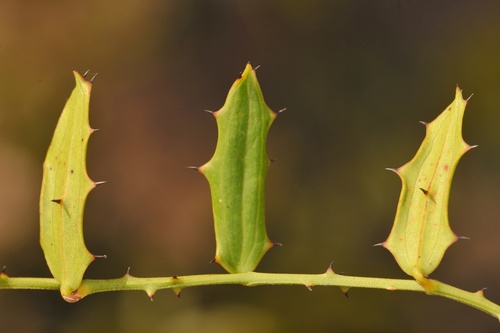
The stems of many Smilax species bear prickles, and these vines are sometimes cultivated to form impenetrable thickets, known as catbriers or greenbriers, useful as hedging.
Other Information
The dried roots are a principal source of sarsaparilla.
Synonyms
Also Known As
Jamaican sarsaparilla, Red Sarsaparilla
References (4)
- Facciola, S., 1998, Cornucopia 2: a Source Book of Edible Plants. Kampong Publications, p 231
- Kermath, B. M., et al, 2014, Food Plants in the Americas: A survey of the domesticated, cultivated and wild plants used for Human food in North, Central and South America and the Caribbean. On line draft. p 811
- Tanaka,
- F. W. H. A. von Humboldt et al., Nov. gen. sp. 1:215[folio]; 1:271[quarto]. 1816