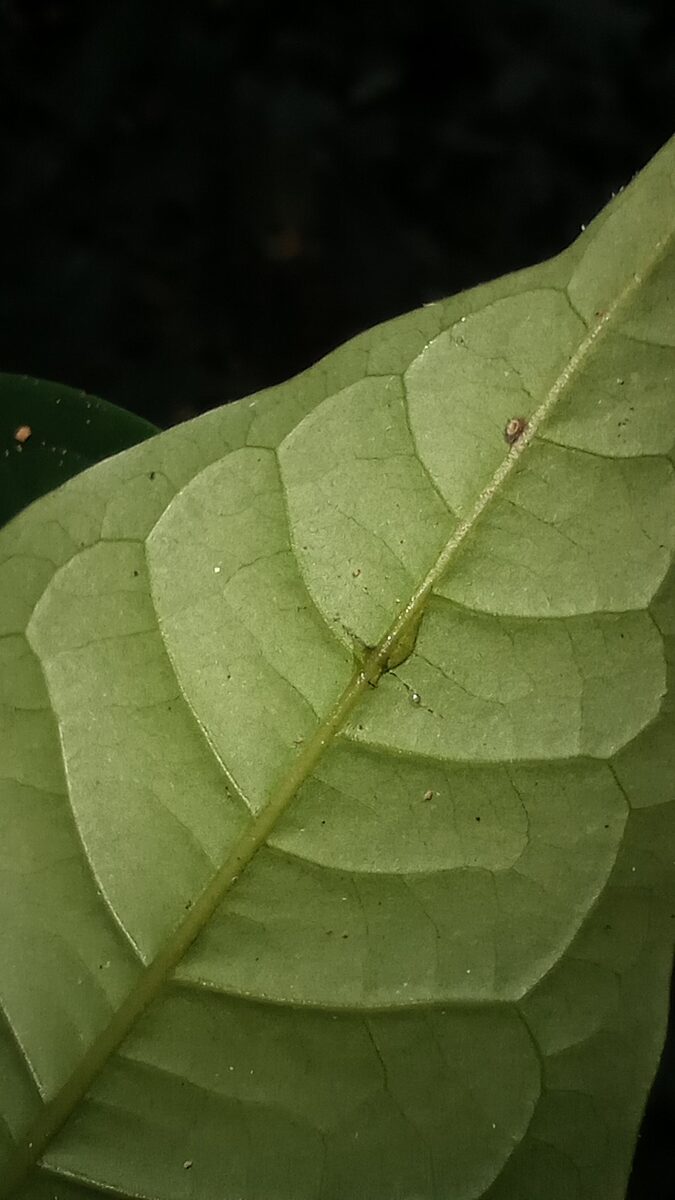
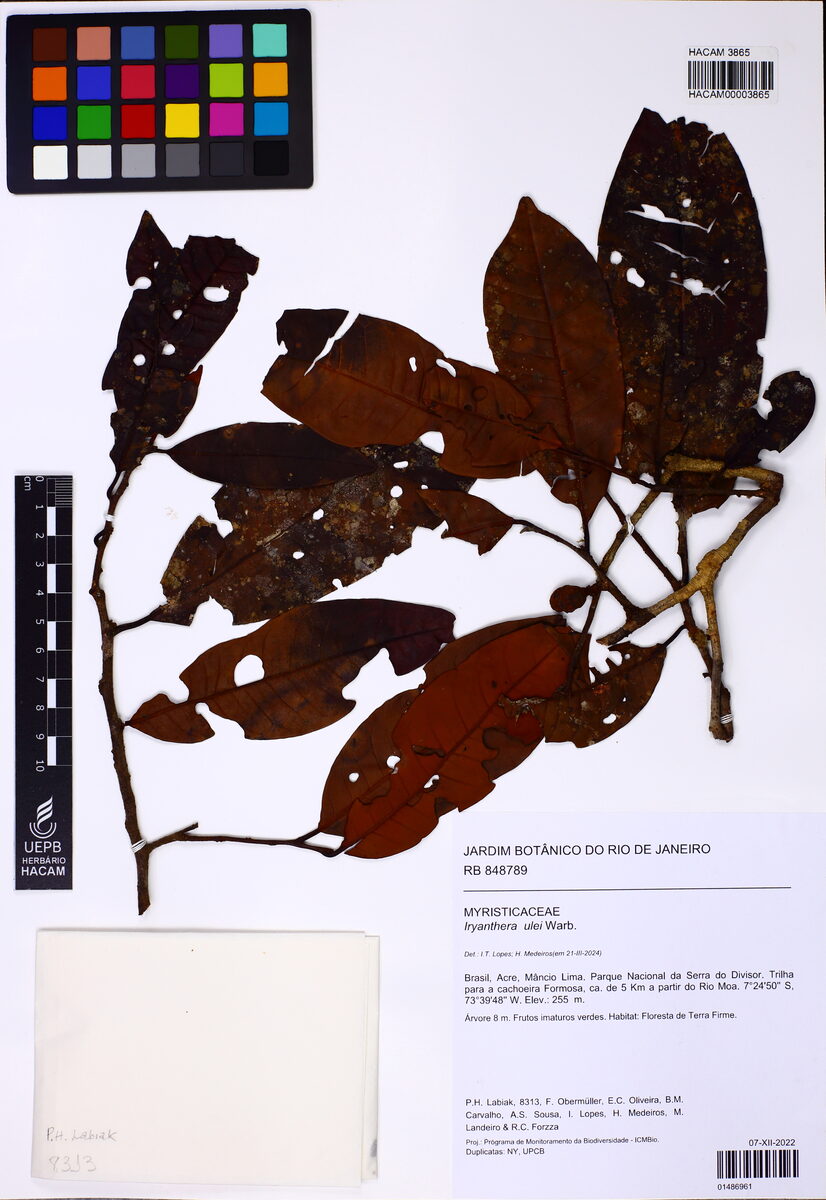
Horsfieldia ridleyana
(King) Warb.
gbif· cc-by
Royal Botanic Gardens, Kew
gbif· cc-by
Royal Botanic Gardens, Kew
gbif· cc-by
Royal Botanic Gardens, Kew
Description
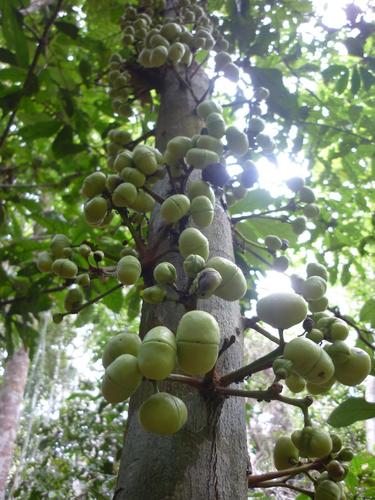
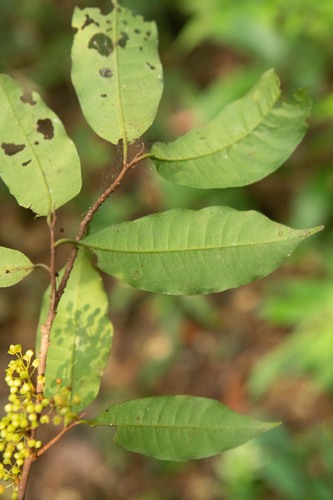
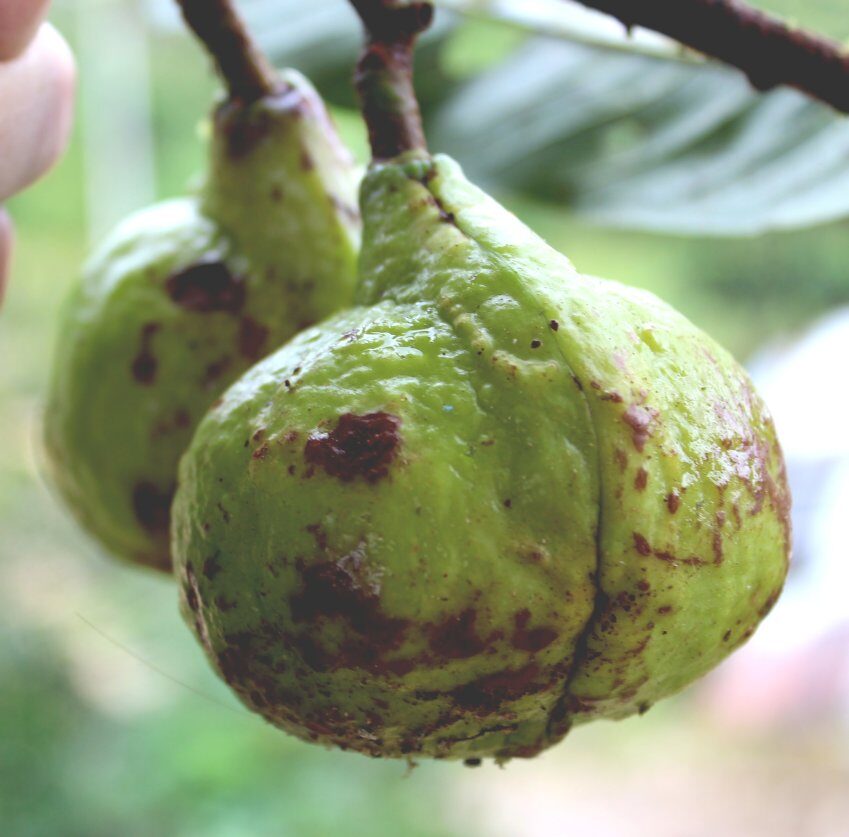
A slender, crooked tree. It grows 5-25 m tall. The fruit is a berry. There are 1-6 per flower stalk. The fruit are oval and 2 cm long by 1-1.5 cm wide. They are yellow-green.
Edible Uses
The fruit is eaten.
Distribution
It is a tropical plant. It grows on poor and shallow soils. It grows up to 1,100 m above sea level.
Where It Grows
Asia, Brunei, Malaysia, SE Asia,
Cultivation
A plant mainly of the moist tropical lowlands, where it can also be found at elevations up to 1,100metres. The plant is often found in the wild in Kerangas forest - a type of moist, heath forest found on acidic, sandy soils that are low in nutrients, especially nitrogen. The tree can flower and fruit all year round. A dioecious species, both male and female forms need to be grown if fruit and seed are required.
Propagation
Seed - dries out easily, loses its viability rapidly, and cannot be stored. It is best sown in a shaded position in a nursery seedbed - germination is usually fairly quick with the seed of most species sprouting within 2 - 17 weeks. Grow the young plants on in a shady position, planting them out in their permanent positions when large enough.
Other Uses
The wood is easy to work but not durable and of little economic value.
Production
It fruits throughout the year.
Synonyms
Also Known As
Penarahan
References (4)
- Burkill, I. H., 1966,
- Milow, P., et al, 2013, Malaysian species of plants with edible fruits or seeds and their evaluation. International Journal of Fruit Science. 14:1, 1-27
- PROSEA No. 2
- World Checklist of Useful Plant Species 2020. Royal Botanic Gardens, Kew