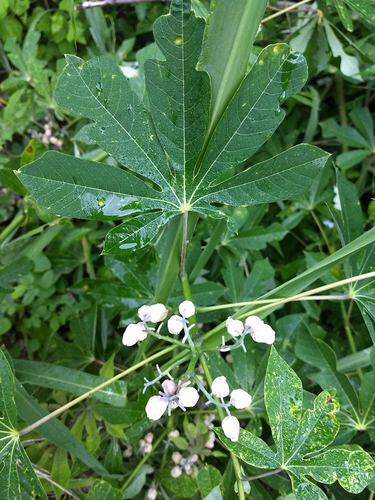
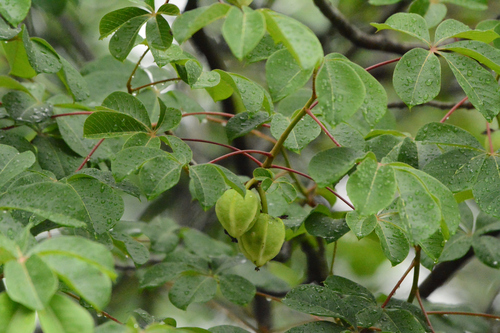
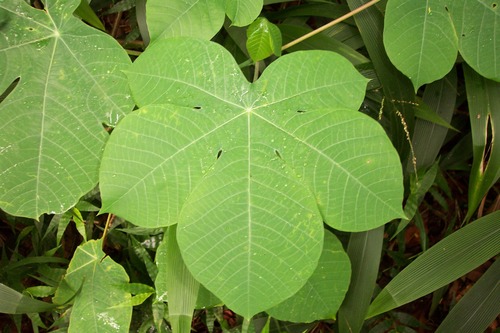
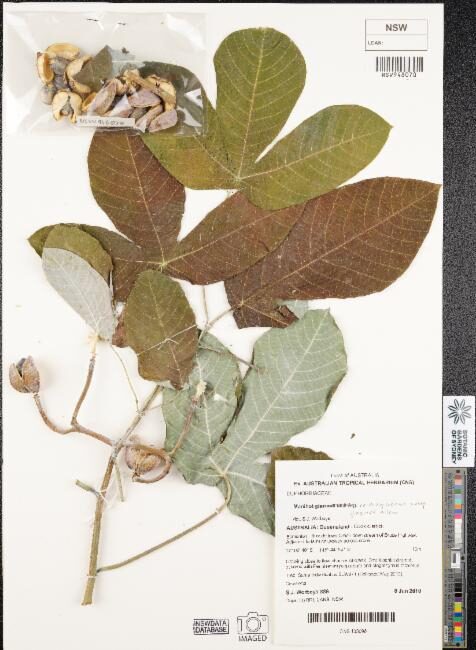
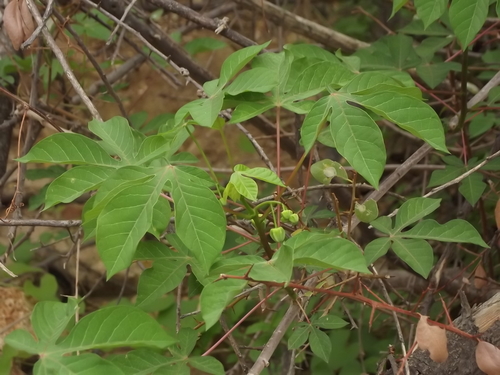
Erythrococca anomala
(Juss. ex Poir.) Prain
Bush lime
gbif· cc-by-nc-nd
Ehoarn Bidault
gbif· cc-by-nc-nd
Ehoarn Bidault
gbif· cc-by-nc-nd
Ehoarn Bidault
Description
A small shrub.
This description is brief — help expand it
Medicinal Uses
The leaves are analgesic, antiseptic, laxative, purgative, and are considered very effective against tapeworm. A decoction of the leaves is taken to expel tapeworms. The dried and ground leaves, combined with the seeds of melegueta pepper (Aframomum melegueta) is taken as a snuff against chronic headache. Leafy twigs are used to clean and disinfect wounds and ulcers. A decoction of young leaves is applied topically as a treatment for skin lesions and subcutaneous parasites. The sap of the leaves is used as eye drops to treat sore eyes; as nose drops to treat sinusitis; and as ear drops to treat ear infections. To treat eye injuries, the leaves are folded into a funnel and filled with water; after a while the water is dropped into the eye. Leaf pulp is also used as a rub to treat local pain. The dried and powdered leaves, either alone or combined with those of Psychotria peduncularis, are mixed with clay and applied in a friction as a treatment for malaria in children, and are rubbed on the neck and throat as a treatment fort meningitis. A leaf macerate is applied to the tooth to treat toothache. The bark is used as a treatment for arthritis and rheumatism. It is appied topically to treat localized pain. The fruit pulp or the root bark are taken as a tonic to remedy general weakness. The roots and bark contain about 1% alkaloids, the twigs and leaves about 0.1%. Alkaloids have also been found in the seeds.
Distribution
It is a tropical plant. It grows in forests.
Where It Grows
Africa, Guinea, Guinée, Guinea-Bissau, Sierra Leone, West Africa,
Cultivation
Grows best in a sunny position. A fast-growing plant. A dioecious species, both male and female forms need to be grown if fruit and seed are required.
Synonyms
References (2)
- FAO Country report Sierra Leone
- World Checklist of Useful Plant Species 2020. Royal Botanic Gardens, Kew