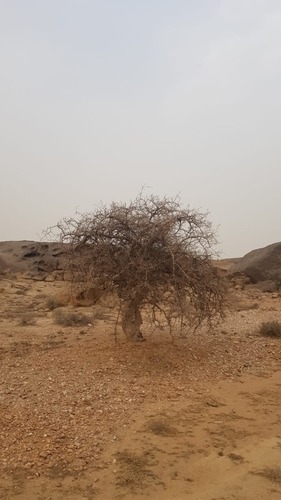
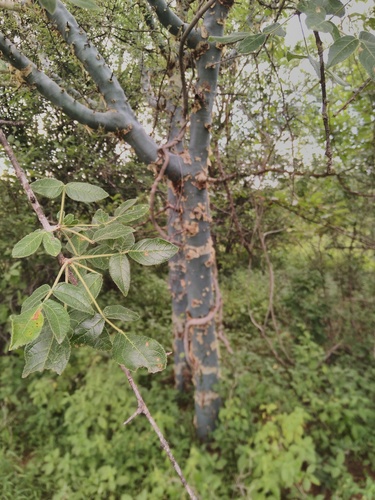
Commiphora habessinica
(O. Berg.) Engl.
Abyssinian myrrh
iNaturalist· cc-by-nc-sa
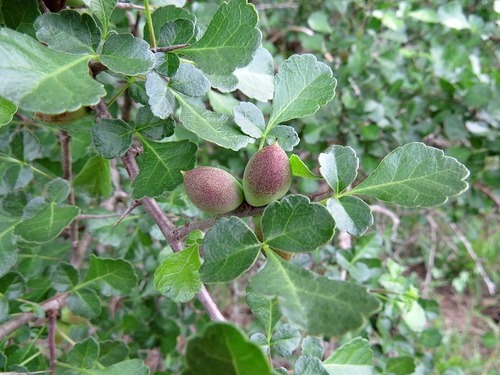
(c) Ateah Alfakih, some rights reserved (CC BY-NC-SA)
iNaturalist· cc-by-nc
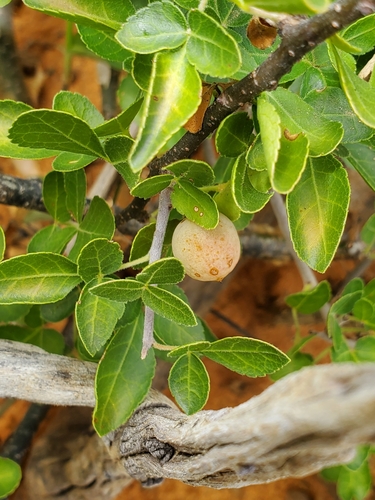
(c) James Bailey, some rights reserved (CC BY-NC)
iNaturalist· cc-by-nc
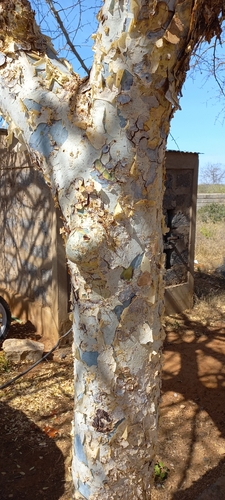
(c) James Bailey, some rights reserved (CC BY-NC)
Description
A shrub or small tree. It grows 6 m tall. It loses its leaves during the year. Plants are separately male and female. There are 2 subspecies.
This description is brief — help expand it
Edible Uses
The ripe fruit are eaten fresh. The stems and roots are sweet and are chewed. The resin is used as a spice or flavoring.
Traditional Uses
The ripe fruit are eaten. (Unripe fruit are bitter and can cause vomiting.) The stems and roots are sweet and are chewed. The resin is used as a spice or flavouring.
Medicinal Uses
The resin (myrrh gum) is traditionally used.
Known Hazards
Unripe fruit are bitter and can cause vomiting.
Distribution
It is a tropical plant. It is often on soils from limestone materials. In Africa it grows between 150-1,900 m above sea level. It grows in areas with an annual rainfall between 100-900 mm. It can grow in arid places.
Where It Grows
Africa, Burundi, Central Africa, Congo, Djibouti, East Africa, Ethiopia, Kenya, Malawi, Middle East, Mozambique, Oman, Rwanda, Saudi Arabia, Somalia, Sudan, Tanzania, Uganda, Yemen, Zambia,
Notes
It yields a myrrh gum.
Synonyms
Also Known As
Arabian myrrh, Hamesa, Hedayito, Medigeh, Medyigeh, Mesh-qeyi, Okor
References (7)
- Addis, G., Asfaw, Z & Woldu, Z., 2013, Ethnobotany of Wild and Semi-wild Edible Plants of Konso Ethnic Community, South Ethiopia. Ethnobotany Research and Applications. 11:121-141
- Bahru, T., et al, 2013, Wild Edible Plants: Sustainable Use and Management by Indigenous Communities in and the Buffer Area of Awah National Park, Ethiopia. Ethiop. J. Sci., 36(2): 93-108
- Lulekal, E., et al, 2011, Wild edible plants in Ethiopia: a review on their potential to combat food insecurity. Afrika Focus - Vol. 24, No 2. pp 71-121
- Miller, A. G., Morris, M. & Stuart-Smith, S., 1988, Plants of Dhofar. The Southern Region of Oman, Traditional, Economic and Medicinal Uses. Sultanate of Oman. p 86
- Royal Botanic Gardens, Kew (1999). Survey of Economic Plants for Arid and Semi-Arid Lands (SEPASAL) database. Published on the Internet; http://www.rbgkew.org.uk/ceb/sepasal/internet [Accessed 5th April 2011]
Show all 7 references Hide references
- Seidemann J., 2005, World Spice Plants. Economic Usage, Botany, Taxonomy. Springer. p 115 (As Commiphora abyssinica)
- Wiersema, J. H. & Leon, B., 2013, World Economic Plants. A Standard Reference CRC Press. 2nd Ed. p 193